



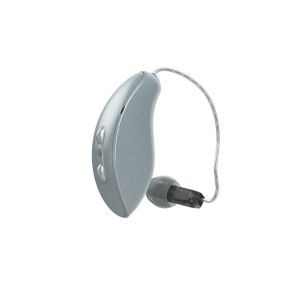
Starkey Omega AI CROS Hearing Aids

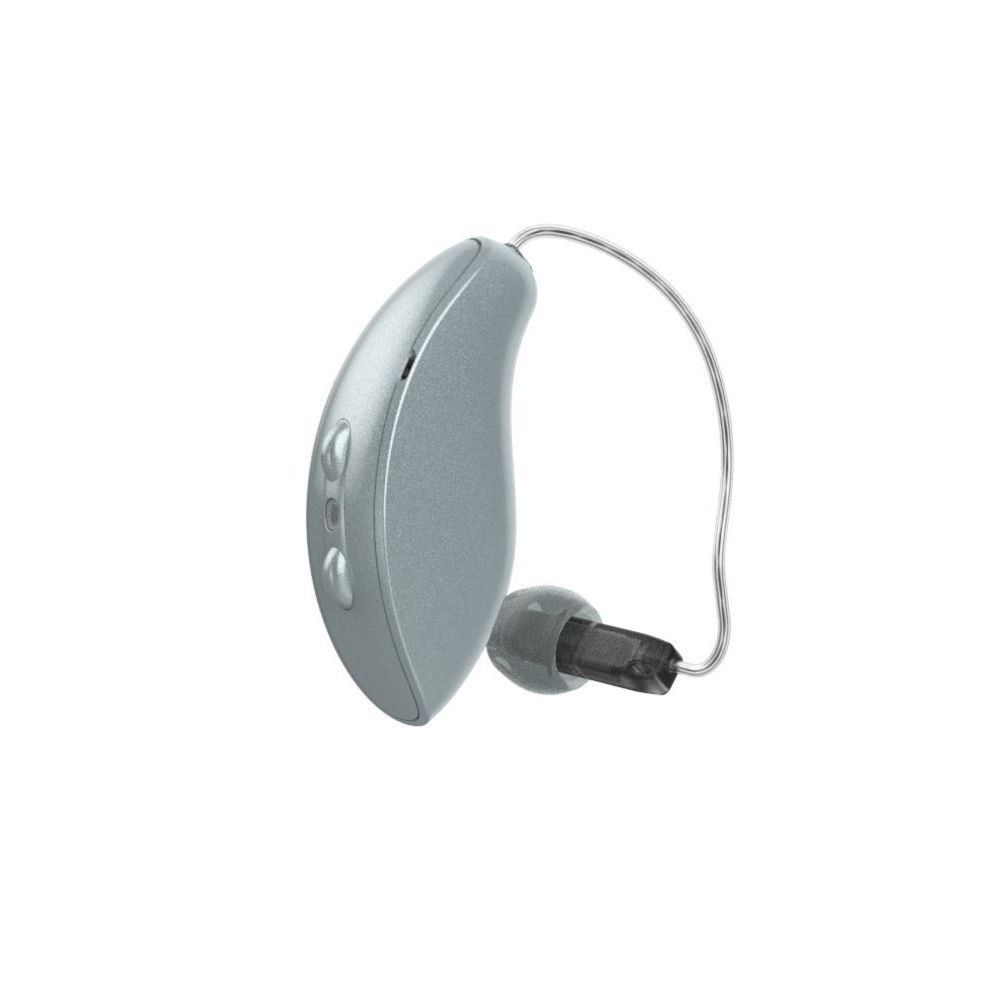
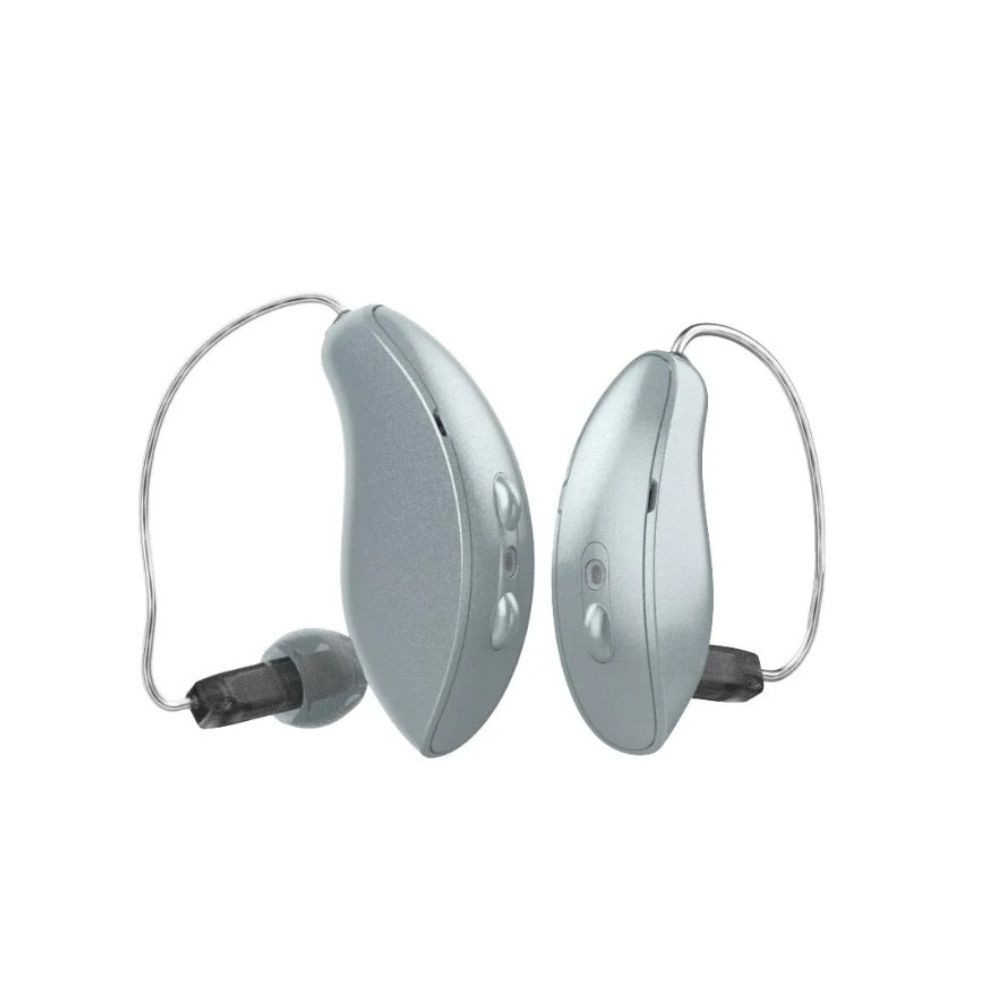

Fitting Styles: RIC
Warranty: 5 years
Charger: Rechargeable an additional £100 per aid



What's included in our hearing aid prices?
Details & Features
Overview of Starkey Omega AI CROS hearing aids
The Starkey Omega AI hearing aids were launched in October 2025, built on Starkey's newest flagship AI platform and designed for single-sided deafness. This solution is also created to give you the confidence to follow conversations from any direction, in any environment, without the constant effort of positioning yourself or asking people to repeat themselves.
If you have little or no hearing in one ear, you may have been told that a standard hearing aid cannot help, or that there is simply nothing to be done. That is rarely the whole picture. CROS and BiCROS systems are specifically designed for exactly this situation, and the Omega AI represents the most advanced version of that technology available today.
Quick highlights
- Designed for single-sided deafness
- Available as CROS or BiCROS, depending on your hearing profile
- Powered by the G3 Neuro Processor and DNN 360 dual deep neural network technology
- Up to 28% improved speech intelligibility compared to the previous Starkey technology
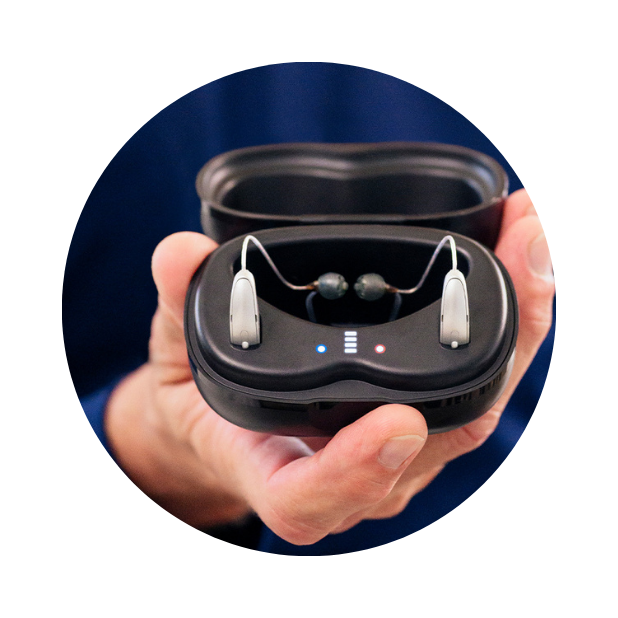
- Up to 29 hours of use on a single charge (RIC RT rechargeable model)
- Available in RIC RT (rechargeable) and RIC 312 (size 312 battery) styles
- Bluetooth LE Audio for iOS and Android, including hands-free calling
- Auracast-ready via the My Starkey app
- IP68 water and dust resistance
- Health features, including fall detection, respiratory rate monitoring, and activity tracking
- Fine-tuning updates can be sent to your aids via the My Starkey app, so minor adjustments rarely require a return visit
- 60-day money-back guarantee, no quibble
- Fitted and fine-tuned by a qualified, HCPC-registered audiologist, in a clinic near you or in your own home
CROS or BiCROS: what is the difference?
CROS is for people who have little or no usable hearing in one ear, with normal hearing in the other. A small transmitter worn on the non-hearing ear picks up sound from that side and wirelessly sends it across to a hearing aid on the better ear.
BiCROS works in the same way, but is designed for people whose better ear also has some degree of hearing loss. The hearing aid in the better ear receives the signal from the weaker side and amplifies sound for its own needs.
Your audiologist will carry out a full hearing assessment and advise which option is right for you. You do not need to decide before your appointment. Clinical suitability can only be determined following a hearing assessment by a qualified audiologist.
If you have been managing with one-sided hearing for some time and assumed nothing could help, you are not alone. Many people come to us after years of coping strategies, not realising that modern CROS technology has moved on considerably. A free hearing test is the right place to start.
The technology
DNN 360: hearing in all directions
At the heart of the Omega AI is Starkey's G3 Neuro Processor, which powers a dual deep neural network (DNN 360) directional system. Rather than focusing only on what is directly in front of you, it analyses the full 360-degree sound environment in real time, anticipating where speech is coming from and adjusting dynamically.
Starkey's research cites up to 28% improved speech intelligibility and up to 8 dB better signal-to-noise performance compared to previous Starkey technology.
For CROS users, this means the transmitter on your non-hearing side is doing sophisticated work, capturing and processing sound with real quality before sending it across to your better ear.
Battery life, styles, and colours available
The rechargeable RIC RT model offers up to 29 hours on a single charge, comfortably covering a full day. For those who prefer a traditional battery, the RIC 312 model uses a standard size 312.
RIC stands for Receiver-in-Canal. It is a discreet style where the main body of the aid sits behind the ear, and a thin wire carries sound into the ear canal. It is one of the most comfortable and widely worn styles available.
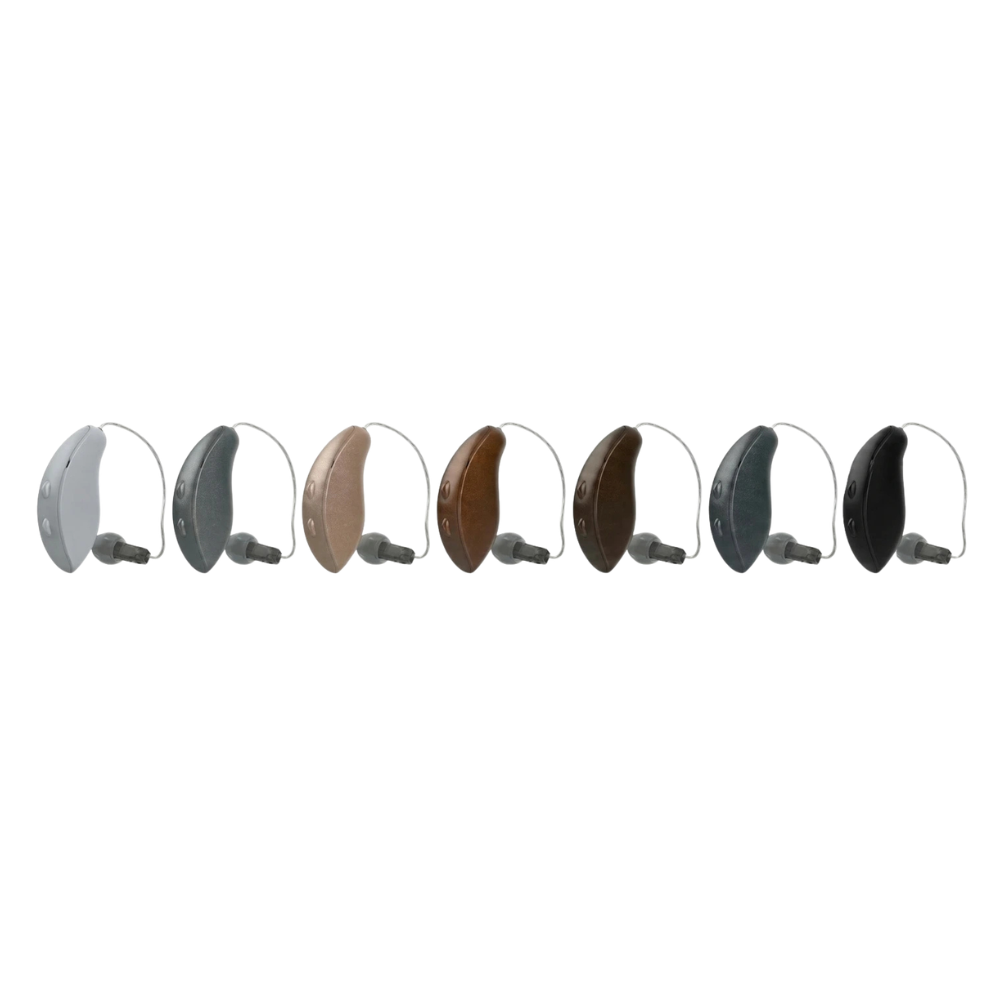
- RIC RT (Receiver-in-Canal with telecoil): Waterproof, wireless, rechargeable, LED status indicator light. Available in colours: Silver, white, beige, caramel, graphite grey, chestnut, and tech black.
- RIC 312 (Traditional battery model): Waterproof, wireless, LED status indicator light. Available in colours: Silver, white, beige, caramel, graphite grey, chestnut, and tech black.
Connectivity and the My Starkey app
The Omega AI uses Bluetooth LE Audio, compatible with both iPhone and Android for audio streaming, hands-free calling, and app control. The My Starkey app gives you straightforward programme and volume control, access to Edge Mode Plus for instant noise reduction, and health monitoring features including fall detection, respiratory rate tracking, and Balance Builder exercises.
Fine-tuning updates can be sent directly to your aids via the app by your audiologist, meaning minor adjustments rarely require a return visit. For anything more significant, your aftercare is included for the life of your hearing aids.
Who should consider this?
The Starkey Omega AI CROS and BiCROS system is worth exploring if you:
- Have little or no functional hearing in one ear
- Have previously been told that a standard hearing aid cannot help
- Are upgrading from an older CROS system and want the benefits of modern AI-driven processing
- Want reliable Bluetooth connectivity alongside your hearing support
- Would value integrated health monitoring in a single device
It is also worth considering if you are currently using NHS hearing aids in your better ear and would like to explore whether a private CROS system could give you a more complete hearing experience. Your audiologist will give you an honest, impartial view based on your assessment results, with no pressure to proceed.
A note on suitability: CROS and BiCROS systems are specifically designed for single-sided hearing loss. If your hearing loss profile is different, your audiologist may recommend an alternative solution. Everything is assessed individually, and you will never be guided towards a product that is not right for your needs.
What's included with Hearing Aid UK?
- Full hearing test and fitting by a registered HCPC audiologist
- All programming and fine-tuning - for life, not just the warranty period
- Free home visits available across the UK (including care homes)
- With over 200 across 93+ clinics, we offer free clinic appointments locally
- 60-day money-back guarantee - try them risk-free
- Full manufacturer's warranty
- Free aftercare for the life of the hearing aids
- Truly independent advice - we're not affiliated with any manufacturer
- Which? recommended, and trusted by over 31,000 people across the UK
If you are reading this on behalf of a loved one, you are welcome to attend the appointment with them. Many family members find it helpful to be there for the discussion, and our audiologists are happy to answer questions from everyone in the room.
Conclusion
The Starkey Omega AI CROS and BiCROS system is the current state of the art in single-sided hearing support. The DNN 360 technology addresses the real-world challenges of hearing loss in one ear in a way that earlier systems could not.
If you have been managing without support or wondering whether something better than your current CROS system exists, a free hearing test is the right place to start. It costs nothing, commits you to nothing, and leaves you better informed about your options. Available through Hearing Aid UK's network of over 200 HCPC-registered audiologists, in a clinic near you or in your own home.
Want to know more about Starkey Omega AI CROS?
The first step does not have to feel like a big one. A free hearing test with one of our qualified audiologists gives you a clear, honest picture of your hearing, with no discomfort and no obligation. If the Starkey Omega AI CROS or BiCROS system sounds like it could help, your audiologist will talk you through it properly before you make any decisions.
Prefer not to travel? A free home visit is available everywhere we operate, at no extra cost. Call our friendly team free on 0800 567 7621, any day of the week, or book online. Everything included, with no hidden costs, and a 60-day money-back guarantee.
Please note that there will be an additional surcharge of £125 if we are pairing a single hearing aid with an existing aid bought from another company, where we are taking over the aftercare responsibilities and looking after both hearing aids.
Kimberley Bradshaw is Head of Online Medical Content at Hearing Aid UK, with six years of experience writing about hearing healthcare for UK and US health and wellness publications. Her focus has always been the same: making complex topics feel clear, human, and easy to understand.
✔️ Head of Online Medical Content, Hearing Aid UK
✔️ Medical Content Writer — UK & US publications
✔️ 6 years experience writing in the audiology space
✔️ Member of Tinnitus UK
Starkey Omega AI Hearing Aids Information
Click on the buttons below to discover more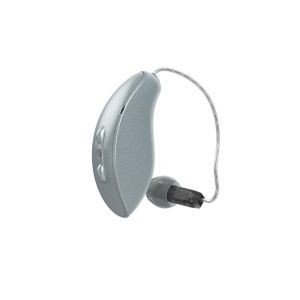
Fitting Styles: RIC, ITE, CIC, ITC
Warranty: 5 years
Charger: Rechargeable an additional £100 per aid
Fitting Styles: RIC, ITE, CIC, ITC
Warranty: 5 years
Charger: Rechargeable an additional £100 per aid
Fitting Styles: RIC, ITE, ITC, CIC
Warranty: 5 years
Charger: Rechargeable an additional £100 per aid
Watch the Starkey Omega AI Hearing Aid Video Below
Need more support?
Here, at Hearing Aid UK, we offer a wide range of hearing aids available on the market - keeping up to date with the best and latest hearing aid technology.
We can support your hearing healthcare in clinic or in the comfort of your own home and with nationwide coverage, we will have an audiologist near you. Whatever your hearing loss level, budget, or style our audiologists can help you find the perfect hearing solution for you.
Call us free for support and advice on 0800 567 7621
Our specialist service includes:
Do not spend hundreds of pounds without getting a second opinion from us.
Please call us on 0800 567 7621
 Not only are the prices great, but the service is fantastic! Many thanks to your team.

Other pages you might find useful
What's included in our hearing aid prices?
FAQs
In general, any audiologist will always recommend to you the hearing aid model that best suits your needs. Here is a useful checklist to make sure that is the case.
- Audiologist's level of knowledge: The audiologist you have seen will hopefully have a wide knowledge of all available hearing aids; however, some will only be familiar with a small number of brands and, therefore, may not really be in a position to know which model is the best for you. It is OK to challenge their recommendation and ask them to justify why this particular brand is the one for you.
- Do research: Read about the hearing aid that was recommended. Does it seem like it will suit your lifestyle? Does it have more or fewer features than you need?
- Be aware of sales targets: Many high street retailers have specific tie-ins to a particular manufacturer/brand. The hearing aid they have suggested may still be the correct one for you, but do your research so that you know why they might have recommended it. You can read our best hearing aids of this year here
If you have significant hearing loss in both ears, you should be wearing two hearing aids. Here are the audiological reasons why:
Localisation: The brain decodes information from both ears and compares and contrasts them. By analysing the minuscule time delays as well as the difference in the loudness of each sound reaching the ears, the person is able to accurately locate a sound source.
Simply put, if you have better hearing on one side than the other, you can't accurately tell what direction sounds are coming from.
Less amplification is required: A phenomenon known as “binaural summation” means that the hearing aids can be set at a lower and more natural volume setting than if you wore only one hearing aid.
Head shadow effect: High frequencies, the part of your hearing that gives clarity and meaning to speech sounds, cannot bend around your head. Only low frequencies can. Therefore, if someone is talking on your unaided side, you are likely to hear that they are speaking, but be unable to tell what they have said.
Noise reduction: The brain has its own built-in noise reduction, which is only really effective when it is receiving information from both ears. If only one ear is aided, even with the best hearing aid in the world, it will be difficult for you to hear in background noise as your brain is trying to retain all of the sounds (including background noise) rather than filtering them out.
Sound quality: We are designed to hear in stereo. Only hearing from one side sounds a lot less natural to us.
Fancy some further reading on this topic? You can read about why two hearing aids are better than one in our article, hearing aids for Both Ears, here
For most people, the main benefit of a rechargeable hearing aid is simple convenience. We are used to plugging in our phones and other devices overnight for them to charge up. Here are some other pros and cons:
For anybody with poor dexterity or issues with their fingers, having a rechargeable aid makes a huge difference, as normal hearing aid batteries are quite small and some people find them fiddly to change.
One downside is that if you forget to charge your hearing aid, then it is a problem that can't be instantly fixed. For most, a 30-minute charge will get you at least two or three hours of hearing, but if you are the type of person who is likely to forget to plug them in regularly, then you're probably better off with standard batteries.
Rechargeable aids are also a little bit bigger and are only available in Behind-the-Ear models.
Finally, just like with a mobile phone, the amount of charge you get on day one is not going to be the same as you get a few years down the line. Be sure to ask what the policy is with the manufacturer's warranty when it comes to replacing the battery.
For most people, the answer is yes. But it's never that simple.
The majority of hearing problems affect the high frequencies a lot more than the low ones. Therefore, open fitting hearing aids sound a lot more natural and ones that block your ears up can make your own voice sound like you are talking with your head in a bucket. Therefore, in-ear aids tend to be less natural.
However, the true answer is we can't tell until we have had a look in your ears to assess the size of your ear canal, and until we have tested your hearing to see which frequencies are being affected.
People with wider ear canals tend to have more flexibility, also there are open fitting modular CIC hearing aids now that do not block your ears.
There is also the age-old rule to consider, that a hearing aid will not help you if it's sat in the drawer gathering dust. If the only hearing aid you would be happy wearing is one that people can't see, then that's what you should get.
Most people can adapt to any type of hearing aid, as long as they know what to expect. Have an honest conversation with your audiologist as to what your needs are.
Generally speaking, six or more. Unless it's none at all. The number of channels a hearing aid has is often a simplistic way an audiologist will use to explain why one hearing aid is better than another, but channels are complex, and it is really not that straightforward. Here are some reasons why:
Hearing aids amplify sounds of different frequencies by different amounts. Most people have lost more high frequencies than low, and therefore need more amplification in the high frequencies. The range of sounds you hear is split into frequency bands or channels, and the hearing aids are set to provide the right amount of hearing at each frequency level.
Less than six channels, and this cannot be done with much accuracy, so six is the magic number. However, a six-channel aid is typically very basic with few other features and is suitable only for hearing a single speaker in a quiet room. The number of channels is not what you should be looking at; it's more the rest of the technology that comes with them.
As a final note, different manufacturers have different approaches. One method is not necessarily better than any other. For example, some manufacturers have as many as 64 channels in their top aids. Most tend to have between 17 and 20. One manufacturer has no channels at all.
Manufacturer's warranties typically last between 2-5 years, depending on the brand and model, and cover defects in materials and workmanship. This includes repairs for component failures, electronic malfunctions, and manufacturing defects, but excludes damage from misuse, accidents, or normal wear. Most manufacturers also include loss and damage insurance for the first year.
We handle all warranty claims on your behalf, liaising with manufacturers and ensuring you get replacement devices quickly when needed. This comprehensive warranty coverage, combined with our lifetime aftercare, gives you complete peace of mind. Find out more about our warranty cover here
Our hearing tests are completely free, whether at our clinics or in your home. Unlike other providers who charge £30-£100 for home visits, we believe hearing healthcare should be accessible without financial barriers. Our comprehensive assessments include examination by an HCPC-registered audiologist, audiogram results, and personalised recommendations.
All testing, future adjustments, and ongoing support are included at no extra cost. While NHS tests are also free, typical 6-week waiting periods often lead people to seek immediate private testing. We provide prompt, professional assessments that fit your schedule and budget.
Yes, we offer completely free home visits throughout the UK, and this service is included in our prices with no additional charges. Home visits are particularly valuable for people with mobility issues, busy schedules, or those who simply prefer the comfort and convenience of their own environment.
Our audiologists can conduct full hearing tests, fit hearing aids, and provide ongoing support in your home. This service sets us apart from many providers who either don't offer home visits or charge extra for them.
We can offer prices up to 40% lower than high street retailers because of our business model. As a network of 200+ independent audiologists, we don't have the massive overheads of large retail chains - no expensive high street premises, no sales targets pushing audiologists to sell the most expensive options, and no costly marketing campaigns.
However, we maintain the same buying power as the big chains because we purchase on behalf of our entire nationwide network. This means you get access to the same premium hearing aids with professional service, but at genuinely competitive prices.
We offer a comprehensive 60-day money-back guarantee, which gives you twice the industry standard time to properly assess whether your hearing aids are right for you. This extended period recognises that adjusting to hearing aids takes time, and your brain needs several weeks to adapt to the amplified sounds.
Unlike many providers who offer just 30 days, we believe 60 days gives you the confidence to test your hearing aids in all the situations that matter to you - from quiet conversations at home to busy restaurants and outdoor activities.
Other Models
Starkey Omega AI 24 | RIC RT / mRIC R / RIC 312 / ITE R / ITC R / CIC
Starkey Omega AI 20 | RIC RT / mRIC R / RIC 312 / ITE R / ITC R / CIC
Starkey Omega AI 16 | RIC RT / mRIC R / RIC 312 / ITE R / ITC R / CIC
Ask the Experts

Get free independent impartial advice from the experts you can trust. We offer nationwide coverage and huge savings on all our hearing aids.
6 Morton Lane
Walkwood
Redditch
Worcestershire
B97 5QA
Latest Launch
When we refer to a product as 'Latest Launch', we mean it is the latest to be released on the market.
New
When we refer to a product as 'New', we mean that the product is the newest hearing aid model on the market.
When we refer to a product as 'Superseded', we mean that there is a newer range available which replaces and improves on this product.
Older Model
When we refer to a product as an 'Older Model', we mean that it is has been superseded by at least two more recent hearing aid ranges.