



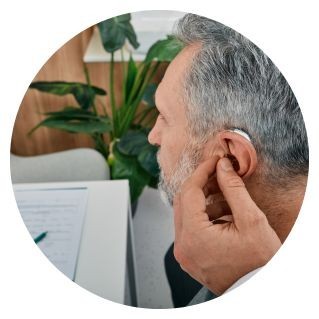
Free home visits
with a local audiologist

Head of Online Medical Content

Audiology Expert & Founder of Hearing Aid UK
Last Hearing Aid UK Update: 24
Getting your hearing aids fitted properly makes all the difference. It's not a case of putting them in and hoping for the best, a qualified audiologist uses the results of your hearing test to programme your aids precisely to your hearing, so that quiet sounds come through clearly and sudden loud ones do not become uncomfortable.
Hearing Aid UK fits hearing aids from all the leading brands in person, either in your own home or at one of our 93+ local clinics, through our network of over 200 HCPC-registered audiologists.
The fitting can happen wherever suits you best. If you would rather come into a local clinic, that works perfectly well. If you would prefer to stay at home, one of our audiologists will come to you instead, at no extra charge.
There are many advantages to having the fitting done at home. One of them is that your audiologist can hear how sound moves through your own rooms, help you connect your hearing aids to the devices you use every day, and adjust the settings around the sounds you actually live with.
Follow-up visits work the same way: your audiologist comes back to fine-tune things as you settle in, and everything is included in the price, with aftercare for life.




If you’re considering hearing aid fittings at home, you may have a few questions, such as:

With hearing aid fittings at home, you can relax knowing the appointment is built around your schedule, in a setting where you’ll actually be using your hearing aids most often.
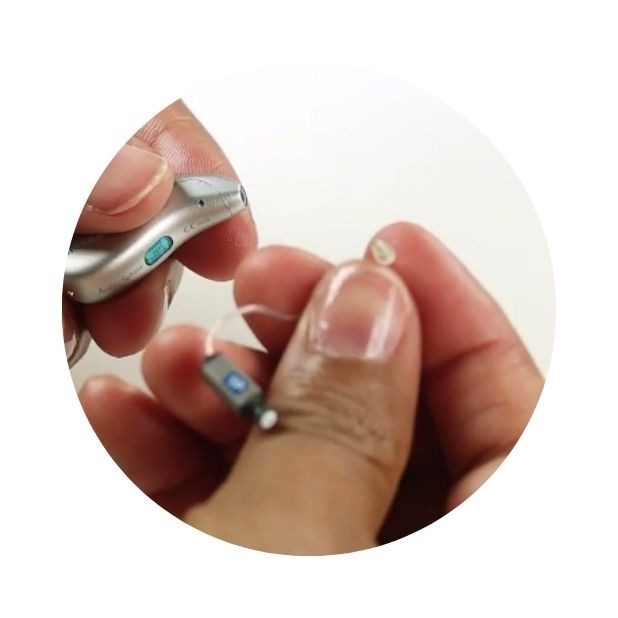
This is also a good time to learn how to care for your hearing aids and connect them to things like smartphones, TVs, and other Bluetooth-enabled tech.
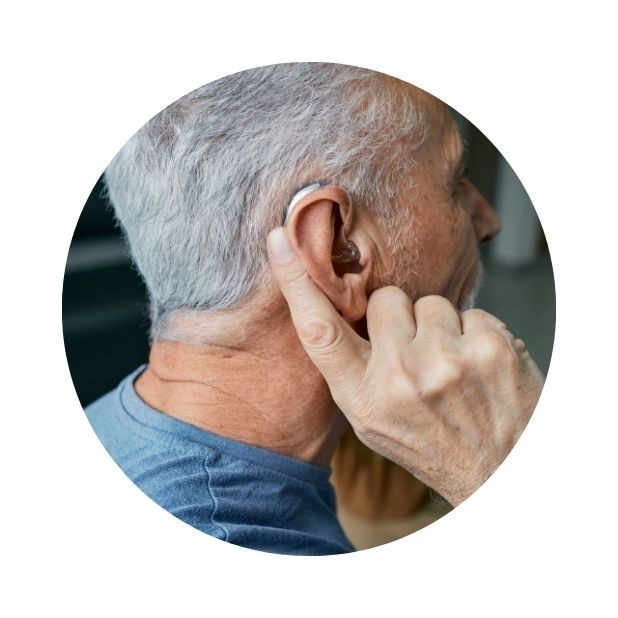
Once your audiologist has advised the right digital hearing aids for you, your lifestyle, your hearing loss, and the technology and connectivity you require, you will be fitted with your new hearing aids.
This can either be in the comfort of your own home or in a clinic. For a fitting to be successful, your audiologist needs enough time to programme your aids precisely to your hearing test results, not just set a standard level and hope it works.
So take your time, ask questions, try the features, and get to know what your hearing aids can do.

Whether you’ve had your hearing test already or are looking to book both at once, hearing aid fittings at home offer many advantages:
Fittings at home also make it easier to include family members in the process, allowing them to understand how your hearing aids work and how they can support you going forward.
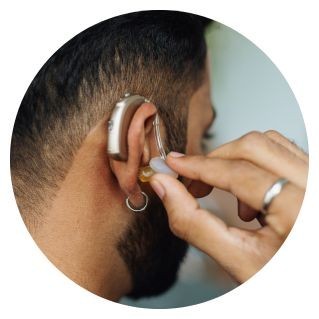
A hearing aid fitting appointment is the same whether you are in the clinic or at home. Using your hearing test results, your audiologist sets how much your hearing aids amplify each pitch.
For instance, amplifying soft sounds to make them audible and compressing loud sounds so they are more comfortable. This is called dynamic range compression.
Your audiologist will also discuss your common listening environments and what you should expect from your hearing aids, and you will go through what features your new devices have. This is also the point where your audiologist will tailor recommendations to your audiogram and how you communicate day-to-day.
If earmoulds are needed, your audiologist will take impressions of your ears, and you will be contacted when your custom-made hearing aids are ready. If not, you can have your hearing aids fitted there and then, in most cases.
NICE's guidelines on hearing loss in adults set out how hearing aids should be fitted and followed up. Taking the time to get the programming right is something our audiologists never rush. Hearing aids that are fitted correctly are vital for a successful hearing experience and for you to get the best out of your new devices.
That's one reason many of our customers choose to be fitted at home: your audiologist can check the settings against the sounds of the place you spend most of your time. Your audiologist will connect your hearing aid to their programming system, set it according to your preferences and hearing loss test results, and then check that the amplification levels are correct.
Your hearing will be reviewed in a follow-up appointment, as well as any maintenance needed in the future. It is also important to remember that it takes time to adjust to your hearing aids. Sometimes, there might be multiple appointments needed to get the sound and support just right.
For example, your audiologist may set up different programmes for quiet rooms, busy places or the TV once you've tried them for a while. You should also contact your audiologist if you think your hearing aids need adjusting in any way.
Fine-tuning is done in person, at home or in clinic. Many hearing aids also come with a smartphone app for everyday tweaks such as volume and switching programmes. Because your first fitting took place at home, your audiologist will already have a good understanding of your environment, making future adjustments easier.
If you are searching for a hearing aid fitting appointment with the NHS, it is important to know that some styles of hearing aids might be available for you to wear then and there; however, others might need to be custom-made, which takes a few weeks.
When your hearing devices are ready, they will be programmed by the NHS to suit your hearing loss needs, and then another appointment will be scheduled to check how you are getting on with your hearing aids.
We can't speak for other companies, but our hearing aid prices include all testing, fitting, programming, and ongoing aftercare for the life of the hearing aids. This is the same for services in the clinic or at home; however, this is not the case for all hearing aid companies. Your hearing aids also come with the manufacturer's warranty and our 60-day money-back guarantee.
Remember, if you are not purchasing your hearing aids from us, then please check with your audiologist whether there is an additional cost for this service.
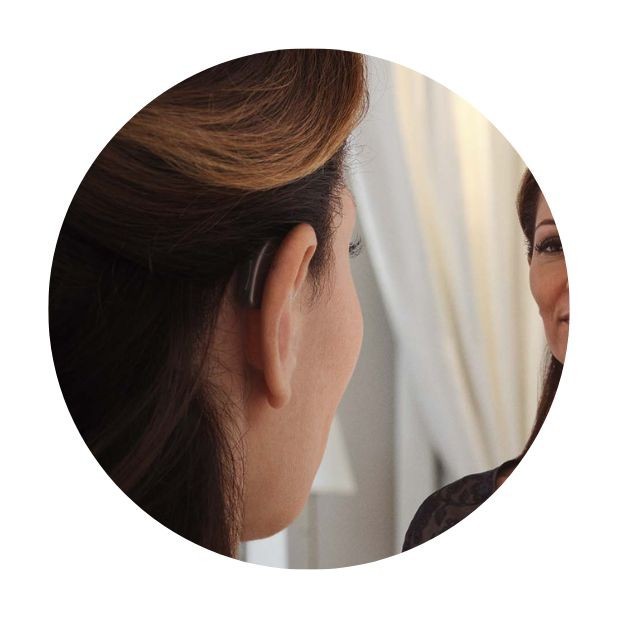
Hearing Aid UK's audiologists can fit, programme and fine-tune your hearing aids in your own home, to the same standard as a clinic appointment.
Your fitting, Bluetooth setup, follow-ups and aftercare are all included in the price of your hearing aids.
The real benefit of fitting at home is that your hearing aids are set up for the sounds of your own home, where you'll wear them most.
Other hearing aid home visit resources:
Ready to experience professional hearing care in your own home?
Get expert hearing aid fitting, programming, and getting started in the comfort of your living room, where you'll actually use your hearing aids every day.
Book your free home fitting today on 0800 567 7621 to speak with an audiologist who can support you locally.
Same professional service • No travel required • No extra costs • HCPC-registered • Which? recommended • Over 31,000 happy customers

Do not spend hundreds of pounds without getting a second opinion from us.
 Not only are the prices great, but the service is fantastic! Many thanks to your team.
Yes. Hearing Aid UK's HCPC-registered audiologists fit, programme and fine-tune hearing aids in person in your own home, anywhere in the UK.
No. Hearing Aid UK's prices include your hearing test, fitting, programming and aftercare for life, whether your appointments are at home or in clinic.
A hearing aid fitting usually takes between one and two hours, including time to learn how to use, clean and connect your hearing aids.
Yes. A home fitting with Hearing Aid UK uses the same programming software and the same standard of care as a clinic, and your audiologist can fine-tune your hearing aids for the sounds of your own home.
Many hearing aids come with a smartphone app for everyday adjustments such as volume, but fine-tuning to your hearing is always done in person by your audiologist.
Hearing aids need to be programmed to your hearing test results so quiet sounds are audible and loud sounds stay comfortable, which is why your audiologist takes time over the fitting and follow-ups.

Get free independent impartial advice from the experts you can trust. We offer nationwide coverage and huge savings on all our hearing aids.
When we refer to a product as 'Latest Launch', we mean it is the latest to be released on the market.
When we refer to a product as 'New', we mean that the product is the newest hearing aid model on the market.
When we refer to a product as 'Superseded', we mean that there is a newer range available which replaces and improves on this product.
When we refer to a product as an 'Older Model', we mean that it is has been superseded by at least two more recent hearing aid ranges.
