



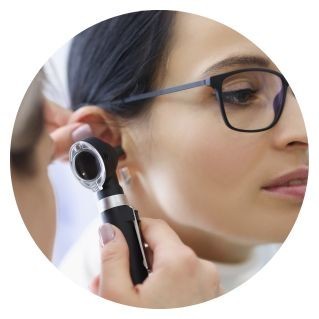
What is an audiologist, and what do they do?
How can a hearing aid audiologist help your hearing?
Last updated by Hearing Aid UK: 22
What an audiologist is
Most people don't think about audiologists until they need one, and then suddenly they're asking: what do these people actually do?
An audiologist is trained to look after hearing and balance for people of any age, from babies through to older adults. Below, we'll cover what the job involves day to day, how the profession has evolved, and what you can expect walking into an appointment.
In practice, that means spotting hearing loss, fitting hearing aids, supporting people with balance problems, and helping ease tinnitus. It's a broader job than most people realise.
The audiology industry has come a long way
Hearing loss is talked about more openly now than it used to be, and awareness is slowly improving too. There's still a way to go, but it's a positive shift, and one worth building on.
We are beginning to see a gradual increase in available education about the benefits of hearing aids, other forms of support, and just how important getting checked early is for your hearing's future and the quality of life you lead.
But what about the audiologists themselves? What do they do, and how can they help those with hearing loss? Here, we answer some of the common misconceptions about our industry and frequently asked questions about the audiologist profession.
Audiologist meaning
An audiologist is a hearing healthcare professional who manages, focuses on, and finds solutions to problems in the auditory system of the person they're seeing. Audiologists are professionally trained to assess, support and monitor all levels of hearing loss, tinnitus symptoms and balance issues (vestibular).
The primary responsibility of an audiologist is to assess hearing and balance concerns. They use a range of assessment tests and tools to check the functioning of the auditory system and understand the nature and extent of someone's hearing loss or vestibular concern.
What is a typical day for an audiologist?
You might be wondering what a typical day is like for an audiologist and what being an audiologist is like. An audiologist's main role is to test hearing capability (audiogram), advise on the best way forward for hearing loss, dispense hearing aids and fit hearing aids.
They also organise and manage cochlear implants and provide rehabilitation counselling for their customers and families. This could be education on hearing loss, how to manage tinnitus symptoms, lip-reading or how to better communicate as a family and individual in various hearing situations and social gatherings.
They also organise and manage cochlear implants and provide rehabilitation counselling for their patients and families. This could be education on hearing loss, how to manage tinnitus symptoms, lip-reading or how to better communicate as a family and individual in various hearing situations and social gatherings.
Where do audiologists work?
Audiologists work in various practice settings; for instance, they provide their hearing healthcare services in their private clinics and in hospitals. Hearing Aid UK also offers hearing care services and hearing tests in your own home for no extra fee.
They generally work alongside and collaborate with speech therapists and pathologists, hearing coaches, ENT clinics and otolaryngologists.
Audiologist vs ENT/otolaryngologist specialist
What is the difference between an audiologist and an otolaryngologist? This could also be referred to as the difference between an audiologist and an ENT. The Ear, Nose and Throat specialists are medical doctors who have completed a degree at a medical school and have specialised in the otolaryngology field.
They offer a variety of services, procedures, and treatments and can assess problems affecting the ear, nose, throat and even the lower areas of the skull. Audiologists work within an ENT clinic or their own private practice, providing hearing tests, dispensing hearing aids and offering counselling services.
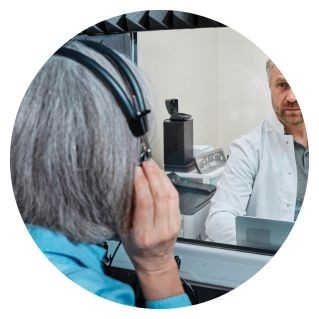
What is an Audiologist?
How to become an audiologist
Is an audiologist a doctor?
The simple answer here is no - audiologists are not medical doctors, and they don't have to have a doctorate to practice. An audiologist is a licensed healthcare professional who specialises in assessing and supporting those with hearing loss, tinnitus and other types of hearing problems.
What are an audiologist's education requirements?
What is required to become an audiologist? They have to, at a minimum, have a master's degree in their field and then some go on to earn a doctorate, where they will then be a doctor of audiology.
The doctoral program typically includes coursework in anatomy and physiology of the auditory system, diagnostic evaluation, treatment and rehabilitation techniques, hearing aid technology, research methods, and professional ethics.
Aspiring audiologists must complete a supervised clinical externship to gain hands-on experience in assessing and managing patients with hearing and balance disorders. After completing their doctoral degree, audiologists must obtain state licensure or certification to practice independently.
What is a certified audiologist?
Since 2010, the qualification required to become a hearing aid dispenser is a foundation degree in audiology, so you may see the letters Fd Sc Aud after the name. In any case, the hearing aid dispenser needs to be registered with the HCPC, and the registration details can be found on the HCPC website.
Are audiologists regulated?
Regulation within audiology has been confusing to consumers for some time. What is important to know is that those who assess, fit, programme and dispense hearing aids should be registered by the Health Care and Professionals Council (HCPC).
All of our audiologists at Hearing Aid UK are qualified and registered with the HCPC. Hearing Aid Dispensers are regulated by the HCPC and set up to protect the public. Their job is to keep a register of health and care professionals who meet their standards for their training, professional skills, behaviour and health.
We were also a member of the British Society of Hearing Aid Audiologists (BSHAA), between 2015 and 2020, which is the professional body that represents and promotes the interests of the independent hearing aid profession across the UK. The Irish equivalent of this is ISHAA.
"HCPC registration isn't just a box to tick; it's what separates a properly trained audiologist from someone simply selling a device. If someone can't tell you their HCPC number, that's worth asking about before you go any further."
Paul Harrison, Audiology Expert & Founder, Hearing Aid UK
Audiologist training
Here are some topics of study that audiologists cover during their education and training:
- Epidemiology
- Physics of sound
- Anatomy and physiology of hearing
- Nervous system diseases
- Ear audiological assessment
- Pediatric Audiology
- Prevention, treatments and rehabilitation of hearing loss
- Counselling
- Lip-reading
- Tinnitus therapy and management
- Dispensing and fitting digital hearing aids
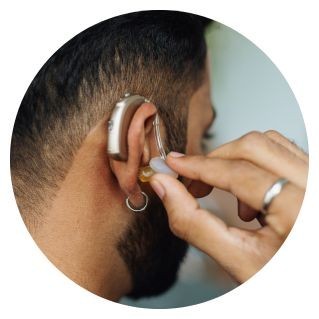
What is an Audiologist?
7 things an audiologist can do for you
1. Audiologists can manage tinnitus relief
If you're living with tinnitus, there are plenty of options available that an audiologist can discuss with you. A complete audiological assessment would be arranged to understand the severity and to help rule out other causes.
Other issues to factor in could be exposure to noise, blood pressure, allergies or stress. You might then be referred on for further support, or the audiologist will advise you on the best course of action to help relieve your symptoms.
2. Audiologists can advise and support you
Living with any form of hearing loss or balance issue can be difficult, at times debilitating and let us not forget to mention – alter your quality of life. Here is where an audiologist comes in. They are the best medical professionals to advise and steer you in the right direction with your hearing health.
Offering services that give you the best solutions for various circumstances and situations like tinnitus, hearing protection, hearing loss, wax build-up, balance worries, hearing aids and tests.
3. Audiologists can discuss products available
There are so many innovative products out there for tinnitus, hearing protection and hearing loss, which you can discuss with an audiologist. They will relay all the options that would benefit you and your hearing healthcare the most. We are all unique and respond to treatment, protection and products differently.
Deciding on the best solutions may take some time, but with the help of an audiologist, you will receive unbiased advice, built from trust, confidence and communication.
4. Audiologists can fit hearing aids
An audiologist will advise and fit your hearing aids. These are the best solutions for you and your hearing loss. Using your test results, the audiologist will tailor your hearing aid settings to give you the best possible hearing experience.
Follow-up appointments will be made so that your hearing health is maintained and monitored. Ensuring that your hearing aids are continually providing optimum support.
5. Audiologists can remove earwax
If you have wax buildup in your ear, an audiologist can professionally and carefully remove this problem. There are two methods currently used – micro-suction and irrigation.
Symptoms that can surface if the wax build-up is not treated could be tinnitus, infections, pain, dizziness or restricted hearing, so it is always best to urgently seek medical help.
6. Audiologists can perform a hearing test
Using an audiogram, an audiologist can carry out a hearing test. It shows the test results in graph form. Each ear will be introduced to different tones and frequencies. The audiologist will mark when these tones become audible to you – the ‘threshold’.
Once the test is complete, there will be a summary of how your hearing copes with different sounds and how sensitive each ear is.
If the findings highlight a hearing loss, the audiologist will explain what type of loss you have and what can help. In most cases, wearing hearing aids can help you improve your quality of hearing and life. All these options will be discussed and explained to you.
7. Audiologists can help with balance
If dizziness and balance become a problem, you must get medical help as soon as you can. An audiologist can offer various balance tests to help understand the cause and severity of what you're experiencing. Your eye movements may also be tested, as they often highlight the true functionality of your ears.
Sometimes a hearing test is required, as inner-ear problems generally stem from issues with the hearing system. Expert advice will follow your consultation as to how your balance can be reinstated.
Conclusion
In short, an audiologist is a healthcare professional dedicated to helping you understand and manage your hearing and balance. That covers everything from hearing assessments and personalised care planning to fitting and programming hearing aids, counselling, and protecting the hearing you have.
Whatever your age, a good audiologist helps you work through the challenges that come with hearing loss or balance issues, so you can communicate more easily and get more out of daily life.
5 Quick reasons why you should get your hearing checked:
- You often ask people to repeat themselves
- You have a consistent ringing in your ears
- You are unable to hold a conversation in challenging listening environments
- You often turn up the volume on the TV or other audio devices
- You're missing sounds you shouldn't be
Want to know more about how an audiologist can help you?
If you think you need an audiologist appointment because you feel you have problems with your hearing or any other type of hearing healthcare issues, our audiologists can help you.
Hearing Aid UK has a professional network of over 200 audiologists nationwide, so we can always locate the right audiologist near you. Wherever you live, we’ll have someone near to you. We offer the choice of appointments either in a shop, clinic or in the comfort of your own home. Call us free on 0800 567 7621

Audiology articles you might like...
 Audibel Hearing Aids
  How hearing aids boost your confidence
  Hearing aids for dexterity problems
Our specialist service includes:
Do not spend hundreds of pounds without getting a second opinion from us.
Please call us on 0800 567 7621
 Not only are the prices great, but the service is fantastic! Many thanks to your team.
What's included in our hearing aid prices?
What is an audiologist? Watch what it is like to be an audiologist at Oticon video below
Other pages you might find useful
Top 3 common FAQs about the audiologist profession
What is an audiologist?
An audiologist is a hearing healthcare professional that manages, focuses and finds a solution to problems in the auditory system of a patient.
Is an audiologist a doctor?
Audiologists are not medical doctors and they don't have to have a doctorate degree to practice.
What is a certified audiologist?
Since 2010 the qualification required to become a hearing aid dispenser is a foundation degree in audiology so you may see the letters Fd Sc Aud after the name.
Ask the Experts

Get free independent impartial advice from the experts you can trust. We offer nationwide coverage and huge savings on all our hearing aids.
6 Morton Lane
Walkwood
Redditch
Worcestershire
B97 5QA
Latest Launch
When we refer to a product as 'Latest Launch', we mean it is the latest to be released on the market.
New
When we refer to a product as 'New', we mean that the product is the newest hearing aid model on the market.
When we refer to a product as 'Superseded', we mean that there is a newer range available which replaces and improves on this product.
Older Model
When we refer to a product as an 'Older Model', we mean that it is has been superseded by at least two more recent hearing aid ranges.