



Widex Allure 330 Hearing Aids Product Highlights

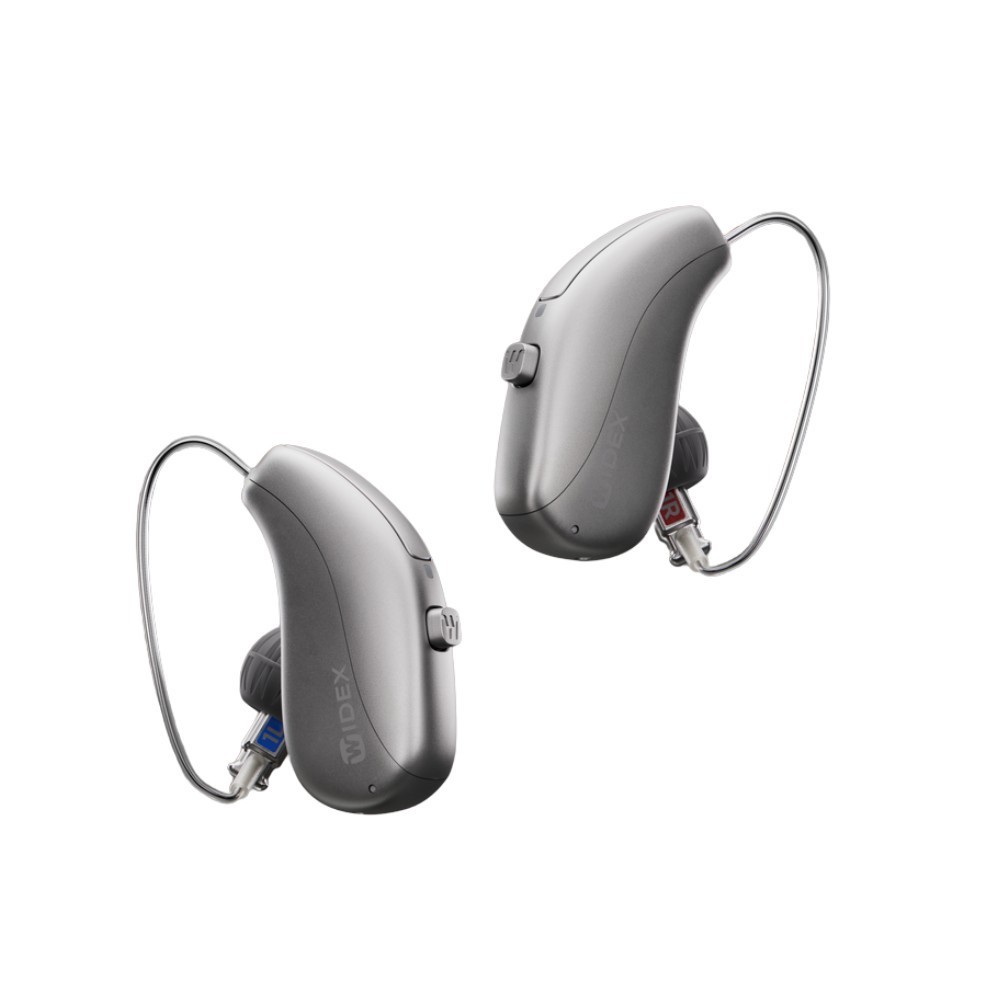
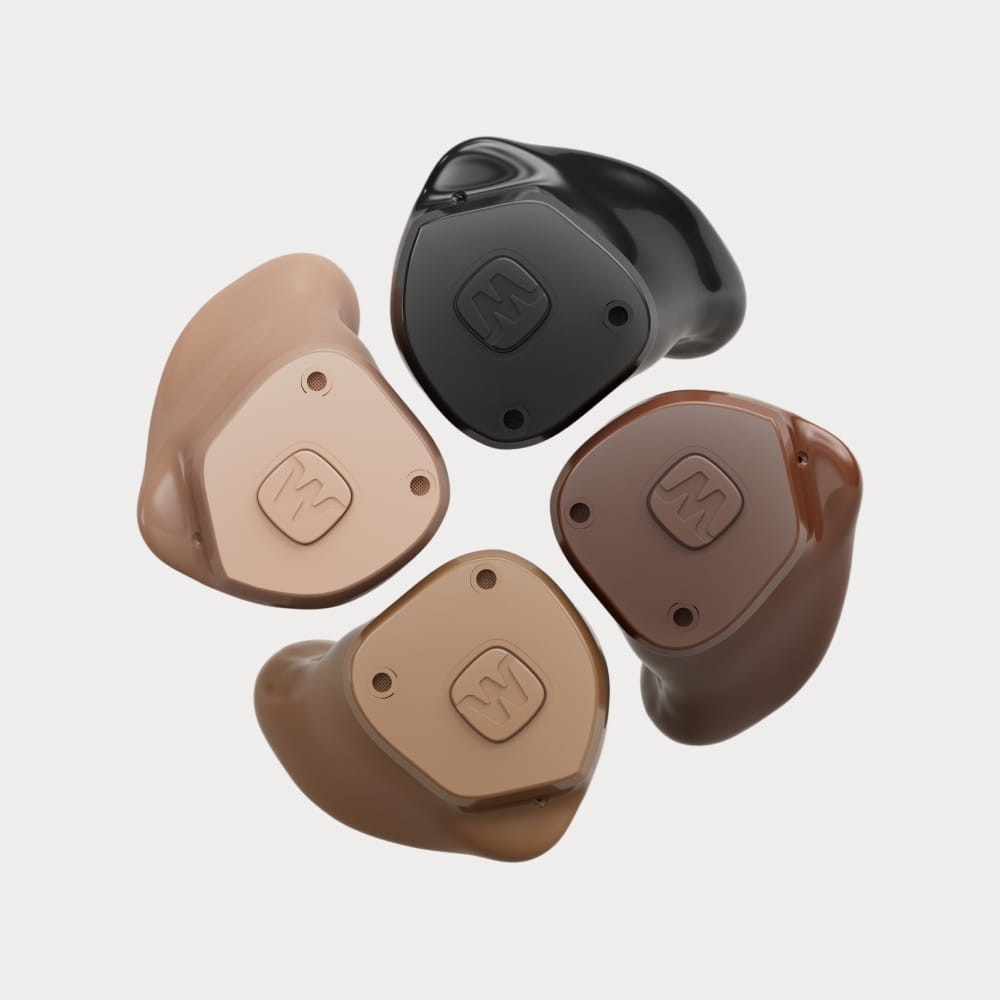
Fitting Styles: RIC, BTE, ITE
Warranty: 5 years
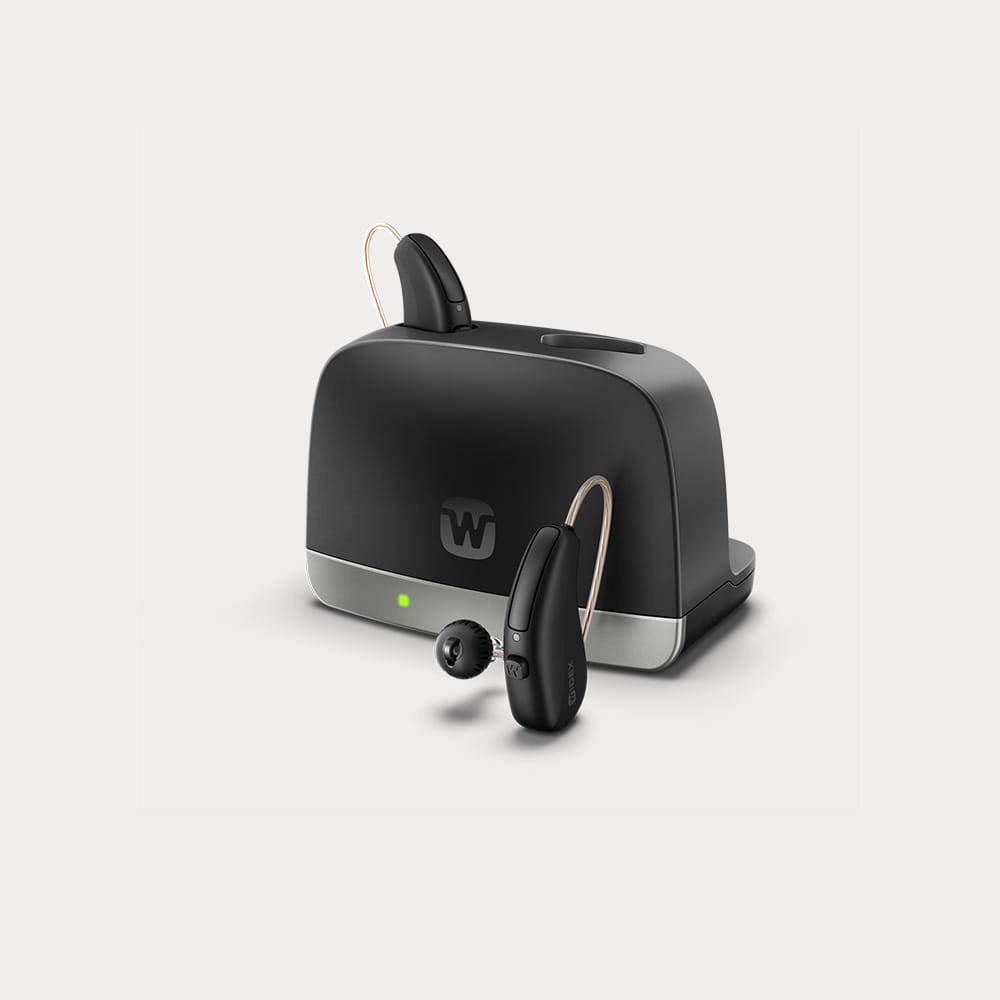
Charger: Comes with charger
Additionals: AI RIC RD model is an additional £100 per aid



What's included in our hearing aid prices?
Details & Features
Widex Allure 330 Hearing Aids Overview
Hearing Aid UK May 2026 update: Widex has added the AI RIC model, with a new AI mode to its Allure range, called Clarity Boost, and it's built to answer a fairly specific complaint: hearing aids that sound natural often struggle in noisy rooms, and hearing aids that handle noise well often sound processed. This addition is only available in technology levels 440 and 330.
Launched in March 2025, Widex launched the Allure hearing aid platform, and the first entirely new chip platform since Widex Moment launched five years earlier. The Widex Allure 330 hearing aids sit below the 440 as the advanced tier within that range, built on the same new W1 chip.
Hearing Aid UK supplies and professionally fits the Widex Allure 330 hearing aids through our HCPC-registered audiologists, at one of our 93+ clinics or with a free home visit.
Widex has built its reputation on natural, low-distortion sound rather than the most aggressive noise processing on the market, and Allure continues that approach on faster hardware. If you've found other hearing aids sound processed or artificial, or you want the newer Allure platform without paying for the full 440 feature set, this is worth understanding properly before you decide.
What's new in the Allure range: Clarity Boost with the Allure AI RIC RD 330 model
Widex has recently added Clarity Boost to the Allure platform, an on-demand AI mode built specifically for noisy situations, restaurants, family meals, and group conversation, that switches on only when needed, using a separate dedicated chip alongside the hearing aid's usual processing. Confirmed available at the 330 tier, for an additional £50 per aid on top of the standard Allure 330 price.
Sound and processing chip
Widex states the W1 chip is four times faster, with four times more memory, than the chip in the previous Moment platform, which it says allows for clearer speech processing and more precise handling of environmental sound. Allure 330 runs on this same chip platform as the 440, with a reduced feature set, covered in the comparison below.
Widex has also launched a new app alongside Allure, with a smoother onboarding process and more customisation options, using real-time AI and machine learning to help fine-tune your hearing experience.
Quick highlights:
- Suitable for mild through to profound hearing loss (available in RIC, BTE, and ITE styles)
- Widex's new W1 chip platform, its first since Moment
- Dedicated streaming compressor
- Speech Enhancer Pro and Allure PureSound sound processing
- Dynamic Feedback Controller and 11-category sound classification
- Rechargeable, with a full day's use from a single charge
- Bluetooth streaming for iPhone and Android
- Widex Allure companion app
- 5-year manufacturer warranty
- Clarity Boost available, an additional £50 per aid
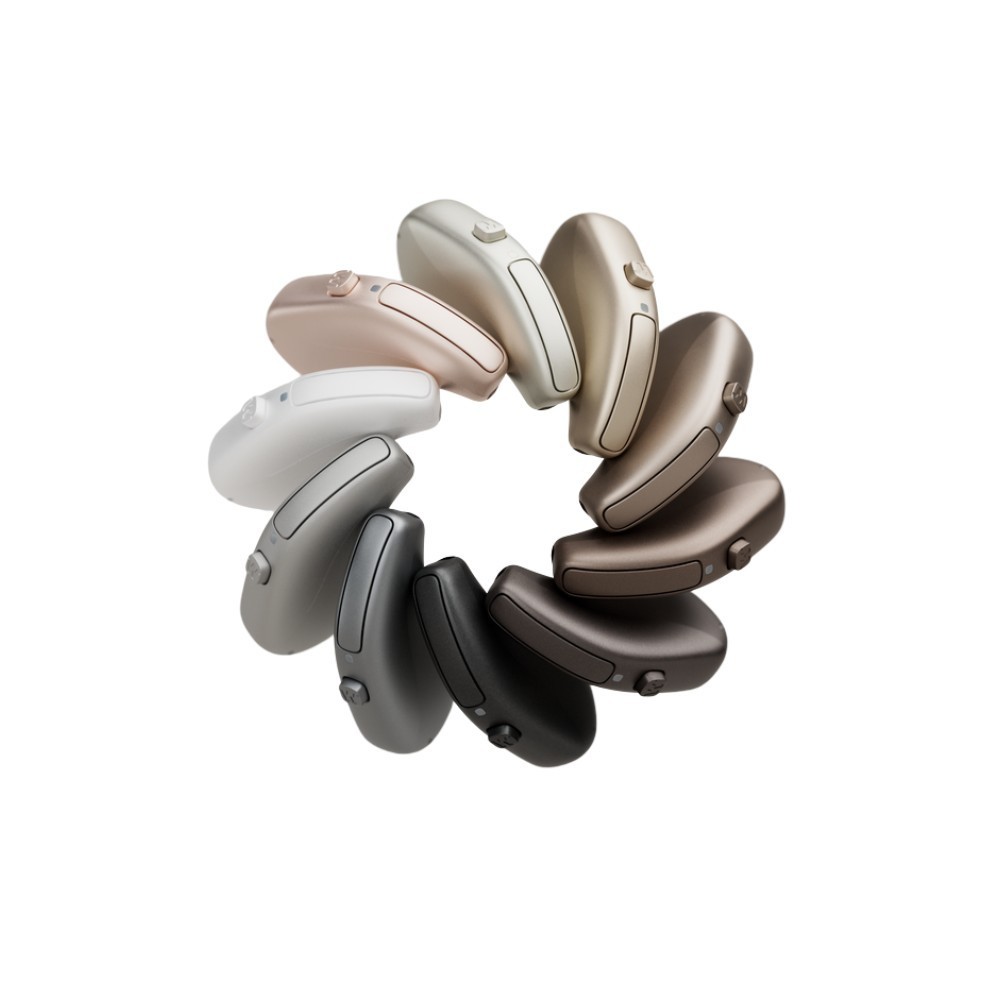
- 10 RIC colours, 9 BTE colours, 4 ITE colours
Speech Enhancer Pro and Dedicated Streaming Compressor
Speech Enhancer Pro is Widex's noise management system, designed to reduce unwanted background sound while keeping speech clear, and the Dedicated Streaming Compressor is built to prevent the volume fluctuations that can happen during music or podcast streaming.
Allure PureSound
Allure PureSound is Widex's low-latency sound processing mode, built on what the company calls ZeroDelay technology, aimed at speech that sounds natural rather than digitally processed, even in background noise.
Dynamic Feedback Controller and Enhanced Sound Clarifier
The Enhanced Sound Clarifier automatically adapts across 11 different sound classifications, and the Dynamic Feedback Controller is designed to reduce whistling by adjusting to the shape of your individual ear.
Comparing the Allure 330 with the 440
The Allure 330 offers fewer personalisation adjustment bands and background sound analysis settings, but still includes speech enhancement features. It also lacks some features for processing high-frequency sounds and adjusting for wind noise. The 330 hearing aids are well suited to those who spend time in medium-sized groups or mostly at home, with mild to severe hearing loss.
Is Allure 330 right for you?
Widex has always taken a different approach from some other manufacturers: rather than competing on the most aggressive noise processing, Allure is built around keeping speech and everyday sound feeling as natural as possible, and the 330 gives you that same underlying platform at a lower price than the 440.
Allure 330 is likely to suit you if:
- You want the newer Allure sound and chip platform without paying for the full 440 feature set
- Your listening challenges are mostly in medium-sized groups or at home, rather than consistently difficult environments
- You're interested in Clarity Boost but at a lower entry price than the 440
It may be worth discussing the 440 instead if:
- You regularly spend time in more demanding listening environments where the extra adjustment bands and wind noise handling in the 440 would make a real difference
- You rely on tinnitus support features and remote microphone accessories
Whichever way you're leaning, this is exactly the kind of comparison your audiologist is best placed to help with. A hearing test tells us your actual hearing loss pattern, and that, more than any feature list, decides what's genuinely right for you.
"The 330 is a genuinely sensible option for people who want Widex's natural sound approach without stretching to the top of the range. What we'd want anyone choosing between 330 and 440 to know is that the difference isn't about basic sound quality; it's about how much help you need in the more demanding situations, and that's exactly what a proper hearing assessment tells us."
says Paul Harrison, Audiology Expert & Founder of Hearing Aid UK
Hearing aid charger, accessories, app, and colours
Widex Allure App: Lets you manage battery life, tweak sound profiles, and even locate lost hearing aids with Bluetooth tracking.
Models and Battery Life: Both the AI model and Allure Receiver-in-Canal RIC R D model are rechargeable, offering a full day of use after a 4-hour charge, or 4 hours after just 30 minutes.
Allure vs Moment: The Allure has a faster chip and AI-powered app, while the Moment focuses more on pure sound.
Accessories: There’s a range of accessories, including the Widex RC-DEX for volume control and the TV Play 2 for better TV streaming.
RIC colours: Tech Black, Titanium Grey, Silver Grey, Dark Cherry, Chestnut Brown, Autumn Beige, Golden Brown, Honey Blonde, Rose Gold, and Pearl White.
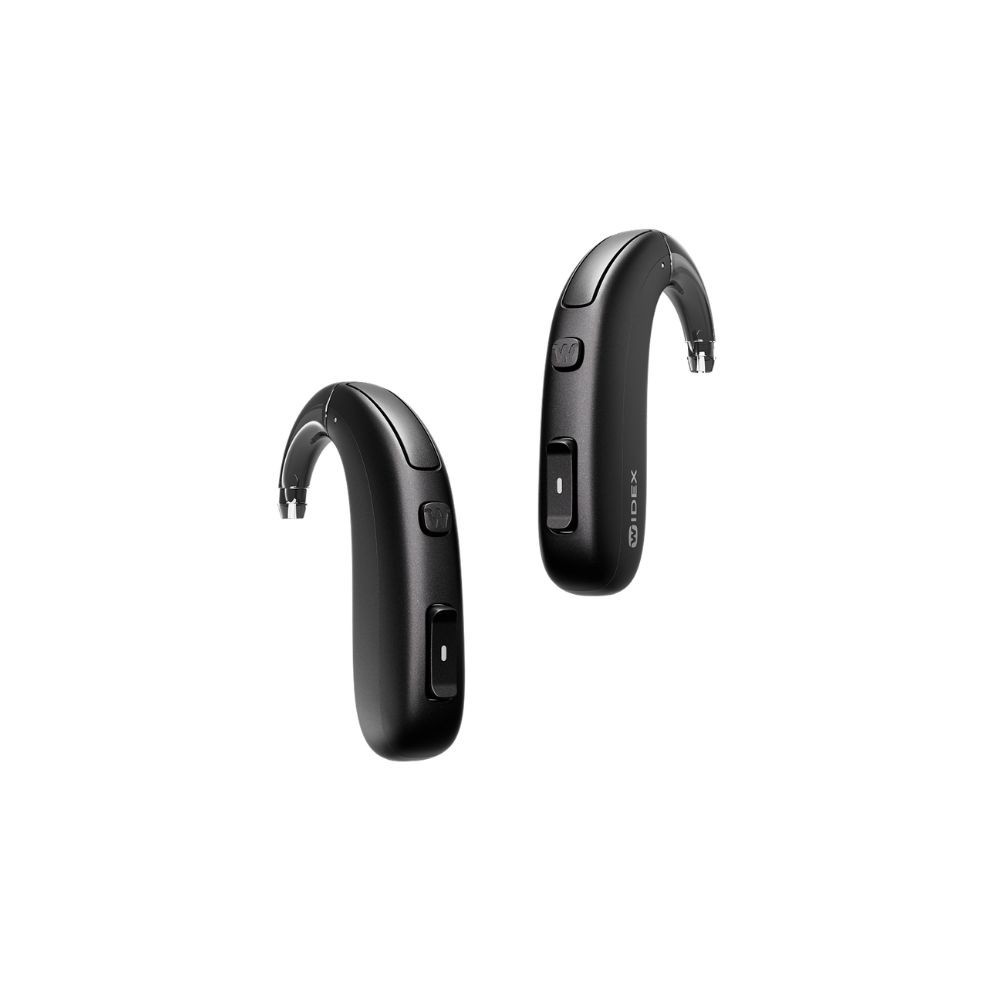
BTE colours: Autumn Beige, Dark Cherry, Golden Brown, Honey Blonde, Pearl White, Rose Gold, Silver Grey, Tech Black, and Titanium Grey.
ITE colours: Clay Brown, Dark Brown, Light Beige, and Tech Black.
Hearing aid models
Widex Allure AI RIC RD: The rechargeable RIC style with Clarity Boost added, an on-demand AI mode for noisy situations. Confirmed available at the 330 tier, for an additional £50 per aid.
Widex Allure RIC RD: A Receiver-in-Canal style built on Widex's new chip platform, designed to give a natural, comfortable sound for everyday listening.
Widex Allure BTE RD: A Behind-the-Ear style suited to a wider range of hearing loss, from mild through to profound, offering the same core Allure sound processing in a more robust build.
Widex Allure ITE RD: A custom In-the-Ear style with hands-free Bluetooth streaming and a rechargeable design, for anyone who'd rather not sit visibly behind the ear.
Need more support with Widex Allure 330 hearing aids?
Widex Allure 330 gives you the same natural, comfortable sound platform as the 440, with a reduced feature set that suits many people well, and Clarity Boost available if extra on-demand help in noise is something you're after. It's a genuinely good value option, and worth comparing honestly against the 440 if you spend a lot of time in more demanding listening environments.
The right way to find out is a proper hearing assessment with one of our HCPC-registered audiologists, who can talk you through how the 330 compares with the 440 and your other options for your specific hearing and lifestyle. Call us free on 0800 567 7621, or book a free hearing test today in one of our 93+ clinics or with a free home visit.
Please note that there will be an additional surcharge of £125 if we are pairing a single hearing aid with an existing aid bought from another company, where we are taking over the aftercare responsibilities and looking after both hearing aids.
Other hearing aid performance levels in the range:
►Widex Allure 440 hearing aids
►Widex Allure 220 hearing aids
►Widex Allure 110 hearing aids
Frequently asked questions about Allure 330
What's the difference between Allure 330 and Allure 440? 330 has fewer personalisation adjustment bands and less handling of high-frequency and wind noise than the 440, but shares the same core chip platform and natural sound approach. Your audiologist can talk you through whether the extra features in the 440 matter for your specific hearing and lifestyle.
Does Allure 330 support Clarity Boost? Yes, confirmed. Clarity Boost is available at the 330 tier for an additional £50 per aid.
How is Allure different from the previous Widex Moment range? Allure runs on a new chip platform, Widex's first since Moment launched five years earlier, which Widex states is significantly faster with more processing memory.
Is Allure 330 good enough for noisy environments, or should I get the 440? It depends on how demanding those environments typically are. 330 handles medium-sized groups and everyday noise well; if you're regularly in genuinely difficult listening situations, the extra features in the 440 may be worth the difference. It's worth discussing your specific situations with your audiologist.
Can I try Allure 330 before deciding? Yes. Book a free hearing test, and your audiologist can talk you through a demonstration and help you understand whether 330 or 440 is the right fit, with no obligation to buy anything.
Kimberley Bradshaw is Head of Online Medical Content at Hearing Aid UK, with six years of experience writing about hearing healthcare for UK and US health and wellness publications. Her focus has always been the same: making complex topics feel clear, human, and easy to understand.
✔️ Head of Online Medical Content, Hearing Aid UK
✔️ Medical Content Writer — UK & US publications
✔️ 6 years experience writing in the audiology space
✔️ Member of Tinnitus UK
Widex Allure 330 Hearing Aids Information
Click on the buttons below to discover more
Fitting Styles: RIC, BTE, ITE
Warranty: 5 years
Charger: Comes with charger
Additionals: AI RIC RD model is an additional £100 per aid
Widex Allure Full Range Fitting Styles: RIC, BTE, ITE
Warranty: 5 years
Charger: Comes with charger
Additionals: AI RIC RD model is an additional £100 per aid
Widex Allure Full Range Fitting Styles: RIC, BTE, ITE
Warranty: 5 years
Charger: Comes with charger
Fitting Styles: RIC, BTE, ITE
Warranty: 5 years
Charger: Comes with charger
Watch the Widex Allure 330 hearing aid video below
Have any questions?
Here, at Hearing Aid UK, we offer a wide range of hearing aids available on the market - keeping up to date with the best and latest hearing aid technology.
We can support your hearing healthcare in clinic or in the comfort of your own home and with nationwide coverage, we will have an audiologist near you.
Whatever your hearing loss level, budget, or style our audiologists can help you find the perfect hearing solution for you.
Call us free for support and advice on 0800 567 7621

Our specialist service includes:
Do not spend hundreds of pounds without getting a second opinion from us.
Please call us on 0800 567 7621
 Not only are the prices great, but the service is fantastic! Many thanks to your team.
Other pages you might like...
What's included in our hearing aid prices?
FAQs
In general, any audiologist will always recommend to you the hearing aid model that best suits your needs. Here is a useful checklist to make sure that is the case.
- Audiologist's level of knowledge: The audiologist you have seen will hopefully have a wide knowledge of all available hearing aids; however, some will only be familiar with a small number of brands and, therefore, may not really be in a position to know which model is the best for you. It is OK to challenge their recommendation and ask them to justify why this particular brand is the one for you.
- Do research: Read about the hearing aid that was recommended. Does it seem like it will suit your lifestyle? Does it have more or fewer features than you need?
- Be aware of sales targets: Many high street retailers have specific tie-ins to a particular manufacturer/brand. The hearing aid they have suggested may still be the correct one for you, but do your research so that you know why they might have recommended it. You can read our best hearing aids of this year here
If you have significant hearing loss in both ears, you should be wearing two hearing aids. Here are the audiological reasons why:
Localisation: The brain decodes information from both ears and compares and contrasts them. By analysing the minuscule time delays as well as the difference in the loudness of each sound reaching the ears, the person is able to accurately locate a sound source.
Simply put, if you have better hearing on one side than the other, you can't accurately tell what direction sounds are coming from.
Less amplification is required: A phenomenon known as “binaural summation” means that the hearing aids can be set at a lower and more natural volume setting than if you wore only one hearing aid.
Head shadow effect: High frequencies, the part of your hearing that gives clarity and meaning to speech sounds, cannot bend around your head. Only low frequencies can. Therefore, if someone is talking on your unaided side, you are likely to hear that they are speaking, but be unable to tell what they have said.
Noise reduction: The brain has its own built-in noise reduction, which is only really effective when it is receiving information from both ears. If only one ear is aided, even with the best hearing aid in the world, it will be difficult for you to hear in background noise as your brain is trying to retain all of the sounds (including background noise) rather than filtering them out.
Sound quality: We are designed to hear in stereo. Only hearing from one side sounds a lot less natural to us.
Fancy some further reading on this topic? You can read about why two hearing aids are better than one in our article, hearing aids for Both Ears, here
For most people, the main benefit of a rechargeable hearing aid is simple convenience. We are used to plugging in our phones and other devices overnight for them to charge up. Here are some other pros and cons:
For anybody with poor dexterity or issues with their fingers, having a rechargeable aid makes a huge difference, as normal hearing aid batteries are quite small and some people find them fiddly to change.
One downside is that if you forget to charge your hearing aid, then it is a problem that can't be instantly fixed. For most, a 30-minute charge will get you at least two or three hours of hearing, but if you are the type of person who is likely to forget to plug them in regularly, then you're probably better off with standard batteries.
Rechargeable aids are also a little bit bigger and are only available in Behind-the-Ear models.
Finally, just like with a mobile phone, the amount of charge you get on day one is not going to be the same as you get a few years down the line. Be sure to ask what the policy is with the manufacturer's warranty when it comes to replacing the battery.
For most people, the answer is yes. But it's never that simple.
The majority of hearing problems affect the high frequencies a lot more than the low ones. Therefore, open fitting hearing aids sound a lot more natural and ones that block your ears up can make your own voice sound like you are talking with your head in a bucket. Therefore, in-ear aids tend to be less natural.
However, the true answer is we can't tell until we have had a look in your ears to assess the size of your ear canal, and until we have tested your hearing to see which frequencies are being affected.
People with wider ear canals tend to have more flexibility, also there are open fitting modular CIC hearing aids now that do not block your ears.
There is also the age-old rule to consider, that a hearing aid will not help you if it's sat in the drawer gathering dust. If the only hearing aid you would be happy wearing is one that people can't see, then that's what you should get.
Most people can adapt to any type of hearing aid, as long as they know what to expect. Have an honest conversation with your audiologist as to what your needs are.
Generally speaking, six or more. Unless it's none at all. The number of channels a hearing aid has is often a simplistic way an audiologist will use to explain why one hearing aid is better than another, but channels are complex, and it is really not that straightforward. Here are some reasons why:
Hearing aids amplify sounds of different frequencies by different amounts. Most people have lost more high frequencies than low, and therefore need more amplification in the high frequencies. The range of sounds you hear is split into frequency bands or channels, and the hearing aids are set to provide the right amount of hearing at each frequency level.
Less than six channels, and this cannot be done with much accuracy, so six is the magic number. However, a six-channel aid is typically very basic with few other features and is suitable only for hearing a single speaker in a quiet room. The number of channels is not what you should be looking at; it's more the rest of the technology that comes with them.
As a final note, different manufacturers have different approaches. One method is not necessarily better than any other. For example, some manufacturers have as many as 64 channels in their top aids. Most tend to have between 17 and 20. One manufacturer has no channels at all.
Manufacturer's warranties typically last between 2-5 years, depending on the brand and model, and cover defects in materials and workmanship. This includes repairs for component failures, electronic malfunctions, and manufacturing defects, but excludes damage from misuse, accidents, or normal wear. Most manufacturers also include loss and damage insurance for the first year.
We handle all warranty claims on your behalf, liaising with manufacturers and ensuring you get replacement devices quickly when needed. This comprehensive warranty coverage, combined with our lifetime aftercare, gives you complete peace of mind. Find out more about our warranty cover here
Our hearing tests are completely free, whether at our clinics or in your home. Unlike other providers who charge £30-£100 for home visits, we believe hearing healthcare should be accessible without financial barriers. Our comprehensive assessments include examination by an HCPC-registered audiologist, audiogram results, and personalised recommendations.
All testing, future adjustments, and ongoing support are included at no extra cost. While NHS tests are also free, typical 6-week waiting periods often lead people to seek immediate private testing. We provide prompt, professional assessments that fit your schedule and budget.
Yes, we offer completely free home visits throughout the UK, and this service is included in our prices with no additional charges. Home visits are particularly valuable for people with mobility issues, busy schedules, or those who simply prefer the comfort and convenience of their own environment.
Our audiologists can conduct full hearing tests, fit hearing aids, and provide ongoing support in your home. This service sets us apart from many providers who either don't offer home visits or charge extra for them.
We can offer prices up to 40% lower than high street retailers because of our business model. As a network of 200+ independent audiologists, we don't have the massive overheads of large retail chains - no expensive high street premises, no sales targets pushing audiologists to sell the most expensive options, and no costly marketing campaigns.
However, we maintain the same buying power as the big chains because we purchase on behalf of our entire nationwide network. This means you get access to the same premium hearing aids with professional service, but at genuinely competitive prices.
We offer a comprehensive 60-day money-back guarantee, which gives you twice the industry standard time to properly assess whether your hearing aids are right for you. This extended period recognises that adjusting to hearing aids takes time, and your brain needs several weeks to adapt to the amplified sounds.
Unlike many providers who offer just 30 days, we believe 60 days gives you the confidence to test your hearing aids in all the situations that matter to you - from quiet conversations at home to busy restaurants and outdoor activities.
Other Models
Widex Allure 440 | Allure AI RIC RD 440 / RIC RD / BTE RD / ITE RD
Widex Allure 330 | Allure AI RIC RD 330 / RIC RD / BTE RD / ITE RD
Ask the Experts

Get free independent impartial advice from the experts you can trust. We offer nationwide coverage and huge savings on all our hearing aids.
6 Morton Lane
Walkwood
Redditch
Worcestershire
B97 5QA
Latest Launch
When we refer to a product as 'Latest Launch', we mean it is the latest to be released on the market.
New
When we refer to a product as 'New', we mean that the product is the newest hearing aid model on the market.
When we refer to a product as 'Superseded', we mean that there is a newer range available which replaces and improves on this product.
Older Model
When we refer to a product as an 'Older Model', we mean that it is has been superseded by at least two more recent hearing aid ranges.