



Unitron Smile Insera 9 Hearing Aids


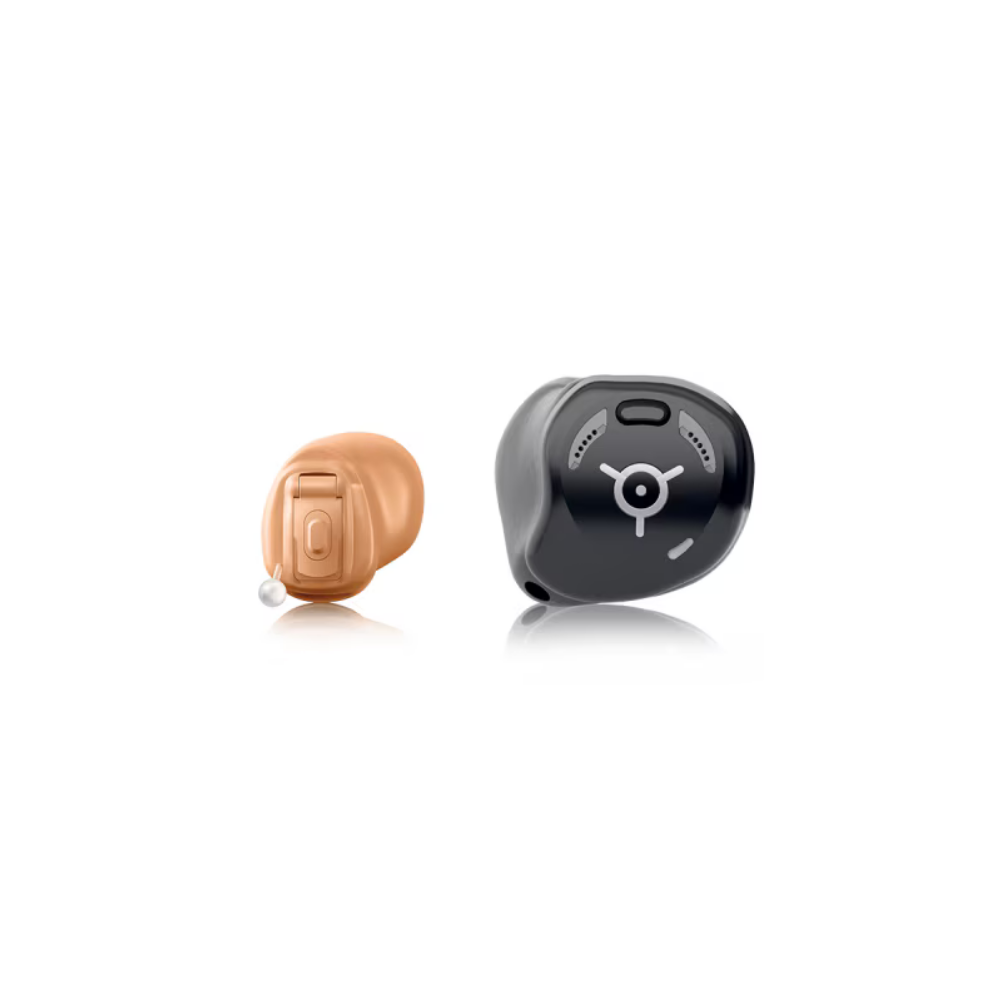
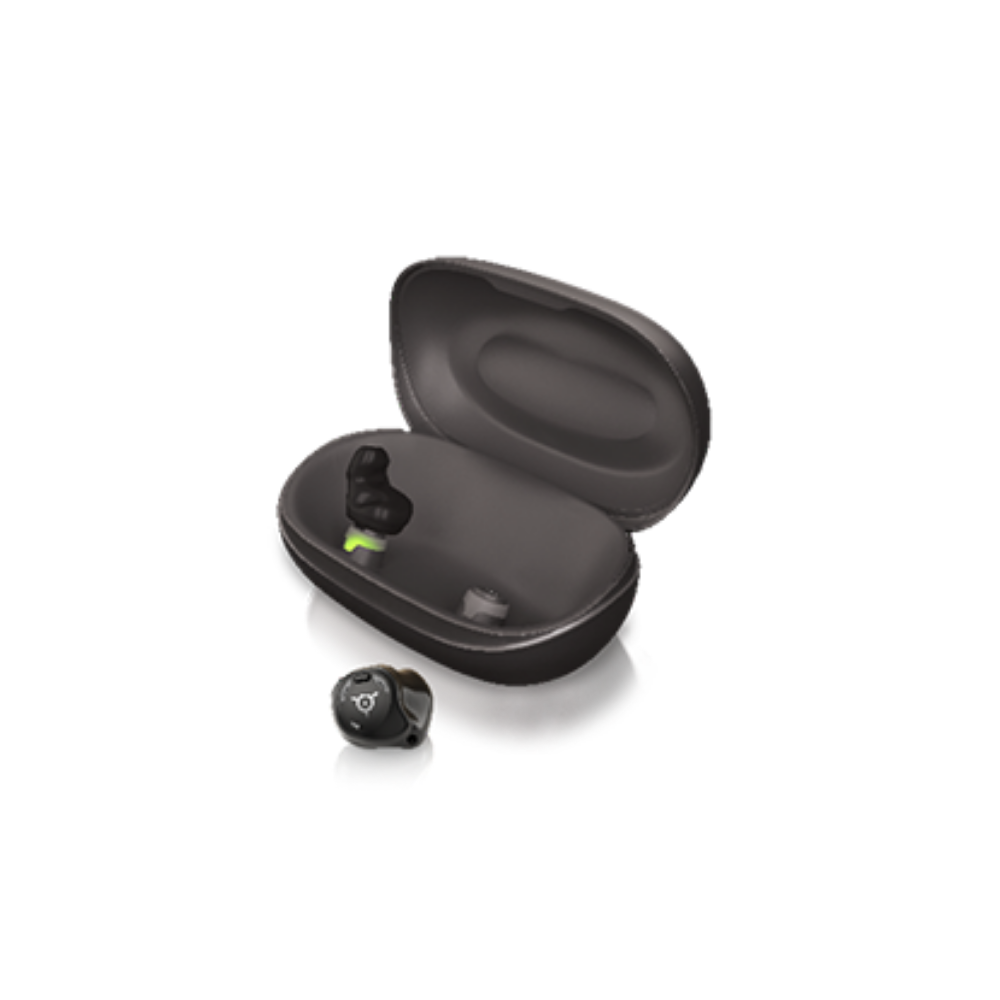

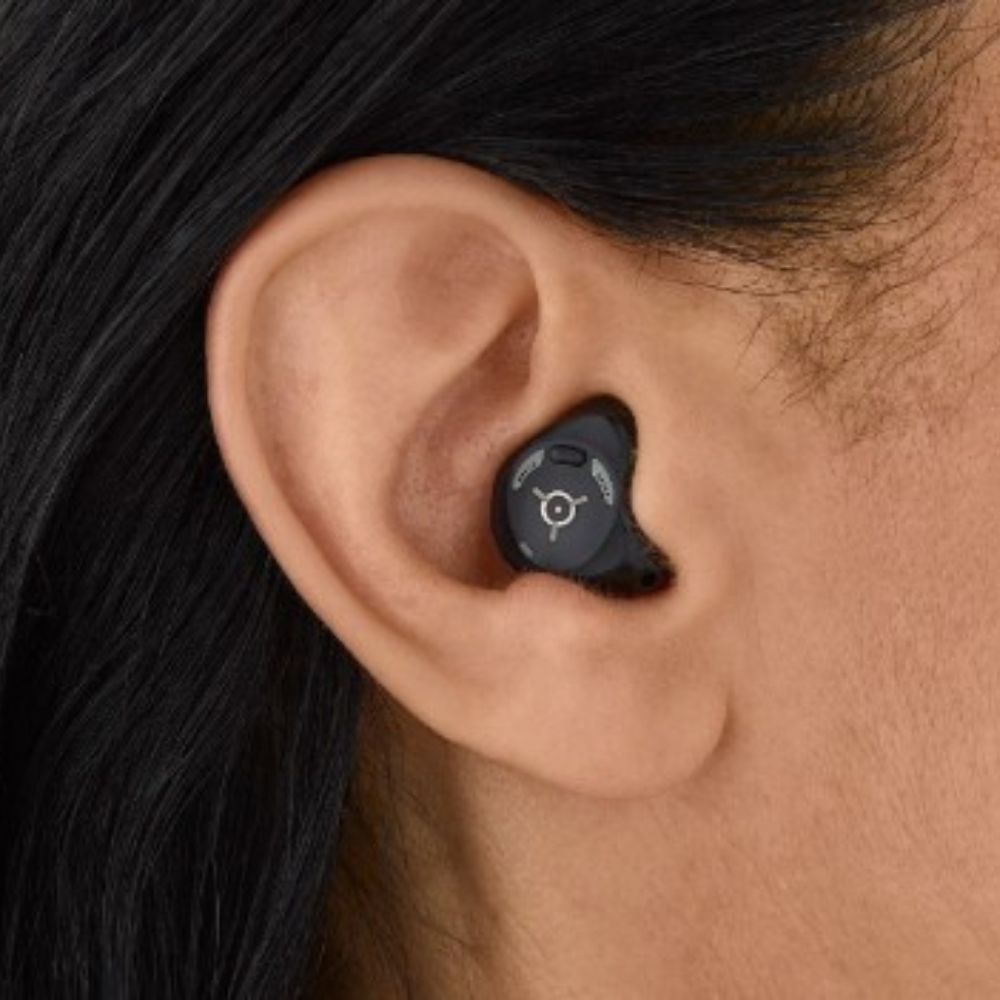
Fitting Styles: ITE, CIC
Warranty: 5 years
Charger: Comes with standard charger



What's included in our hearing aid prices?
Details & Features
Unitron Smile Insera 9 Hearing Aids Overview
For years, rechargeable hearing aids have only been available in Behind-Ear styles. The Unitron Smile Insera™ 9 hearing aids are one of the few that change all that. This model is Unitron's first custom, rechargeable In-the-Ear (ITE) hearing aid, meaning you can now have an In-Ear fit with all-day rechargeable power, no battery fiddling, and the full feature set of Unitron's most advanced platform.
Launched in January 2026, the Insera offers two models. The Insera S-R 9 is the rechargeable ITE, designed to look closer to a modern earbud than a traditional hearing aid. The Insera S 10 NW O is the smaller, Completely-in-Canal (CIC) option, which is non-wireless but extremely discreet. Both are custom-moulded to your ear and fitted by a qualified, HCPC-registered audiologist.
Insera S-R 9 hearing aids: The custom rechargeable option
The Insera S-R 9 is built on Unitron's Smile platform and brings the same rechargeable technology found in the Moxi into a custom in-ear shell. EarMatch™ Advantage shapes the aid to your specific ear canal, which means the fit feels considered rather than generic.
It supports mild to severe hearing loss, connects to the Remote Plus™ app, and works with Unitron's range of wireless accessories for a more personalised listening experience day to day.
Quick Insera S-R9 highlights
- Advanced sound processing that enhances speech clarity while reducing unwanted background noise
- Universal Bluetooth connectivity for seamless compatibility with Bluetooth-enabled devices
- A precise, comfortable fit from day one with EarMatch Advantage
- Effortless, reliable recharging thanks to intuitive snap-and-charge technology
- A streamlined pairing process for fast, simple setup and onboarding
- Lithium-ion rechargeable battery
- Compatible with the Remote Plus app and Unitron accessories
- Available in four colours: Beige, tan, cocoa, and brown
- IP68-rated durability
- HyperFocus with Dynamic Noise Reduction for clearer speech in noise
- AutoFocus 360 to focus and know the voices coming from all directions
Why are custom rechargeables worth considering?
Custom rechargeable in-ear hearing aids are still genuinely rare. Most rechargeable technology has, until very recently, been confined to behind-the-ear styles, which means anyone wanting a discreet in-ear fit has had to accept the inconvenience of disposable batteries.
The Insera S-R 9 changes that, and it does so without compromising on sound processing capability. For anyone who has been holding off on in-ear aids for precisely that reason, the timing of this product is worth paying attention to.
Insera S-R 9's main compatible Unitron accessories
Remote Control: Make simple, discreet adjustments whenever you need them with this accessory. Easily fine-tune volume or settings during meetings or a quiet film night without drawing attention.
PartnerMic: If you're often asking people to repeat themselves in noisy places, the PartnerMic clips to the person you're talking to and sends their voice directly to your hearing aids. Much less exhausting than straining to hear across a table.
TV Connector: Stream sound from your television directly to your hearing aids for clearer, immersive audio.
The App: Personalise your listening experience on the go with the Remote Plus app. Adjust volume, balance, and tone, including bass, mids, and treble, all in real time to suit your preferences.
Insera S9 10 NW O hearing aids: The discreet, no-fuss option
The Insera S 10 NW O is Unitron's smallest in-ear aid in the Smile range, a Completely-in-Canal (CIC) model that sits deep in the ear canal and is largely invisible in day-to-day wear. It runs on a size 10 traditional battery and includes a telecoil for use with hearing loops in theatres, places of worship, and public venues.
It shares the same core Integra OS technology and AI sound processing as the S-R 9, but without wireless connectivity. For anyone who values maximum discretion and doesn't need Bluetooth or streaming, this is worth serious consideration. Available in four colours: beige, tan, cocoa, and brown.
Quick Insera S9 10 NW O highlights:
- Suitable for mild to moderately severe hearing loss
- Completely-in-Canal (CIC) style, sitting deep in the ear canal for a near-invisible fit
- Unitron's smallest in-ear aid in the Smile range
- Powered by Integra OS with AI sound processing
- Includes a telecoil for compatibility with hearing loops in theatres, places of worship, and public venues
- Runs on a size 10 traditional battery
- No wireless connectivity or Bluetooth streaming
- Available in four colours: beige, tan, cocoa, and brown
Which model is right for me?
Both models share the same AI sound processing. The choice comes down to two things: batteries and Bluetooth. The S-R 9 charges overnight, connects to your smartphone, and works with accessories like the PartnerMic and TV Connector. It is the fuller-featured option.
The S 10 NW O sits deeper in the canal, is largely invisible, and includes a telecoil for hearing loops. No Bluetooth, which for some people is exactly what they want. Your audiologist will make the final call based on your hearing and lifestyle.
Main technical features of both Insera 9 models
Pinna Effect 2: Designed to replicate the natural shape of the outer ear, this technology helps improve sound localisation. Whether someone calls your name from behind while you’re out walking, you’ll be better able to instinctively identify where the sound is coming from, which enhances everyday awareness and safety.
AI-Trained Integra OS™: Integra OS identifies eight key listening environments and automatically adjusts settings to suit changing soundscapes. From a quiet conversation indoors to a bustling cafe, the system adapts seamlessly so you can focus on what matters.
Integra OS Automation System: Automatically optimises performance across a wide range of environments, including quiet, noisy, small groups, crowds, loud noise, music, quiet settings, and general background noise, all without manual input.
AutoFocus 360: Most hearing aids work best when sound is coming from directly in front of you. AutoFocus 360 is different. Anyone who has sat at a busy dinner table and found themselves constantly craning their neck to follow the conversation will understand why this matters. AutoFocus 360 picks up speech from all directions, so you can simply sit and listen.
Automatic HyperFocus™: Created for particularly challenging environments, such as busy restaurants, this feature focuses on speech when background noise is at its highest, helping you stay engaged even when everyone is talking at once.
Here are the 8 listening environments in which your hearing will be supported: Conversation in Quiet, Conversation in Noise, Quiet, Noise, Conversation in a Small Group, Music, Conversation in a Crowd, and Conversation in Loud Noise.
The 8 listening environments: what they mean in practice
- Conversation in Quiet: A one-to-one chat at home or a GP appointment
- Conversation in Noise: Talking to someone in a busy café or shop
- Conversation in a Small Group: A family dinner or a small work meeting
- Conversation in a Crowd: A busy restaurant or a crowded waiting room
- Conversation in Loud Noise: A busy high street or a sports venue
- Music: Live music, the radio, or streaming through the TV Connector
- Quiet: Reading or resting at home
- Noise: General background sound, such as traffic or an open-plan office
Who is the Unitron Smile Insera 9 suited to?
The Insera S-R 9 is a strong fit for anyone who has wanted the discretion of an in-ear aid but been put off by the inconvenience of traditional battery changes. If you find small batteries fiddly or simply prefer the simplicity of overnight charging, this removes one of the main practical barriers to in-ear wear.
It is also well-suited to people upgrading from NHS hearing aids who want something far less visible. The NHS mostly offer Behind-the-Ear aids, which are effective, but they are designed for durability and practicality rather than aesthetics. The Insera S-R 9 is custom-moulded to your ear, meaning it sits snugly and is considerably less noticeable.
If you are new to hearing aids and nervous about the process, a custom ITE aid does involve a slightly longer fitting journey than a standard RIC (Receiver-in-Canal) aid, because an ear impression is taken first to create the mould. Your audiologist will walk you through this at your free home visit or free clinic appointment. It is a straightforward process from start to finish.
Who might it not suit?
The Insera 9 suits mild to severe hearing loss. If you have profound hearing loss, your audiologist may recommend a different style with greater amplification capacity, and will tell you honestly if that is the case. For example, your audiologist may suggest a Receiver-in-Canal (RIC) or Behind-the-Ear (BTE) style with greater output capacity, and will advise on the most suitable option for your level of hearing loss.
Other performance levels in the Insera model:
Comparing the different technology levels of the Insera models
| Tech Level | 9 - Premium | 7- Advanced | 5 - Standard | 3 - Entry |
| Environmental classification |
|
|
|
|
| Sound optimisation and performance |
|
|
|
|
| Fine-tuning channels | 20 | 20 | 16 | 12 |
"What strikes me about the Insera 9 is how well the ear impression translates into the final fit. Custom-moulded aids can sometimes need more adjustment time than a standard dome-based RIC, but the EarMatch process is precise enough that most people are comfortable from the first fitting. That matters, because comfort in the first week is usually what determines whether someone actually wears their aids consistently."
Paul Harrison, Audiology Expert, Hearing Aid UK
What's included in the price with Hearing Aid UK?
When you choose the Smile Insera 9 through us, you're getting considerably more than just the hearing aids:
- Full hearing test and fitting by an HCPC-registered audiologist
- Aftercare for life, not just the warranty period
- Free home visits available across the UK (we come to you at no extra charge)
- Free clinic appointments in your area across 93+clinics
- 60-day money-back guarantee - try them risk-free
- Full manufacturer's warranty
- Truly independent advice - we're not affiliated with any manufacturer
- With over 30,000 happy customers, we are recommended by Which? when compared to the larger hearing aid provider chains
- Looking on behalf of a loved one? You're welcome to attend with them - many family members find it helpful to be there for the discussion.
Why choose us?
We're completely independent, which means there are no manufacturer agreements, no brand quotas, and no incentives influencing what our audiologists suggest. If the Insera 9 is right for you, they will say so. If something else would serve you better, they will say that instead. That is what independent advice actually means in practice.
Our audiologists are fully qualified and experienced with all the latest technology. Getting hearing aids can feel like a big step, and our audiologists understand that. They will explain what they are recommending and why, answer your questions honestly, and make sure you walk away feeling like you actually understand what happens next.
For custom-fitted hearing aids like the Insera 9, this matters more than usual. Getting the ear impression right, ensuring the mould fits comfortably, and programming the aid correctly for your specific hearing profile takes expertise and care. It is not something that can be done remotely or by post.
Key takeaways: Unitron Smile Insera 9
- Unitron's first rechargeable custom In-the-Ear hearing aid, breaking the assumption that rechargeable aids only come in behind-the-ear styles
- Two models: the S-R 9 (rechargeable ITE with Bluetooth) and the S 10 NW O (non-wireless CIC for maximum discretion)
- Custom-moulded to your ear canal through an impression taken by your audiologist, ensuring a more precise and comfortable fit than a standard dome-based aid
- AI-trained Integra OS automatically adapts across 8 listening environments without manual adjustment
- HyperFocus activates in the most demanding listening conditions, such as busy restaurants, to keep speech clear when background noise is highest
- AutoFocus 360 prioritises speech from all directions, so you can follow conversations at a table without constantly turning your head
- Suits mild to severe hearing loss; your audiologist will advise if a different style would serve you better
- All prices include your hearing test, fitting, and aftercare for life with no time limit
Conclusion
The Unitron Smile Insera 9 does something no rechargeable in-ear hearing aid has done before: it puts the convenience of overnight charging inside a custom-fitted, discreet in-ear design. For anyone who has held off on in-ear aids because of the fiddly battery changes, or who has been reluctant to upgrade from NHS aids because they couldn't find something truly discreet, this is worth a conversation.
The S-R 9 and S 10 NW O take different approaches to that same goal of discretion, and which one suits you depends on whether you value Bluetooth connectivity and accessories alongside it.
Want to know more about Unitron Smile Insera 9 hearing aids?
A free hearing test takes around an hour, it's straightforward, and you won't be pushed towards any particular product. Not sure what to expect? When you get in touch, you'll speak with someone who can answer your questions and arrange a free hearing test if you decide you'd like one. The test is free, the advice is impartial, and there is no obligation to buy anything.
If the Insera 9 suits your hearing and lifestyle, they'll say so. If something else would serve you better, they'll say that instead. Book a free home visit or free clinic appointment here, or call us free on 0800 567 7621.
Please note that there will be an additional surcharge of £125 if we are pairing a single hearing aid with an existing aid bought from another company, where we are taking over the aftercare responsibilities and looking after both hearing aids.
FAQs for Unitron Smile Insera 9
What's the difference between the two models, and how do I know which is right for me?
The S-R 9 is rechargeable with Bluetooth and app control. The S 10 NW O is smaller, battery-powered, and has no wireless connectivity. Both share the same AI sound processing at their core. Your audiologist will talk through your listening habits at your free appointment and help you decide which suits you better.
How does the ear impression work, and is it uncomfortable?
A soft material is gently placed in the ear canal, left briefly to set, and removed. It only takes a few minutes. Your HCPC-registered audiologist handles this at your free home visit or local clinic appointment.
The S 10 NW O has no Bluetooth. Is that a problem?
Only if you actually want Bluetooth. The S 10 NW O still has full AI sound processing, automatic environment detection, and a telecoil for hearing loops in theatres and public venues. For anyone who finds technology fiddly or just wants an aid that quietly gets on with the job, no wireless connectivity is a feature, not a gap.
How easy is battery management on each model?
The S-R 9 charges overnight via a snap-and-charge system, so there are no batteries to handle at all. The S 10 NW O uses a size 10 disposable battery, one of the smaller sizes available. If dexterity is a concern, mention it to your audiologist. They'll give you an honest steer on which model is more practical for your day-to-day.
What support is included after I'm fitted?
All Insera 9 aids purchased through Hearing Aid UK include aftercare for life, covering adjustments and follow-up appointments with no time limit and no extra charge. There's also a 60-day money-back guarantee if the aids turn out not to be the right fit.
Useful Unitron hearing aid resources:
Kimberley Bradshaw is Head of Online Medical Content at Hearing Aid UK, with six years of experience writing about hearing healthcare for UK and US health and wellness publications. Her focus has always been the same: making complex topics feel clear, human, and easy to understand.
✔️ Head of Online Medical Content, Hearing Aid UK
✔️ Medical Content Writer — UK & US publications
✔️ 6 years experience writing in the audiology space
✔️ Member of Tinnitus UK
Unitron Smile Insera Hearing Aids Information
Click on the buttons to find out more
Fitting Styles: ITE, CIC
Warranty: 5 years
Charger: Comes with standard charger
Fitting Styles: ITE, CIC
Warranty: 5 years
Charger: Comes with standard charger
Fitting Styles: ITE, CIC
Warranty: 5 years
Charger: Comes with standard charger
Fitting Styles: ITE, CIC
Warranty: 5 years
Charger: Comes with standard charger
Watch the Unitron Smile hearing aid platform video below
Have any questions?
Here, at Hearing Aid UK, we offer a wide range of hearing aids available on the market - keeping up to date with the best and latest hearing aid technology.
We can support your hearing healthcare in clinic or in the comfort of your own home and with nationwide coverage, we will have an audiologist near you.
Whatever your hearing loss level, budget, or style our audiologists can help you find the perfect hearing solution for you.
Call us free for support and advice on 0800 567 7621

Our specialist service includes:
Do not spend hundreds of pounds without getting a second opinion from us.
Please call us on 0800 567 7621
 Not only are the prices great, but the service is fantastic! Many thanks to your team.
What's included in our hearing aid prices?
FAQs
In general, any audiologist will always recommend to you the hearing aid model that best suits your needs. Here is a useful checklist to make sure that is the case.
- Audiologist's level of knowledge: The audiologist you have seen will hopefully have a wide knowledge of all available hearing aids; however, some will only be familiar with a small number of brands and, therefore, may not really be in a position to know which model is the best for you. It is OK to challenge their recommendation and ask them to justify why this particular brand is the one for you.
- Do research: Read about the hearing aid that was recommended. Does it seem like it will suit your lifestyle? Does it have more or fewer features than you need?
- Be aware of sales targets: Many high street retailers have specific tie-ins to a particular manufacturer/brand. The hearing aid they have suggested may still be the correct one for you, but do your research so that you know why they might have recommended it. You can read our best hearing aids of this year here
If you have significant hearing loss in both ears, you should be wearing two hearing aids. Here are the audiological reasons why:
Localisation: The brain decodes information from both ears and compares and contrasts them. By analysing the minuscule time delays as well as the difference in the loudness of each sound reaching the ears, the person is able to accurately locate a sound source.
Simply put, if you have better hearing on one side than the other, you can't accurately tell what direction sounds are coming from.
Less amplification is required: A phenomenon known as “binaural summation” means that the hearing aids can be set at a lower and more natural volume setting than if you wore only one hearing aid.
Head shadow effect: High frequencies, the part of your hearing that gives clarity and meaning to speech sounds, cannot bend around your head. Only low frequencies can. Therefore, if someone is talking on your unaided side, you are likely to hear that they are speaking, but be unable to tell what they have said.
Noise reduction: The brain has its own built-in noise reduction, which is only really effective when it is receiving information from both ears. If only one ear is aided, even with the best hearing aid in the world, it will be difficult for you to hear in background noise as your brain is trying to retain all of the sounds (including background noise) rather than filtering them out.
Sound quality: We are designed to hear in stereo. Only hearing from one side sounds a lot less natural to us.
Fancy some further reading on this topic? You can read about why two hearing aids are better than one in our article, hearing aids for Both Ears, here
For most people, the main benefit of a rechargeable hearing aid is simple convenience. We are used to plugging in our phones and other devices overnight for them to charge up. Here are some other pros and cons:
For anybody with poor dexterity or issues with their fingers, having a rechargeable aid makes a huge difference, as normal hearing aid batteries are quite small and some people find them fiddly to change.
One downside is that if you forget to charge your hearing aid, then it is a problem that can't be instantly fixed. For most, a 30-minute charge will get you at least two or three hours of hearing, but if you are the type of person who is likely to forget to plug them in regularly, then you're probably better off with standard batteries.
Rechargeable aids are also a little bit bigger and are only available in Behind-the-Ear models.
Finally, just like with a mobile phone, the amount of charge you get on day one is not going to be the same as you get a few years down the line. Be sure to ask what the policy is with the manufacturer's warranty when it comes to replacing the battery.
For most people, the answer is yes. But it's never that simple.
The majority of hearing problems affect the high frequencies a lot more than the low ones. Therefore, open fitting hearing aids sound a lot more natural and ones that block your ears up can make your own voice sound like you are talking with your head in a bucket. Therefore, in-ear aids tend to be less natural.
However, the true answer is we can't tell until we have had a look in your ears to assess the size of your ear canal, and until we have tested your hearing to see which frequencies are being affected.
People with wider ear canals tend to have more flexibility, also there are open fitting modular CIC hearing aids now that do not block your ears.
There is also the age-old rule to consider, that a hearing aid will not help you if it's sat in the drawer gathering dust. If the only hearing aid you would be happy wearing is one that people can't see, then that's what you should get.
Most people can adapt to any type of hearing aid, as long as they know what to expect. Have an honest conversation with your audiologist as to what your needs are.
Generally speaking, six or more. Unless it's none at all. The number of channels a hearing aid has is often a simplistic way an audiologist will use to explain why one hearing aid is better than another, but channels are complex, and it is really not that straightforward. Here are some reasons why:
Hearing aids amplify sounds of different frequencies by different amounts. Most people have lost more high frequencies than low, and therefore need more amplification in the high frequencies. The range of sounds you hear is split into frequency bands or channels, and the hearing aids are set to provide the right amount of hearing at each frequency level.
Less than six channels, and this cannot be done with much accuracy, so six is the magic number. However, a six-channel aid is typically very basic with few other features and is suitable only for hearing a single speaker in a quiet room. The number of channels is not what you should be looking at; it's more the rest of the technology that comes with them.
As a final note, different manufacturers have different approaches. One method is not necessarily better than any other. For example, some manufacturers have as many as 64 channels in their top aids. Most tend to have between 17 and 20. One manufacturer has no channels at all.
Manufacturer's warranties typically last between 2-5 years, depending on the brand and model, and cover defects in materials and workmanship. This includes repairs for component failures, electronic malfunctions, and manufacturing defects, but excludes damage from misuse, accidents, or normal wear. Most manufacturers also include loss and damage insurance for the first year.
We handle all warranty claims on your behalf, liaising with manufacturers and ensuring you get replacement devices quickly when needed. This comprehensive warranty coverage, combined with our lifetime aftercare, gives you complete peace of mind. Find out more about our warranty cover here
Other Models
Ask the Experts

Get free independent impartial advice from the experts you can trust. We offer nationwide coverage and huge savings on all our hearing aids.
6 Morton Lane
Walkwood
Redditch
Worcestershire
B97 5QA
Latest Launch
When we refer to a product as 'Latest Launch', we mean it is the latest to be released on the market.
New
When we refer to a product as 'New', we mean that the product is the newest hearing aid model on the market.
When we refer to a product as 'Superseded', we mean that there is a newer range available which replaces and improves on this product.
Older Model
When we refer to a product as an 'Older Model', we mean that it is has been superseded by at least two more recent hearing aid ranges.