



Oticon Reveal 4 Hearing Aids Product Highlights

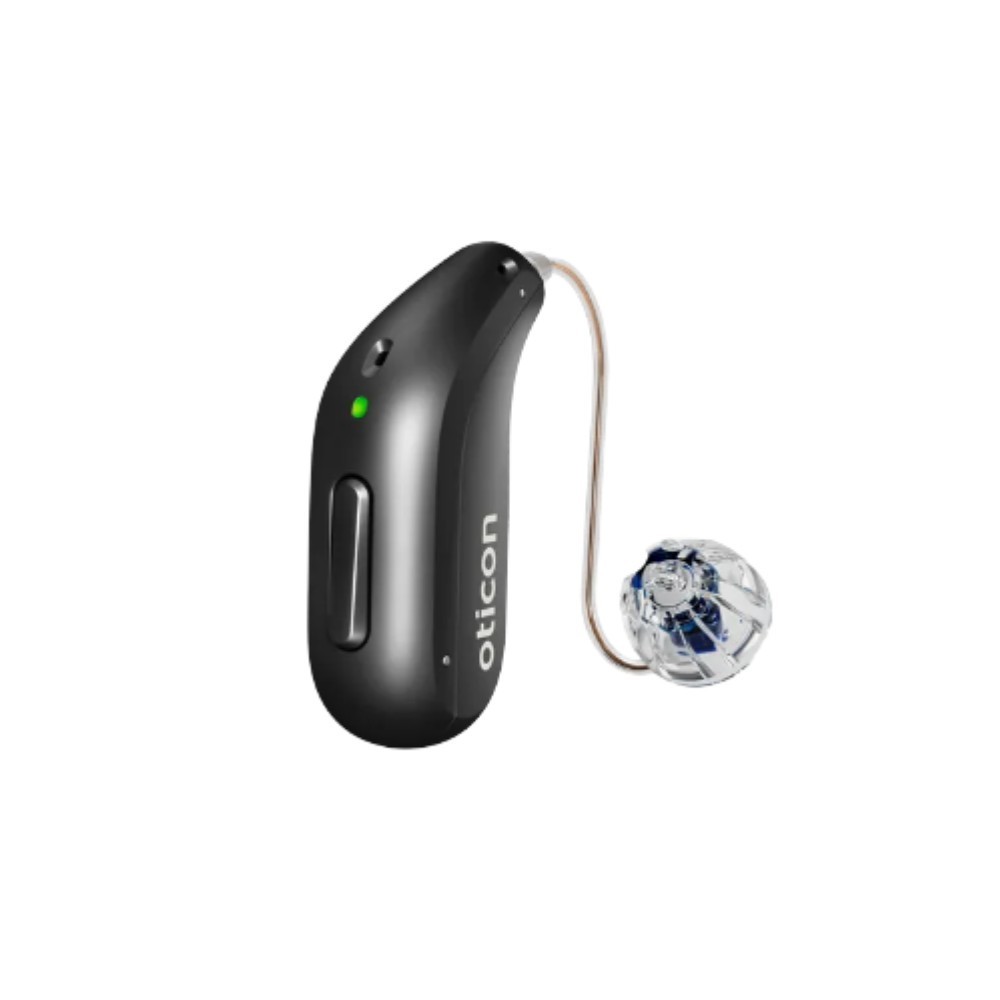

Fitting Styles: RIC
Warranty: 2 years
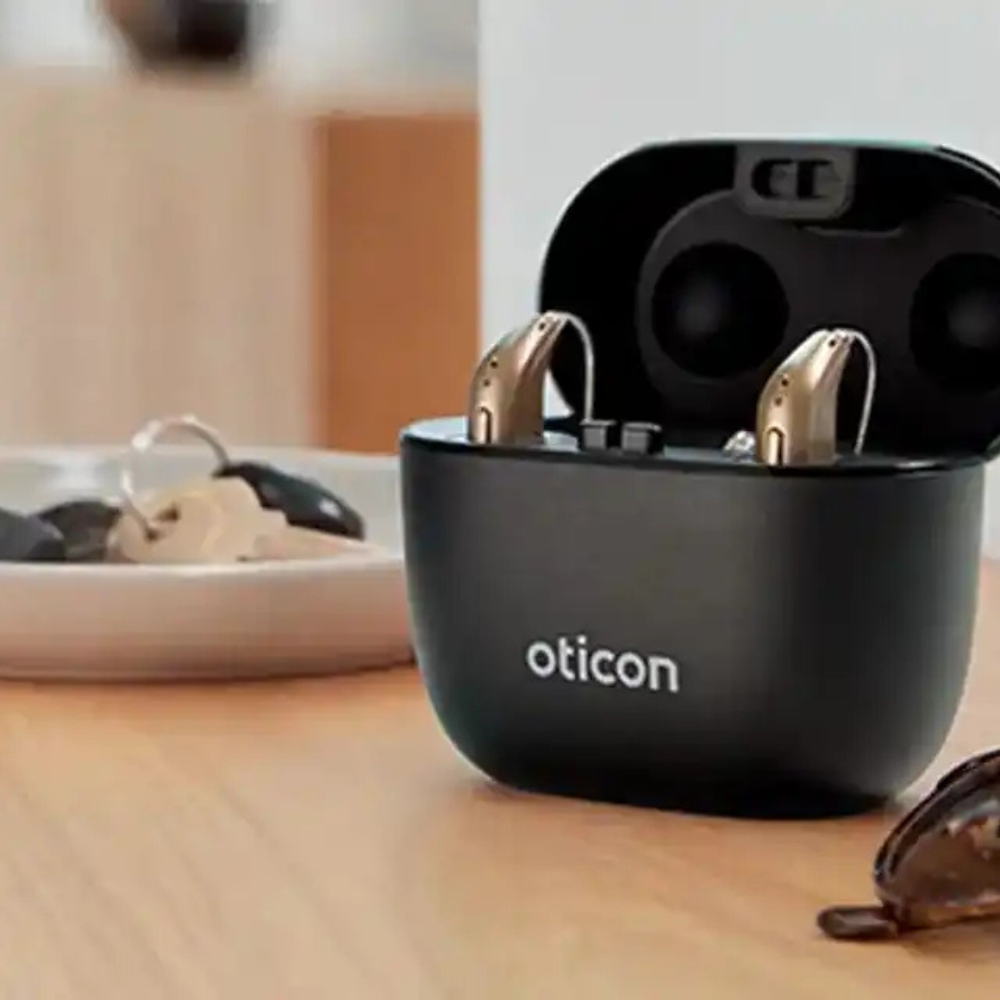
Chargers: Comes with charger



What's included in our hearing aid prices?
Details & Features
Oticon Reveal 4 Hearing Aids Overview
Launched in September 2026, the Oticon Reveal 4 hearing aids are the entry point into Oticon's newest hearing aid range, giving access to Reveal's core Dual AI processing at the most accessible level in the family.
It's built for people whose listening environments are generally calmer and more predictable, and who want reliable, straightforward hearing support without paying for capability aimed at more complex situations.
Hearing Aid UK supplies and fits the Oticon Reveal 4 across the UK, giving access to Oticon's newest Dual AI technology through a qualified, HCPC-registered audiologist.
Quick highlights of the Reveal 4:
- Dual AI processing: Speech AI and Context AI running simultaneously
- Wind and Handling Stabiliser 2.0, up to 40 dB of wind and handling noise reduction
- Reveal Optimiser feedback management for stable, precise gain
- Auracast, Bluetooth LE Audio and telecoil support
- CROS compatible for single-sided deafness
- Rechargeable battery, up to a full day's use from a 1-hour charge, up to 22 hours from a full 2-hour charge
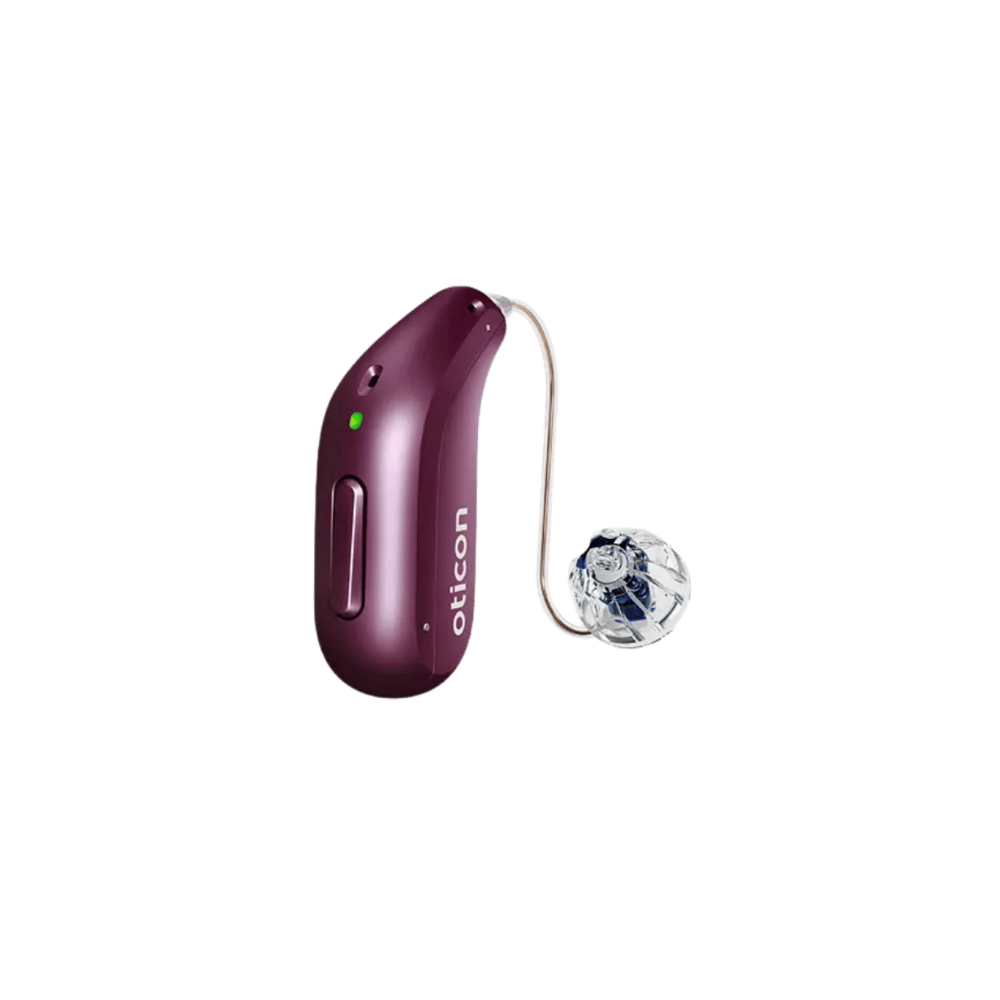
- Available in 9 colours: Chroma Beige, Silver Grey, Silver, Terracotta, Chestnut Brown, Steel Grey, Diamond Black, Honey Beige, and Deep Plum.
Core Dual AI technology, simplified
Even at the entry level, the Reveal 4 carries Oticon's Dual AI foundation, Speech AI and Context AI working together rather than one system trying to do both jobs.
What changes moving down the range is generally the breadth of configuration options and automation available, rather than the fundamental technology being switched off.
A sensible starting point
For quieter households, calmer routines, and conversation that mostly happens one-to-one rather than in large groups, the Reveal 4 is designed to provide clear, natural-sounding support without unnecessary complexity. It shares the same discreet miniRITE shell as the rest of the Reveal range, so there's no visible difference between technology levels.
Connectivity and everyday use
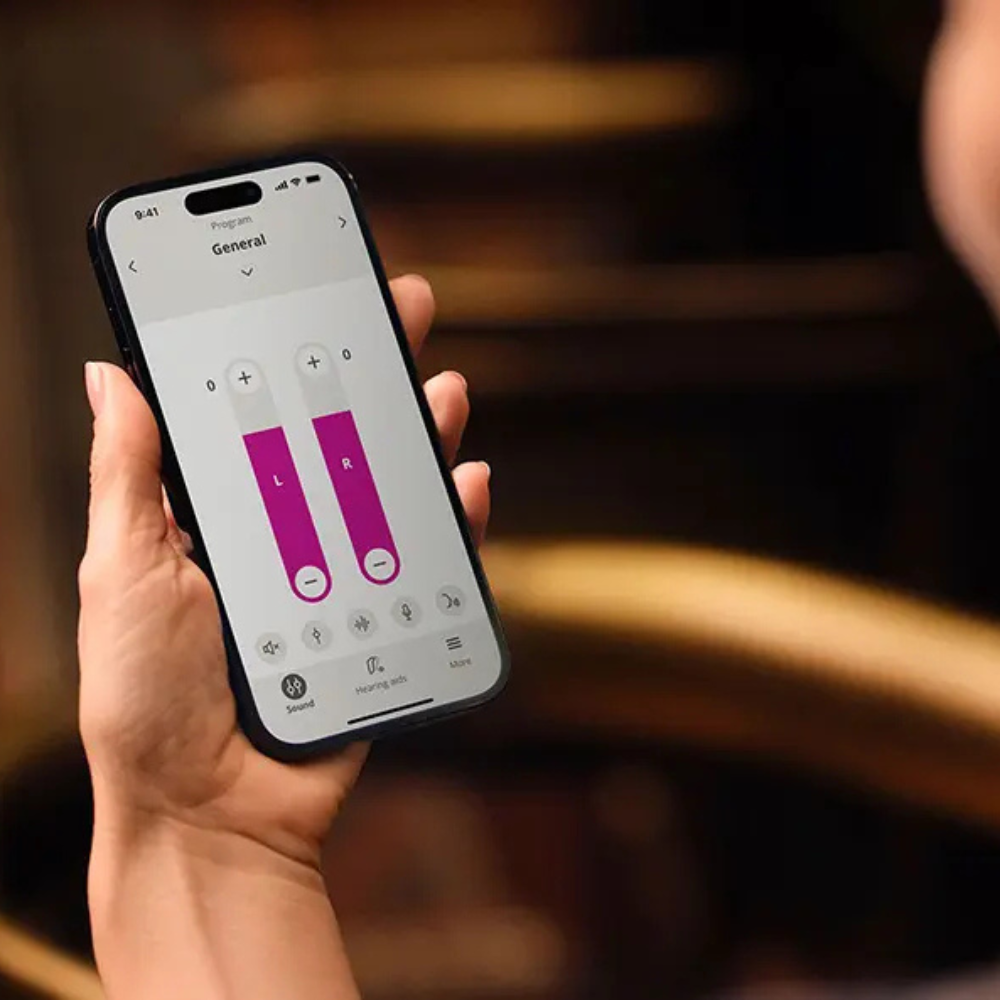
Reveal 4 supports Bluetooth LE Audio, including Auracast broadcast audio where available, alongside direct connectivity for compatible iPhone, iPad and Android devices and telecoil support for hearing loops.
A Streaming Comfort feature also automatically reduces surrounding sound during music, podcast or call streaming, so what you're listening to stays the focus.
Who should consider the Reveal 4?
If your listening life is generally calm, at home, a familiar routine, with occasional outings rather than frequent noisy environments, the Reveal 4 is worth discussing with your audiologist as a straightforward, accessible way into Oticon's newest technology.
Who might it not suit?
If you regularly find yourself in busy, unpredictable environments, restaurants, group conversations, or time outdoors in wind, it's worth discussing the Reveal 3 or a higher level with your audiologist, since you may find the more demanding situations harder going on this level.
Paul Harrison, Audiology Expert & Founder of Hearing Aid UK, says:
"I'd never assume entry-level means a lesser fitting experience. What matters is whether the level matches the person's actual listening life, and for someone with a calmer routine, the Reveal 4 can genuinely be the right call rather than a compromise."
Fitted and fine-tuned by a qualified audiologist
Hearing Aid UK supplies and professionally fits Oticon Reveal 4 hearing aids throughout the UK. You can arrange a free hearing test and consultation with an HCPC-registered audiologist at one of our 93+ clinics or through a free home visit.
Your appointment includes professional fitting and programming, fine-tuning and aftercare for life, with a 60-day money-back guarantee included.
Oticon Reveal technology comparison table
| Feature | Oticon Reveal 1 | Oticon Reveal 2 | Oticon Reveal 3 | Oticon Reveal 4 |
| Dual AI (Speech AI + Context AI) | ✅ | ✅ | ✅ | ✅ |
| Speech AI focus settings | Front, Wide, Full | Limited | Limited | Modified |
| Wind and Handling Stabiliser 2.0 | ✅ | ✅ | ✅ | ✅ |
| Reveal Optimiser | ✅ | ✅ | ✅ | ✅ |
| Auracast / Bluetooth LE Audio | ✅ | ✅ | ✅ | ✅ |
| Telecoil | ✅ | ✅ | ✅ | ✅ |
| CROS compatible | ✅ | ✅ | ✅ | ✅ |
Which one is right for me?
If your listening environments are more varied- restaurants, group conversation, time outdoors- the Reveal 3 or a higher level may suit you better. Your audiologist will talk through your hearing test results and lifestyle before recommending a level.
What's included when you buy Oticon Reveal 4 hearing aids from Hearing Aid UK?
- Full hearing test and examination by an HCPC-registered audiologist
- Professional fitting and programming
- Aftercare for life and fine-tuning
- Free home visits, including care homes
- Free clinic appointments across our 93+ clinics
- 60-day full money-back guarantee
- Full manufacturer's warranty
- Independent, impartial advice, no manufacturer bias
- Recommended by Which?, with over 30,000 happy customers
- You're welcome to bring a friend or family member to any appointment
Other Oticon Reveal hearing aids available from Hearing Aid UK:
Need more support with the Oticon Reveal 4 hearing aids?
The Oticon Reveal 4 is a genuinely sensible starting point for people whose listening life doesn't call for the most complex configuration options, giving access to Oticon's newest Dual AI approach without paying for headroom you're unlikely to use.
If the Oticon Reveal 4 sounds like a sensible starting point for you, the next step is a consultation with one of our HCPC-registered audiologists. They can assess whether it suits your hearing loss and lifestyle, and let you experience the difference for yourself.
Call us free on 0800 567 7621 to book a consultation, or if you'd like an honest conversation about whether the Reveal 4 is right for you, we're here to help.
FAQs for Oticon Reveal 4
Does entry-level mean I get a lesser fitting experience? No. Every Reveal level is fitted and fine-tuned in person by the same HCPC-registered audiologists, with the same free hearing test, aftercare for life and 60-day money-back guarantee included.
Is the Reveal 4 still an AI hearing aid? Yes. It carries the same core Dual AI processing, Speech AI and Context AI, as the rest of the range. What generally changes at lower levels is the breadth of configuration options rather than the underlying technology.
Does the Reveal 4 support telecoil for hearing loops? Yes. Reveal 4 supports telecoil alongside Bluetooth LE Audio.
Can I try the Reveal 4 before committing to buy? Yes. Your free hearing test and consultation come with no obligation to buy, and every purchase is backed by a 60-day money-back guarantee.
Do I need to visit a clinic, or can someone come to me? Both options are available. Book a free appointment at one of our 93+ UK clinics, or arrange a free home visit if that's easier for you.
Where can I buy Oticon Reveal 4 hearing aids in the UK? Hearing Aid UK supplies and professionally fits Oticon Reveal 4 hearing aids throughout the UK. You can arrange a free hearing test and consultation with an HCPC-registered audiologist at one of our 93+ UK clinics or through a free home visit.
Does Hearing Aid UK provide professional fitting for Oticon Reveal 4? Yes. Hearing Aid UK provides professional Oticon Reveal 4 fitting and programming through HCPC-registered audiologists.
Kimberley Bradshaw is Head of Online Medical Content at Hearing Aid UK, with six years of experience writing about hearing healthcare for UK and US health and wellness publications. Her focus has always been the same: making complex topics feel clear, human, and easy to understand.
✔️ Head of Online Medical Content, Hearing Aid UK
✔️ Medical Content Writer — UK & US publications
✔️ 6 years experience writing in the audiology space
✔️ Member of Tinnitus UK
Oticon Reveal Hearing Aids Information
Click on the buttons below to discover more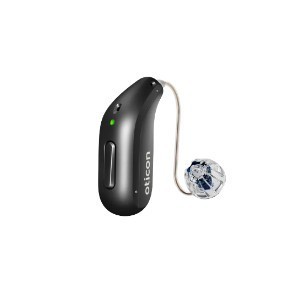
Fitting Styles: RIC
Warranty: 5 years
Chargers: Comes with charger
Fitting Styles: RIC
Warranty: 5 years
Chargers: Comes with charger
Fitting Styles: RIC
Warranty: 5 years
Chargers: Comes with charger
Fitting Styles: RIC
Warranty: 2 years
Chargers: Comes with charger
Have any questions?
Here, at Hearing Aid UK, we offer a wide range of hearing aids available on the market - keeping up to date with the best and latest hearing aid technology.
We can support your hearing healthcare in clinic or in the comfort of your own home and with nationwide coverage, we will have an audiologist near you.
Whatever your hearing loss level, budget, or style our audiologists can help you find the perfect hearing solution for you.
Call us free for support and advice on 0800 567 7621
Watch the Oticon Reveal hearing aid video below

Our specialist service includes:
Do not spend hundreds of pounds without getting a second opinion from us.
Please call us on 0800 567 7621
 Not only are the prices great, but the service is fantastic! Many thanks to your team.
Other pages you might like...
What's included in our hearing aid prices?
FAQs
In general, any audiologist will always recommend to you the hearing aid model that best suits your needs. Here is a useful checklist to make sure that is the case.
- Audiologist's level of knowledge: The audiologist you have seen will hopefully have a wide knowledge of all available hearing aids; however, some will only be familiar with a small number of brands and, therefore, may not really be in a position to know which model is the best for you. It is OK to challenge their recommendation and ask them to justify why this particular brand is the one for you.
- Do research: Read about the hearing aid that was recommended. Does it seem like it will suit your lifestyle? Does it have more or fewer features than you need?
- Be aware of sales targets: Many high street retailers have specific tie-ins to a particular manufacturer/brand. The hearing aid they have suggested may still be the correct one for you, but do your research so that you know why they might have recommended it. You can read our best hearing aids of this year here
If you have significant hearing loss in both ears, you should be wearing two hearing aids. Here are the audiological reasons why:
Localisation: The brain decodes information from both ears and compares and contrasts them. By analysing the minuscule time delays as well as the difference in the loudness of each sound reaching the ears, the person is able to accurately locate a sound source.
Simply put, if you have better hearing on one side than the other, you can't accurately tell what direction sounds are coming from.
Less amplification is required: A phenomenon known as “binaural summation” means that the hearing aids can be set at a lower and more natural volume setting than if you wore only one hearing aid.
Head shadow effect: High frequencies, the part of your hearing that gives clarity and meaning to speech sounds, cannot bend around your head. Only low frequencies can. Therefore, if someone is talking on your unaided side, you are likely to hear that they are speaking, but be unable to tell what they have said.
Noise reduction: The brain has its own built-in noise reduction, which is only really effective when it is receiving information from both ears. If only one ear is aided, even with the best hearing aid in the world, it will be difficult for you to hear in background noise as your brain is trying to retain all of the sounds (including background noise) rather than filtering them out.
Sound quality: We are designed to hear in stereo. Only hearing from one side sounds a lot less natural to us.
Fancy some further reading on this topic? You can read about why two hearing aids are better than one in our article, hearing aids for Both Ears, here
For most people, the main benefit of a rechargeable hearing aid is simple convenience. We are used to plugging in our phones and other devices overnight for them to charge up. Here are some other pros and cons:
For anybody with poor dexterity or issues with their fingers, having a rechargeable aid makes a huge difference, as normal hearing aid batteries are quite small and some people find them fiddly to change.
One downside is that if you forget to charge your hearing aid, then it is a problem that can't be instantly fixed. For most, a 30-minute charge will get you at least two or three hours of hearing, but if you are the type of person who is likely to forget to plug them in regularly, then you're probably better off with standard batteries.
Rechargeable aids are also a little bit bigger and are only available in Behind-the-Ear models.
Finally, just like with a mobile phone, the amount of charge you get on day one is not going to be the same as you get a few years down the line. Be sure to ask what the policy is with the manufacturer's warranty when it comes to replacing the battery.
For most people, the answer is yes. But it's never that simple.
The majority of hearing problems affect the high frequencies a lot more than the low ones. Therefore, open fitting hearing aids sound a lot more natural and ones that block your ears up can make your own voice sound like you are talking with your head in a bucket. Therefore, in-ear aids tend to be less natural.
However, the true answer is we can't tell until we have had a look in your ears to assess the size of your ear canal, and until we have tested your hearing to see which frequencies are being affected.
People with wider ear canals tend to have more flexibility, also there are open fitting modular CIC hearing aids now that do not block your ears.
There is also the age-old rule to consider, that a hearing aid will not help you if it's sat in the drawer gathering dust. If the only hearing aid you would be happy wearing is one that people can't see, then that's what you should get.
Most people can adapt to any type of hearing aid, as long as they know what to expect. Have an honest conversation with your audiologist as to what your needs are.
Generally speaking, six or more. Unless it's none at all. The number of channels a hearing aid has is often a simplistic way an audiologist will use to explain why one hearing aid is better than another, but channels are complex, and it is really not that straightforward. Here are some reasons why:
Hearing aids amplify sounds of different frequencies by different amounts. Most people have lost more high frequencies than low, and therefore need more amplification in the high frequencies. The range of sounds you hear is split into frequency bands or channels, and the hearing aids are set to provide the right amount of hearing at each frequency level.
Less than six channels, and this cannot be done with much accuracy, so six is the magic number. However, a six-channel aid is typically very basic with few other features and is suitable only for hearing a single speaker in a quiet room. The number of channels is not what you should be looking at; it's more the rest of the technology that comes with them.
As a final note, different manufacturers have different approaches. One method is not necessarily better than any other. For example, some manufacturers have as many as 64 channels in their top aids. Most tend to have between 17 and 20. One manufacturer has no channels at all.
Manufacturer's warranties typically last between 2-5 years, depending on the brand and model, and cover defects in materials and workmanship. This includes repairs for component failures, electronic malfunctions, and manufacturing defects, but excludes damage from misuse, accidents, or normal wear. Most manufacturers also include loss and damage insurance for the first year.
We handle all warranty claims on your behalf, liaising with manufacturers and ensuring you get replacement devices quickly when needed. This comprehensive warranty coverage, combined with our lifetime aftercare, gives you complete peace of mind. Find out more about our warranty cover here
Other Models
Ask the Experts

Get free independent impartial advice from the experts you can trust. We offer nationwide coverage and huge savings on all our hearing aids.
6 Morton Lane
Walkwood
Redditch
Worcestershire
B97 5QA
Latest Launch
When we refer to a product as 'Latest Launch', we mean it is the latest to be released on the market.
New
When we refer to a product as 'New', we mean that the product is the newest hearing aid model on the market.
When we refer to a product as 'Superseded', we mean that there is a newer range available which replaces and improves on this product.
Older Model
When we refer to a product as an 'Older Model', we mean that it is has been superseded by at least two more recent hearing aid ranges.