




Head of Online Medical Content

Audiology Expert & Founder of Hearing Aid UK

Private Hearing Aids vs NHS
What's the difference between private hearing aids and NHS hearing aids?
Overview | Is private hearing care better? | Comparing NHS with private | NHS waiting times | Device styles of both | Costs of both | Pros and cons of NHS hearing aids | Conclusion
Last Hearing Aid UK Update: 10
Should I buy a hearing aid privately?
The NHS versus private question is one of the most common things people want to understand before making any decisions, and the honest answer is that neither option is right for everyone.
NHS hearing aids are free, which matters enormously for a lot of people, and they work perfectly well for straightforward hearing needs.
The trade-off is waiting times that can stretch to months, a limited choice of style, and a level of aftercare that varies considerably depending on where you live. You tend to get what you are given, and getting an appointment to have them adjusted or maintained can be harder than it should be.
Private hearing aids offer a wider range of technology, far more choice in terms of style and discretion, and a considerably more personal experience from beginning to end.
Through an independent provider like Hearing Aid UK, prices are typically up to 40% less than the high street, and everything from the initial test through to lifelong aftercare is included in the cost, so there are no unexpected bills further down the line.
The right choice depends on your needs, your lifestyle, and what matters most to you. That is exactly what an honest, no-obligation conversation with a qualified audiologist is there to help you work out.
If you are weighing up the options, read on. We have put together an honest look at what both routes involve, backed up by the findings of the most recent Which? Report for hearing aids.
Are private hearing aids better than the NHS?
Before you make any decisions about going private, it is worth getting your hearing checked by your GP first, even if you have already decided that private is the route for you. Your GP or Ear, Nose, and Throat (ENT) specialist can check your ear health and spot any treatable causes of your hearing loss, such as infection or illness.
Hearing tests are provided free on the NHS, which can not only work out the level of your hearing loss but also the cause behind it. Many private hearing aid dispensers also carry out free hearing tests, but if you need treatment, you will need to see an ENT consultant.
Getting a second opinion is always worth it
It is easy to feel overwhelmed before you have even started. The range of hearing aids, the conflicting advice, and the prices that vary wildly depending on where you look. Many people end up more confused after researching than they were before.
Our advice is simple: start with your GP, find out what the NHS can offer you, and then get a second opinion from an independent audiologist.
Only once you have compared both will you feel genuinely confident you are making the right decision for your hearing, your lifestyle, and your budget
Private hearing aids and healthcare are personal
The recent Which Report tells us that independent audiologists were rated 86% by their customers for the service they provided, and the hearing aids purchased. In our opinion, customers from independent practices tend to feel less like a ‘number’ and more valued and cared for.
They are offered honest and unbiased advice that is bespoke to them and their hearing healthcare, from HCPC-registered audiologists. We understand that there are a few factors that may influence your decision on whether to get hearing aids privately or through the NHS - everyone is different, and what may be suitable for one person may not be right for another.

Private Hearing Aids vs NHS Hearing Aids
The Waiting Game
How long will you have to wait?
Once you have decided to go ahead with hearing aids, one of the first practical questions is how quickly you want to be seen. A private audiologist can usually see you within a week or two for the initial test and take an ear impression, if needed.
Depending on the style of hearing aid you choose, you could have your hearing aids fitted within one to three weeks of that first appointment.
The NHS has made progress on waiting times in recent years, but NHS England figures show you could still wait over six weeks for your hearing test and a further six weeks before fitting. How long this takes in practice depends a lot on which part of the country you live in.
How hearing aid styles have changed
Hearing aid style has come a long way. If your only reference point is the large, visible devices that were around a generation ago, it is worth knowing that things have changed considerably.
Today's hearing aids are often so discreet that people wearing them are barely noticeable, and in some cases, entirely so. The stigma that once surrounded hearing aids has faded as the technology has improved and the conversation around hearing health has become more open.
The NHS provides Behind-the-Ear (BTE) styles, which have a small casing behind the ear and a thin tube that sits just inside the ear canal. Whilst many hearing aids use ear moulds, others can have an open fitting where the tube sits just inside the ear canal without an ear mould.
This style is more discreet and harder for others to see. It also lets air circulate within the ear canal. This works well for a wide range of hearing losses, from mild to severe.
Private hearing aid providers can offer the full range of styles, from BTE and Receiver-in-Canal (RIC) designs to smaller aids that sit inside the ear canal and are effectively invisible. The right style for you depends on your hearing loss, your dexterity, and your personal preference. Your audiologist will talk you through all the options.
What can private hearing aids actually do that NHS ones can't?
NHS digital hearing aids are more capable than many people realise. They can be fine-tuned to your specific hearing loss.
They have different programme settings so that you can focus the microphones all around you or in front of you, making it easier to listen to people speaking when there is background noise. They also have a 't' setting allowing you to use loop systems or Bluetooth sound streamers.
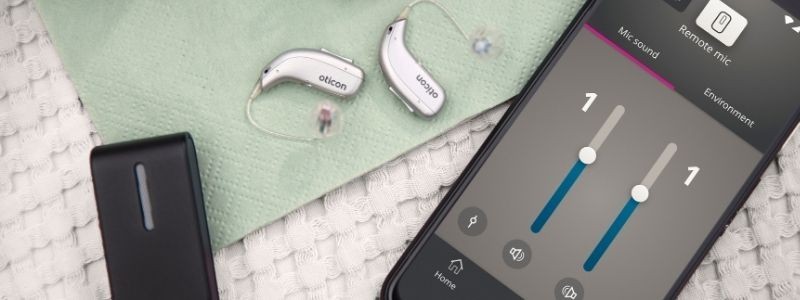
Where private hearing aids pull ahead is in the range and depth of that technology. They have a larger number of channels for sound processing, more sophisticated noise reduction, smarter microphone systems, automatic environment detection, and direct streaming from smartphones and tablets.
Modern private hearing aids are compatible with Apple devices, and you can stream sound from your iPhone or iPad directly to your hearing aids. Android users can also benefit from streaming features and more.
The honest answer is that not everyone needs all of that. But if you spend time in noisy environments, struggle with telephone conversations, or want something more discreet than a standard BTE, private hearing aids open up options that simply are not available on the NHS.
"NHS aids do a solid job for straightforward hearing loss, and we'll always say so. Where we see people upgrade is when they're struggling in noisy rooms or on the phone, situations the more advanced processing in private aids is built to handle. It's not about better or worse, it's about matching the aid to how someone actually lives."
Paul Harrison, Audiology Expert & Founder, Hearing Aid UK
Private Hearing Aids Cost UK
Are private hearing aids worth the cost?
Understanding the cost difference
There are no upfront costs for NHS hearing aids, and follow-up appointments, batteries, and repairs for normal wear and tear are also covered. You will also get a new hearing aid when your current one reaches the end of its life, which is usually five or six years.
The one thing worth knowing is that the NHS hearing aid you are provided with is only on loan and remains the property of the NHS. If it is lost or broken due to negligence, you may be liable for the cost of replacement.
Private hearing aids range from a few hundred pounds to a few thousand, depending on the technology level and style you choose. Even devices at the more accessible end of the price range can be genuinely effective. It all varies depending on the wants and needs of your hearing loss, and what you, as an individual, want from your aids.
The key is understanding what is included in the price you are quoted. At Hearing Aid UK, every price includes your hearing test, fitting, and aftercare for life. There are no charges for follow-up appointments, fine-tuning, or adjustments.
Before committing to any provider, it is worth asking exactly what is and is not included, because the variation between providers on this point is significant.

Private Hearing Aids vs NHS Hearing Aids
Why do people with NHS hearing aids choose not to wear them?
The statistics of NHS hearing aid wearers
According to a published NHS study, around 29% in the UK who currently have NHS hearing aids decide not to wear them, a pattern also reflected in wider findings from RNID. That is a striking figure, and it matters because hearing aids only improve your quality of life if you actually use them.
This is said to have something to do with ongoing technical problems or the wearer not seeing an improvement in their hearing when they are worn.
With hearing loss being a huge sensory challenge, which affects around 18 million people in the UK, this is rather a worrying statistic indeed. People who need hearing solutions and don't use them are increasing their risk of developing dementia and cognitive decline.
Hearing aids make a huge impact on the quality of life for those with a hearing impairment and help reduce this risk.
The reasons vary. Some people find the technology limiting, particularly if they spend a lot of time in noisy or varied environments. Others find the style uncomfortable or conspicuous. One of the most consistent factors is the lack of knowledge of the device itself, which can deter people from using them properly or not using them at all.
This is where aftercare makes a real difference. Understanding how your hearing aids work, how to maintain them, and knowing there is someone you can call when something feels off are all part of what makes hearing aid use successful over time.
Level of technology and aftercare: Why it matters
Modern connectivity features, Bluetooth streaming, and smartphone compatibility are among the most common reasons people look beyond the NHS. The NHS range does not currently offer these as standard, and for many people, particularly those who use their phone frequently or spend time in varying listening environments, that gap matters.
Style is another factor. The NHS can only provide a basic list of models, due to the cost of the hearing aid itself and budget restrictions. This can put people off wearing their aids at all, which is ultimately the worst outcome for their hearing health.
The other piece is structured aftercare. Your hearing loss needs can change over time, and your hearing abilities must be checked regularly so that your hearing aids are working to their full potential.
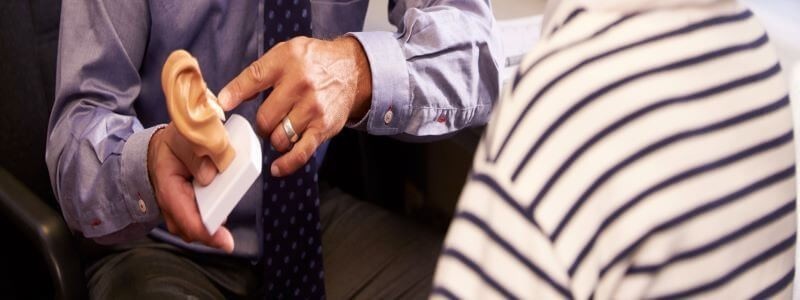
Regular check-ups and ongoing fine-tuning are not just a nice extra. They are part of what makes hearing aids work properly over the long term. The right hearing aid and aftercare will give you the right knowledge to understand your device and the confidence to wear it every day.
NHS Hearing Aids Compared to Private Hearing Aids
A quick reference to the pros and cons of NHS hearing aids
NHS hearing aids PROS:
- NHS hearing aids come at no cost.
- The NHS offers free follow-up appointments, which include batteries and any repairs you need.
- There are some NHS drop-in clinics in some areas for your NHS hearing aids and hearing healthcare. In addition, home visits can be arranged, but this again can vary depending on the area.
- Digital hearing aids come as standard from the NHS.
NHS hearing aids CONS:
- The NHS can't provide much choice when it comes to hearing aid devices.
- You will be charged if you lose your hearing aids.
- There is a longer waiting time from being initially seen by an NHS audiologist to receiving the right treatment for your hearing loss.
Conclusion
So, NHS or private? Yes, the style of NHS hearing aids has improved significantly over the years, and now all hearing aids dispensed by the NHS are digital and include some level of technology. For people with straightforward hearing needs and no particular concerns about style or connectivity, the NHS is a perfectly reasonable place to start.
But hearing is not a one-size-fits-all experience. The right hearing aid is the one that fits your hearing loss, suits your lifestyle, and that you will actually wear every day. That is why the choice of provider and the quality of the relationship you have with your audiologist matter so much.
At Hearing Aid UK, we are happy to talk through both options with you, without any pressure to go private. If the NHS route is genuinely the right one for you, we will say so.
If a private hearing aid would make a meaningful difference to your daily life, we will explain why, show you the options, and give you the time and space to decide. Call us free on 0800 567 7621 or book a no-obligation hearing test at a clinic near you or in the comfort of your own home.
Why Choose Us?
- FREE Hearing Tests
- Best Hearing Aids and Prices
- FREE Aftercare for Life
- FREE Home Visits
- FREE Clinic Appointments
- 200+ Local Audiologists
- 60 Day Money Back Guarantee
Private hearing aids near me
It is an exciting age for hearing aid technology and design, offering us more options and accessibility than ever before. Whether you choose to go with the NHS or private, finding the right hearing solution for your unique hearing loss is what is most important.
Want to know more about NHS hearing aids or private hearing aids? Are you weighing up the pros and cons of NHS hearing aids? Wondering where to buy private hearing aids?
Call one of our audiologists free on 0800 567 7621 to answer any queries you may have regarding this article or any other hearing healthcare enquiry you may have.

Other hearing aid advice articles you might like...
 Audibel Hearing Aids
  How hearing aids boost your confidence
  Hearing aids for dexterity problems
 Why choose Hearing Aid UK?

Our specialist service includes:
Do not spend hundreds of pounds without getting a second opinion from us.
Please call us on 0800 567 7621
 Not only are the prices great, but the service is fantastic! Many thanks to your team.
What's included in our hearing aid prices?
Common FAQs when researching hearing aids and hearing loss
In general, any audiologist will always recommend to you the hearing aid model that best suits your needs. Here is a useful checklist to make sure that is the case.
- Audiologist's level of knowledge: The audiologist you have seen will hopefully have a wide knowledge of all available hearing aids; however, some will only be familiar with a small number of brands and, therefore, may not really be in a position to know which model is the best for you. It is OK to challenge their recommendation and ask them to justify why this particular brand is the one for you.
- Do research: Read about the hearing aid that was recommended. Does it seem like it will suit your lifestyle? Does it have more or fewer features than you need?
- Be aware of sales targets: Many high street retailers have specific tie-ins to a particular manufacturer/brand. The hearing aid they have suggested may still be the correct one for you, but do your research so that you know why they might have recommended it. You can read our best hearing aids of this year here
If you have significant hearing loss in both ears, you should be wearing two hearing aids. Here are the audiological reasons why:
Localisation: The brain decodes information from both ears and compares and contrasts them. By analysing the minuscule time delays as well as the difference in the loudness of each sound reaching the ears, the person is able to accurately locate a sound source.
Simply put, if you have better hearing on one side than the other, you can't accurately tell what direction sounds are coming from.
Less amplification is required: A phenomenon known as “binaural summation” means that the hearing aids can be set at a lower and more natural volume setting than if you wore only one hearing aid.
Head shadow effect: High frequencies, the part of your hearing that gives clarity and meaning to speech sounds, cannot bend around your head. Only low frequencies can. Therefore, if someone is talking on your unaided side, you are likely to hear that they are speaking, but be unable to tell what they have said.
Noise reduction: The brain has its own built-in noise reduction, which is only really effective when it is receiving information from both ears. If only one ear is aided, even with the best hearing aid in the world, it will be difficult for you to hear in background noise as your brain is trying to retain all of the sounds (including background noise) rather than filtering them out.
Sound quality: We are designed to hear in stereo. Only hearing from one side sounds a lot less natural to us.
Fancy some further reading on this topic? You can read about why two hearing aids are better than one in our article, hearing aids for Both Ears, here
For most people, the main benefit of a rechargeable hearing aid is simple convenience. We are used to plugging in our phones and other devices overnight for them to charge up. Here are some other pros and cons:
For anybody with poor dexterity or issues with their fingers, having a rechargeable aid makes a huge difference, as normal hearing aid batteries are quite small and some people find them fiddly to change.
One downside is that if you forget to charge your hearing aid, then it is a problem that can't be instantly fixed. For most, a 30-minute charge will get you at least two or three hours of hearing, but if you are the type of person who is likely to forget to plug them in regularly, then you're probably better off with standard batteries.
Rechargeable aids are also a little bit bigger and are only available in Behind-the-Ear models.
Finally, just like with a mobile phone, the amount of charge you get on day one is not going to be the same as you get a few years down the line. Be sure to ask what the policy is with the manufacturer's warranty when it comes to replacing the battery.
For most people, the answer is yes. But it's never that simple.
The majority of hearing problems affect the high frequencies a lot more than the low ones. Therefore, open fitting hearing aids sound a lot more natural and ones that block your ears up can make your own voice sound like you are talking with your head in a bucket. Therefore, in-ear aids tend to be less natural.
However, the true answer is we can't tell until we have had a look in your ears to assess the size of your ear canal, and until we have tested your hearing to see which frequencies are being affected.
People with wider ear canals tend to have more flexibility, also there are open fitting modular CIC hearing aids now that do not block your ears.
There is also the age-old rule to consider, that a hearing aid will not help you if it's sat in the drawer gathering dust. If the only hearing aid you would be happy wearing is one that people can't see, then that's what you should get.
Most people can adapt to any type of hearing aid, as long as they know what to expect. Have an honest conversation with your audiologist as to what your needs are.
Generally speaking, six or more. Unless it's none at all. The number of channels a hearing aid has is often a simplistic way an audiologist will use to explain why one hearing aid is better than another, but channels are complex, and it is really not that straightforward. Here are some reasons why:
Hearing aids amplify sounds of different frequencies by different amounts. Most people have lost more high frequencies than low, and therefore need more amplification in the high frequencies. The range of sounds you hear is split into frequency bands or channels, and the hearing aids are set to provide the right amount of hearing at each frequency level.
Less than six channels, and this cannot be done with much accuracy, so six is the magic number. However, a six-channel aid is typically very basic with few other features and is suitable only for hearing a single speaker in a quiet room. The number of channels is not what you should be looking at; it's more the rest of the technology that comes with them.
As a final note, different manufacturers have different approaches. One method is not necessarily better than any other. For example, some manufacturers have as many as 64 channels in their top aids. Most tend to have between 17 and 20. One manufacturer has no channels at all.
Manufacturer's warranties typically last between 2-5 years, depending on the brand and model, and cover defects in materials and workmanship. This includes repairs for component failures, electronic malfunctions, and manufacturing defects, but excludes damage from misuse, accidents, or normal wear. Most manufacturers also include loss and damage insurance for the first year.
We handle all warranty claims on your behalf, liaising with manufacturers and ensuring you get replacement devices quickly when needed. This comprehensive warranty coverage, combined with our lifetime aftercare, gives you complete peace of mind. Find out more about our warranty cover here
Our hearing tests are completely free, whether at our clinics or in your home. Unlike other providers who charge £30-£100 for home visits, we believe hearing healthcare should be accessible without financial barriers. Our comprehensive assessments include examination by an HCPC-registered audiologist, audiogram results, and personalised recommendations.
All testing, future adjustments, and ongoing support are included at no extra cost. While NHS tests are also free, typical 6-week waiting periods often lead people to seek immediate private testing. We provide prompt, professional assessments that fit your schedule and budget.
Yes, we offer completely free home visits throughout the UK, and this service is included in our prices with no additional charges. Home visits are particularly valuable for people with mobility issues, busy schedules, or those who simply prefer the comfort and convenience of their own environment.
Our audiologists can conduct full hearing tests, fit hearing aids, and provide ongoing support in your home. This service sets us apart from many providers who either don't offer home visits or charge extra for them.
We can offer prices up to 40% lower than high street retailers because of our business model. As a network of 200+ independent audiologists, we don't have the massive overheads of large retail chains - no expensive high street premises, no sales targets pushing audiologists to sell the most expensive options, and no costly marketing campaigns.
However, we maintain the same buying power as the big chains because we purchase on behalf of our entire nationwide network. This means you get access to the same premium hearing aids with professional service, but at genuinely competitive prices.
We offer a comprehensive 60-day money-back guarantee, which gives you twice the industry standard time to properly assess whether your hearing aids are right for you. This extended period recognises that adjusting to hearing aids takes time, and your brain needs several weeks to adapt to the amplified sounds.
Unlike many providers who offer just 30 days, we believe 60 days gives you the confidence to test your hearing aids in all the situations that matter to you - from quiet conversations at home to busy restaurants and outdoor activities.
Other pages you might find useful
Ask the Experts

Get free independent impartial advice from the experts you can trust. We offer nationwide coverage and huge savings on all our hearing aids.
6 Morton Lane
Walkwood
Redditch
Worcestershire
B97 5QA
Latest Launch
When we refer to a product as 'Latest Launch', we mean it is the latest to be released on the market.
New
When we refer to a product as 'New', we mean that the product is the newest hearing aid model on the market.
When we refer to a product as 'Superseded', we mean that there is a newer range available which replaces and improves on this product.
Older Model
When we refer to a product as an 'Older Model', we mean that it is has been superseded by at least two more recent hearing aid ranges.