




Head of Online Medical Content

Audiology Expert & Founder of Hearing Aid UK

What is Mixed Hearing Loss?
Understanding this form of hearing loss
Introduction | What is mixed hearing loss | Causes | Symptoms | Getting checked | What can help? | Living with mixed hearing loss | Conclusion
Last Hearing Aid UK Update: 19
A mixture of losses
Mixed hearing loss has elements of both conductive and sensorineural hearing loss. To put it simply, something in the outer or middle ear is stopping sound from reaching the inner ear properly, and the inner ear or hearing nerve isn’t processing sound as well as it should. Both problems are happening at the same time.
Mixed hearing loss stands out from other types because it's really two things happening at once, and that combination can make everyday listening genuinely tiring.
Picture sitting in a cafe with a friend. You can hear that they're talking, but the words come through muffled, almost as if they're speaking underwater.
Then there's the flip side: the quiet moments. A phone ringing in another room, or your partner calling you from upstairs, can pass you by completely.
That’s a bit of what life with mixed hearing loss can be like. In this article, we briefly look at what mixed hearing loss is, how it occurs, and what it means for those who have it.
What is mixed hearing loss?
Because more than one part of the auditory system is involved, mixed hearing loss can be trickier to pin down and to manage than either type on its own. It helps to break it down into its two parts.
Conductive hearing loss happens when something in the outer or middle ear stops sound from getting through to the inner ear. Sometimes the cause is simple, a build-up of earwax, say, or fluid sitting behind the eardrum. Other times it's more involved, such as recurring ear infections or a structural difference in the ear.
Sensorineural hearing loss, on the other hand, comes from damage to the inner ear (the cochlea) or the nerve pathways that carry sound to the brain. It's usually permanent and can be brought on by ageing, prolonged exposure to loud noise, a head injury, or certain medical conditions.
When both are present together, that's mixed hearing loss, and managing it means addressing both sides of the picture.
Causes of mixed hearing loss
Because mixed hearing loss is a combination of both conductive and sensorineural hearing loss, its causes tend to reflect both types. The most common ones include:
- Chronic ear infections: Persistent ear infections are a common culprit. If they aren’t dealt with, they can start out causing conductive hearing loss and gradually do damage to the inner ear, too, at which point sensorineural hearing loss enters the picture as well.
- Head trauma: A significant head injury can affect multiple parts of the ear at once, both the outer and middle ear and the inner ear, making mixed hearing loss a real possibility in the aftermath of an accident or injury.
- Genetic factors: Some people are simply more predisposed to hearing problems that affect both the middle and inner ear. It's not always something that can be predicted or prevented, but knowing your family history can be a useful early warning.
- Ageing: As we get older, the inner ear naturally starts to decline, which is sensorineural hearing loss. But ageing can also bring conductive issues along for the ride, such as earwax building up more readily. When both happen together, mixed hearing loss is often the result.
Age UK notes that hearing changes become more common as we get older, though the pattern and severity vary a great deal from person to person.

Symptoms of Mixed Hearing Loss
And how to get your hearing checked
Symptoms of mixed hearing loss
The symptoms of mixed hearing loss can vary widely, but typical symptoms include:
- Difficulty hearing in both quiet and noisy environments.
- A feeling of fullness or pressure in the ears.
- Tinnitus (ringing in the ears).
- Difficulty understanding speech.
Picture yourself in a work meeting where you can hear that people are talking, but the words feel just out of reach, as if someone has turned the clarity down. The further away someone is, or the softer their voice, the harder it gets to follow.
Take it to a family gathering or a busy restaurant, and it’s a different kind of challenge. The noise is all there, but it blurs into one continuous hum, and picking out a single voice from the mix starts to feel like hard work.
If any of this sounds familiar, it's worth mentioning to your GP first, particularly if you've noticed pain, discharge, or a sudden change in one ear. The NHS advises seeing a GP if you think your hearing is getting worse. Ear infections and wax build-up are common, treatable causes of the conductive side of mixed hearing loss, and a GP is the right first port of call for these.
Getting your hearing checked
Getting to the bottom of mixed hearing loss isn't easy, because it involves more than one part of the ear. Pinning it down takes a bit more than a standard hearing check. A GP, and later an audiologist, will work through a few different stages to make sure they've got the full picture:
- Medical history: The first step is simply talking. Your audiologist will want to know about your health history, any ear problems you've had in the past, medications you're currently taking, and anything else that might help connect the dots.
- Physical examination: Next, they’ll have a gentle look inside your ears to see if anything obvious is getting in the way, like a build-up of earwax, a sign of infection, or something about the shape of the ear itself.
- Tests: You'll then be taken to a quiet room, or a soundproof booth in the clinic, where different tones and speech are played at various volumes and frequencies, and your responses help your audiologist map out your hearing in detail.
It's completely painless and more straightforward than it sounds, but the results are incredibly useful, giving a clear picture of not just how much hearing has been affected, but which parts of the auditory system are involved. That distinction is what guides everything that comes next.
Hearing Aid UK is a hearing healthcare service, not a medical practice, so we don't diagnose or treat the underlying medical causes of conductive hearing loss, such as infections or structural issues.
If your GP has ruled out or looked at a medical cause and you're still noticing changes to your hearing, a free hearing test with one of our HCPC-registered audiologists is a good next step. It's carried out at a local clinic or during a free home visit, whichever suits you best, with no obligation to buy anything afterwards.
What can help with mixed hearing loss?
Because mixed hearing loss has two components, support usually involves more than one approach. What works best will depend on which type of hearing loss is more dominant, and how severe each one is.
- Medications: Where an infection is driving the conductive hearing loss, antibiotics or other medications tend to be the first thing a doctor will try.
- Surgery: If the conductive hearing loss is coming from a blockage, a growth such as a cholesteatoma, or a structural problem in the outer or middle ear, surgery may be an option worth considering. This is arranged through the NHS or a private ENT consultant, not through Hearing Aid UK.
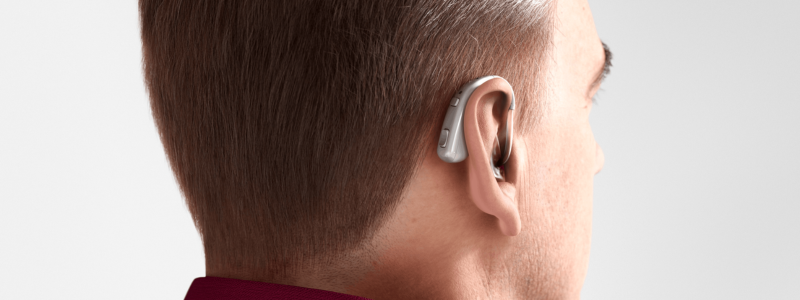
- Hearing aids: A hearing aid is one of the most common tools for managing mixed hearing loss. Behind-the-ear (BTE) models are often the go-to choice, partly because they offer more power, something that can really matter when the sensorineural side is more significant.
- Bone conduction hearing aids and middle ear implants: Where a conventional hearing aid isn’t suitable, for example because of ongoing ear discharge or a problem with the ear canal, an ENT team may consider a device that sends sound through the bone of the skull to the inner ear.
These are assessed and fitted through an NHS or private ENT and audiology service, not through Hearing Aid UK.
- Cochlear implants: Where sensorineural hearing loss is profound, a cochlear implant might be considered. Unlike a hearing aid, which amplifies sound, this works by bypassing the damaged parts of the ear and stimulating the auditory nerve directly. This is an NHS-led clinical pathway, assessed and provided through a specialist audiology or ENT team.
However, a combination might work best. For instance, someone dealing with conductive hearing loss from ear infections alongside age-related sensorineural hearing loss might use a hearing aid to boost volume, while medication or surgery tackles the infections themselves.
"Mixed hearing loss is one of the more interesting cases we see in clinic, because you're often working with a moving target. If a chronic ear infection is still active, sorting that out with a GP first makes a real difference to how well a hearing aid performs afterwards.
Once the conductive side is being managed medically, a well-fitted hearing aid gives the sensorineural side something solid to work with, and that's where our audiologists come in."
says Paul Harrison, Audiology Expert & Founder, Hearing Aid UK

Living With Mixed Hearing Loss
Practical tips and ongoing support
Living with mixed hearing loss
Living with mixed hearing loss isn't always easy, but with the right support and a few good strategies, most people find ways to manage it really well. Here are some practical tips to help:
- Scheduled assessments: Regular visits to an audiologist help make sure any changes in your hearing are picked up early.
- Hearing protection: Protecting the ears from loud noises helps prevent additional hearing damage.
- Ways to communicate: Learning and using communication techniques, such as lip reading, can help improve understanding in conversations.
- Support networks: Joining support groups or connecting with others who have hearing loss can offer important emotional support and practical advice.
For instance, a family member might find it helpful to adjust the volume on the TV or use subtitles when watching films together.
If you’re on the phone and struggling, don’t hesitate to ask the person on the other end to slow down or repeat themselves. These little tweaks can make a real difference to your experience.
One thing our audiologists often mention: mixed hearing loss can change over time as the conductive side improves or fluctuates, which is why the aftercare included for life with any hearing aid we fit matters. Your settings can be reviewed and fine-tuned as your hearing changes, at no extra cost.
Can mixed hearing loss be corrected?
Mixed hearing loss involves both conductive and sensorineural hearing loss, so there's rarely a single fix that covers everything. It's worth saying that "corrected" isn't really the right word here. "Improved" is closer to the truth, and the good news is there are plenty of options that can make a genuine difference.
How much improvement is possible depends on how severe the loss is and which side, conductive or sensorineural, is the dominant factor. But with the right support and some small adjustments to everyday life, many people manage their symptoms really well and get back to the conversations and situations that matter to them.
Need more support?
If you’ve noticed changes to your hearing and a medical cause has been ruled out or looked at, our Hearing Aid UK can connect you with one of over 200 independent, HCPC-registered audiologists offer a for a free, no-obligation hearing test at one of our 93+ clinics or in the comfort of your own home.
Because we aren’t owned by any manufacturer, the advice you get is impartial, and we’re Which? recommended. Call us free on 0800 567 7621, or book your free hearing test online to get a clear picture of what’s going on and what could help.
Why Choose Us?
- FREE Hearing Tests
- Best Hearing Aids and Prices
- FREE Aftercare for Life
- FREE Home Visits
- FREE Clinic Appointments
- 200+ Local Audiologists
- 60 Day Money Back Guarantee
Not sure what's behind your hearing changes?
If a medical cause has been ruled out or treated and you're still noticing changes to your hearing, our HCPC-registered audiologists offer a free, no-obligation hearing test, whether that's at one of our 93+ clinics or in the comfort of your own home.
Call us free on 0800 567 7621, or book your free hearing test online.
There's no pressure, just clear, independent advice on what could help.

Other hearing loss articles you might like...
 What is a Cholesteatoma?
  I need subtitles all the time
  Struggling to hear on public transport
Our specialist service includes:
Do not spend hundreds of pounds without getting a second opinion from us.
Please call us on 0800 567 7621
 Not only are the prices great, but the service is fantastic! Many thanks to your team.
What's included in our hearing aid prices?
Other pages you might find useful
FAQs on mixed hearing loss
Is mixed hearing loss permanent?
Part of it may be. The conductive side, such as earwax, fluid or an infection, can often improve once a GP or ENT specialist has looked into it.
The sensorineural side, which affects the inner ear or hearing nerve, is usually permanent but can often be managed well with a hearing aid.
Should I see my GP or an audiologist first?
See your GP first if you have ear pain, discharge, a sudden change in your hearing or signs of an infection, because these need medical attention.
Once a medical cause has been ruled out or looked at, a free hearing test with one of Hearing Aid UK’s HCPC-registered audiologists can show how your hearing has been affected and what could help.
Can hearing aids help with mixed hearing loss?
Yes, hearing aids are one of the most common ways to manage mixed hearing loss, particularly the sensorineural side.
Behind-the-Ear models are often a good fit because they can provide more power. A qualified audiologist will test your hearing before recommending whether a hearing aid is suitable for you.
Can I have a hearing test at home if I think I have mixed hearing loss?
Yes. Hearing Aid UK offers free hearing tests at home or at one of 93+ clinics across the UK, carried out in person by an HCPC-registered audiologist. There’s no obligation to buy anything afterwards.
Can mixed hearing loss change over time?
Yes, mixed hearing loss can change as the conductive side improves or fluctuates, or as the sensorineural side progresses with age. That’s why regular hearing checks matter.
Every hearing aid fitted through Hearing Aid UK includes aftercare for life, so your settings can be reviewed and fine-tuned as your hearing changes, at no extra cost.
Ask the Experts

Get free independent impartial advice from the experts you can trust. We offer nationwide coverage and huge savings on all our hearing aids.
6 Morton Lane
Walkwood
Redditch
Worcestershire
B97 5QA
Latest Launch
When we refer to a product as 'Latest Launch', we mean it is the latest to be released on the market.
New
When we refer to a product as 'New', we mean that the product is the newest hearing aid model on the market.
When we refer to a product as 'Superseded', we mean that there is a newer range available which replaces and improves on this product.
Older Model
When we refer to a product as an 'Older Model', we mean that it is has been superseded by at least two more recent hearing aid ranges.