




Head of Online Medical Content

Audiology Expert & Founder of Hearing Aid UK
Water in Ears
How does water get trapped in the ear?
Overview | How does it happen? | What does it feel like? | When it could be something else and prevention | The risks | Conclusion
Last Hearing Aid UK Update: 13
Overview
If you've ever stepped out of the pool or the shower with that strange, full feeling in your ear, as though suddenly everything has gone quiet, you'll know exactly how uncomfortable it can be.
Muffled hearing, a sensation of pressure, is incredibly common, and for most people, it usually passes fairly quickly.
Sometimes water doesn't drain away. When moisture stays in the ear canal, it can create the right conditions for bacteria or fungi to grow, leading to an infection called swimmer's ear, or otitis externa.
Symptoms like itching, pain, and discharge are all signs that things may have moved beyond a simple case of trapped water.
Left unaddressed, what starts as a minor irritation can occasionally develop into something that affects your hearing more seriously.
So while it might be tempting to ignore it, it's worth knowing a little more about what's happening inside your ear, and when it's time to do something about it.
How does water get trapped in the ear?
The ear canal is the narrow, curved passage that runs from your outer ear down to the eardrum. Its design is impressive from a protective point of view, but that same shape is precisely what makes it prone to trapping water.
When you swim, bathe, or even get caught in the rain, water can travel down the canal and settle there, held in place by the curve of the canal itself, or by a build-up of earwax acting as a partial barrier.
Earwax is actually water-repellent by nature, which means that in many cases, it does a decent job of pushing water back out on its own. But it doesn't always manage it.
People with naturally narrow ear canals tend to be more susceptible, as are those who spend a great deal of time in the water, surfers, competitive swimmers, and keen open-water enthusiasts, for example.
Diving or performing any kind of inverted movement underwater can also increase the likelihood of water becoming lodged, as the pressure and direction of movement force water deeper into the canal.
What does it feel like?
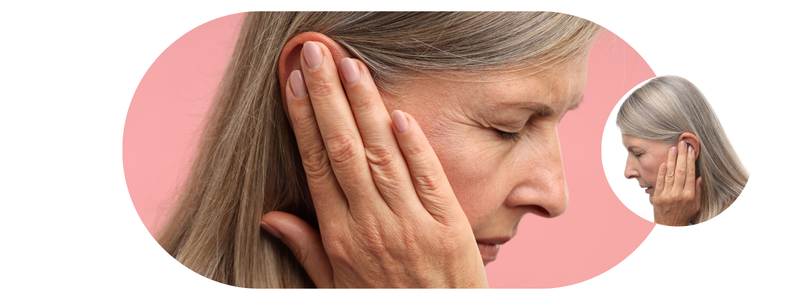
The symptoms of water in the ear are fairly distinctive, even if they're easy to confuse with other ear complaints. The most common experience is a feeling of fullness or blockage, as though someone has pressed a hand gently over your ear.
Sounds become muffled or distorted, and you might notice a faint crackling or popping sensation when you move your jaw, swallow, or yawn.
Some people also describe a tickling or itching feeling inside the ear, mild discomfort around the jawbone or throat, and a subtle sense that something is moving around inside the canal when they shift position. In most cases, these symptoms affect just one ear, though both can be affected.
These symptoms usually resolve on their own; however, when they don't, or when they begin to worsen, it's worth taking things more seriously.
"People often assume a bit of water in the ear is nothing to worry about, and most of the time it isn't; it clears on its own within a day or so. What we'd say is: if it's still there after a few days, or you're getting pain, itching, or your hearing feels muffled, that's your cue to get it looked at rather than keep tipping your head and hoping. Swimmer's ear is easy to treat early and much more uncomfortable if you leave it."
Paul Harrison, Audiology Expert & Founder, Hearing Aid UK
The risks of trapped water
The reason water in the ear can become more than a minor inconvenience is that moisture creates the ideal conditions for bacteria and fungi to thrive. The ear canal is warm and, when wet, provides exactly the kind of environment that microorganisms are drawn to.
When bacteria or fungi are given the opportunity to grow, the result can be otitis externa, commonly known as swimmer's ear. Despite the name, you don't have to be a swimmer to develop it.
Regular showers, hot tubs, humid climates, and even heavy sweating can all contribute to the kind of prolonged moisture that leads to infection.
Swimmer's ear tends to show up as pain or discomfort in the ear, itching inside the canal, redness or tenderness around the outer ear, and sometimes a discharge. If you notice any of these alongside hearing that feels persistently muffled, it's worth getting it looked at rather than waiting it out.
Left untreated, ear infections can escalate. In more serious cases, prolonged or recurring infections can lead to complications, including temporary hearing loss, cartilage damage, or bone involvement, all of which are far easier to avoid than to treat.
Water behind the eardrum
It's also worth knowing that not all fluid in the ear is the same. Sometimes the problem isn't in the outer canal at all; it's further in, behind the eardrum itself.
This can happen when the Eustachian tubes, the tiny channels that connect your middle ear to the back of your throat, get blocked or stop draining as they should.
It's the kind of thing that can happen after a cold or flu, a sinus or throat infection, or even a flight where the change in air pressure leaves your ears feeling stuffy and strange for days afterwards. Allergies can also play a role.
The symptoms can feel remarkably similar to regular water in the ear, that same sense of pressure, muffled sounds, and general discomfort, which is part of what makes it easy to dismiss. In adults, it often sorts itself out in time.
In children, however, it can sometimes develop into glue ear, a condition where thick fluid builds up in the middle ear and can affect hearing if it isn't addressed.
So if the blocked feeling in your ear doesn't seem to be shifting, and you can't quite put it down to a recent swim or shower, it may be worth getting it properly checked out.
Could it be something else?
Sometimes, that watery feeling in your ear has nothing to do with water at all. Tinnitus, a condition that causes phantom sounds like ringing, whooshing, or swishing, can feel remarkably similar to trapped fluid, and it's easier to mix the two up than you might think.
If the sensation lingers long after any water exposure, or comes with sounds that don't seem to change with movement or head position, it's probably worth having a conversation with a professional about tinnitus specifically, rather than just assuming it'll pass.
There's a wide range of possible causes, from something as straightforward as a build-up of earwax or an ear infection, to things like a perforated eardrum or another underlying condition that's better caught sooner rather than later.
Prevention and when to seek help
Keeping water out of your ears in the first place is often simpler than dealing with it afterwards. Wearing earplugs or a swim cap when swimming can make a real difference, and tilting your head to the side after a shower or bath helps any trapped water drain naturally.
Most of the time, water in the ear is the kind of thing that takes care of itself. But occasionally it sticks around, and that's when it's worth paying a little more attention.
If that blocked, muffled feeling is still with you after a couple of days, or if you start to notice any pain, itching, discharge, or swelling around the ear, don't ignore it. Those can be signs that something more is going on, and the sooner it gets looked at, the better.
We're unable to recommend any specific treatment for water in the ears. Your first point of call should always be your GP; however, a local pharmacist might be able to advise you on over-the-counter remedies and point you in the right direction.
Conclusion
Water in the ears is something most of us have dealt with at one point or another, and usually sorts itself out without any fuss. But every now and then, it lingers. And when it does, it's worth listening to what your body is telling you, because the ear is more delicate than it gets credit for, and small problems have a habit of becoming bigger ones when they're left alone for too long.
Looking after your hearing doesn't have to be complicated. It's really just about knowing your body, noticing when something doesn't feel quite right, and not talking yourself out of getting it checked.
Whether this is the first time you've had water stuck in your ear or it seems to happen every time you go for a swim, your ears are worth taking seriously.
If something feels off, or you're just not sure, speak to your GP. A quick conversation now is always better than a more difficult one later.
Why Choose Us?
- FREE Hearing Tests
- Best Hearing Aids and Prices
- FREE Aftercare for Life
- FREE Home Visits
- FREE Clinic Appointments
- 200+ Local Audiologists
- 60 Day Money Back Guarantee
Is water in your ears affecting your hearing?
Speak to your local GP
Looking after your hearing starts with knowing when something isn't right.
If something feels off, or you're just not sure, please do reach out to your GP, pharmacist, or a local audiologist. A quick conversation now is always better than a more difficult one later.
However, if your hearing is affected and you are referred to see an audiologist, then we can help you locally.

Other hearing aid loss articles you might like...
 What is a Cholesteatoma?
  I need subtitles all the time
  Struggling to hear on public transport
Watch the NHS video about ear infections below
Our specialist service includes:
Do not spend hundreds of pounds without getting a second opinion from us.
Please call us on 0800 567 7621
 Not only are the prices great, but the service is fantastic! Many thanks to your team.
What's included in our hearing aid prices?
FAQs
In general, any audiologist will always recommend to you the hearing aid model that best suits your needs. Here is a useful checklist to make sure that is the case.
- Audiologist's level of knowledge: The audiologist you have seen will hopefully have a wide knowledge of all available hearing aids; however, some will only be familiar with a small number of brands and, therefore, may not really be in a position to know which model is the best for you. It is OK to challenge their recommendation and ask them to justify why this particular brand is the one for you.
- Do research: Read about the hearing aid that was recommended. Does it seem like it will suit your lifestyle? Does it have more or fewer features than you need?
- Be aware of sales targets: Many high street retailers have specific tie-ins to a particular manufacturer/brand. The hearing aid they have suggested may still be the correct one for you, but do your research so that you know why they might have recommended it. You can read our best hearing aids of this year here
If you have significant hearing loss in both ears, you should be wearing two hearing aids. Here are the audiological reasons why:
Localisation: The brain decodes information from both ears and compares and contrasts them. By analysing the minuscule time delays as well as the difference in the loudness of each sound reaching the ears, the person is able to accurately locate a sound source.
Simply put, if you have better hearing on one side than the other, you can't accurately tell what direction sounds are coming from.
Less amplification is required: A phenomenon known as “binaural summation” means that the hearing aids can be set at a lower and more natural volume setting than if you wore only one hearing aid.
Head shadow effect: High frequencies, the part of your hearing that gives clarity and meaning to speech sounds, cannot bend around your head. Only low frequencies can. Therefore, if someone is talking on your unaided side, you are likely to hear that they are speaking, but be unable to tell what they have said.
Noise reduction: The brain has its own built-in noise reduction, which is only really effective when it is receiving information from both ears. If only one ear is aided, even with the best hearing aid in the world, it will be difficult for you to hear in background noise as your brain is trying to retain all of the sounds (including background noise) rather than filtering them out.
Sound quality: We are designed to hear in stereo. Only hearing from one side sounds a lot less natural to us.
Fancy some further reading on this topic? You can read about why two hearing aids are better than one in our article, hearing aids for Both Ears, here
For most people, the main benefit of a rechargeable hearing aid is simple convenience. We are used to plugging in our phones and other devices overnight for them to charge up. Here are some other pros and cons:
For anybody with poor dexterity or issues with their fingers, having a rechargeable aid makes a huge difference, as normal hearing aid batteries are quite small and some people find them fiddly to change.
One downside is that if you forget to charge your hearing aid, then it is a problem that can't be instantly fixed. For most, a 30-minute charge will get you at least two or three hours of hearing, but if you are the type of person who is likely to forget to plug them in regularly, then you're probably better off with standard batteries.
Rechargeable aids are also a little bit bigger and are only available in Behind-the-Ear models.
Finally, just like with a mobile phone, the amount of charge you get on day one is not going to be the same as you get a few years down the line. Be sure to ask what the policy is with the manufacturer's warranty when it comes to replacing the battery.
For most people, the answer is yes. But it's never that simple.
The majority of hearing problems affect the high frequencies a lot more than the low ones. Therefore, open fitting hearing aids sound a lot more natural and ones that block your ears up can make your own voice sound like you are talking with your head in a bucket. Therefore, in-ear aids tend to be less natural.
However, the true answer is we can't tell until we have had a look in your ears to assess the size of your ear canal, and until we have tested your hearing to see which frequencies are being affected.
People with wider ear canals tend to have more flexibility, also there are open fitting modular CIC hearing aids now that do not block your ears.
There is also the age-old rule to consider, that a hearing aid will not help you if it's sat in the drawer gathering dust. If the only hearing aid you would be happy wearing is one that people can't see, then that's what you should get.
Most people can adapt to any type of hearing aid, as long as they know what to expect. Have an honest conversation with your audiologist as to what your needs are.
Generally speaking, six or more. Unless it's none at all. The number of channels a hearing aid has is often a simplistic way an audiologist will use to explain why one hearing aid is better than another, but channels are complex, and it is really not that straightforward. Here are some reasons why:
Hearing aids amplify sounds of different frequencies by different amounts. Most people have lost more high frequencies than low, and therefore need more amplification in the high frequencies. The range of sounds you hear is split into frequency bands or channels, and the hearing aids are set to provide the right amount of hearing at each frequency level.
Less than six channels, and this cannot be done with much accuracy, so six is the magic number. However, a six-channel aid is typically very basic with few other features and is suitable only for hearing a single speaker in a quiet room. The number of channels is not what you should be looking at; it's more the rest of the technology that comes with them.
As a final note, different manufacturers have different approaches. One method is not necessarily better than any other. For example, some manufacturers have as many as 64 channels in their top aids. Most tend to have between 17 and 20. One manufacturer has no channels at all.
Manufacturer's warranties typically last between 2-5 years, depending on the brand and model, and cover defects in materials and workmanship. This includes repairs for component failures, electronic malfunctions, and manufacturing defects, but excludes damage from misuse, accidents, or normal wear. Most manufacturers also include loss and damage insurance for the first year.
We handle all warranty claims on your behalf, liaising with manufacturers and ensuring you get replacement devices quickly when needed. This comprehensive warranty coverage, combined with our lifetime aftercare, gives you complete peace of mind. Find out more about our warranty cover here
Our hearing tests are completely free, whether at our clinics or in your home. Unlike other providers who charge £30-£100 for home visits, we believe hearing healthcare should be accessible without financial barriers. Our comprehensive assessments include examination by an HCPC-registered audiologist, audiogram results, and personalised recommendations.
All testing, future adjustments, and ongoing support are included at no extra cost. While NHS tests are also free, typical 6-week waiting periods often lead people to seek immediate private testing. We provide prompt, professional assessments that fit your schedule and budget.
Yes, we offer completely free home visits throughout the UK, and this service is included in our prices with no additional charges. Home visits are particularly valuable for people with mobility issues, busy schedules, or those who simply prefer the comfort and convenience of their own environment.
Our audiologists can conduct full hearing tests, fit hearing aids, and provide ongoing support in your home. This service sets us apart from many providers who either don't offer home visits or charge extra for them.
We can offer prices up to 40% lower than high street retailers because of our business model. As a network of 200+ independent audiologists, we don't have the massive overheads of large retail chains - no expensive high street premises, no sales targets pushing audiologists to sell the most expensive options, and no costly marketing campaigns.
However, we maintain the same buying power as the big chains because we purchase on behalf of our entire nationwide network. This means you get access to the same premium hearing aids with professional service, but at genuinely competitive prices.
We offer a comprehensive 60-day money-back guarantee, which gives you twice the industry standard time to properly assess whether your hearing aids are right for you. This extended period recognises that adjusting to hearing aids takes time, and your brain needs several weeks to adapt to the amplified sounds.
Unlike many providers who offer just 30 days, we believe 60 days gives you the confidence to test your hearing aids in all the situations that matter to you - from quiet conversations at home to busy restaurants and outdoor activities.
Other pages you might find useful
Ask the Experts

Get free independent impartial advice from the experts you can trust. We offer nationwide coverage and huge savings on all our hearing aids.
6 Morton Lane
Walkwood
Redditch
Worcestershire
B97 5QA
Latest Launch
When we refer to a product as 'Latest Launch', we mean it is the latest to be released on the market.
New
When we refer to a product as 'New', we mean that the product is the newest hearing aid model on the market.
When we refer to a product as 'Superseded', we mean that there is a newer range available which replaces and improves on this product.
Older Model
When we refer to a product as an 'Older Model', we mean that it is has been superseded by at least two more recent hearing aid ranges.