




Head of Online Medical Content

Audiology Expert & Founder of Hearing Aid UK

Hearing Aids with Wind Noise Reduction
Why wind is a problem for hearing aid wearers
Overview | The challenges of outdoor conversations | Why wind is such a problem for wearers | Industry examples of hearing aids with wind noise management |
What to look out for in a hearing aid | Who benefits the most from this type of hearing aid | Conclusion and FAQs
Last Hearing Aid UK Update: 03
Overview
If wind noise has ever ruined a conversation outdoors while you're wearing hearing aids, you're not alone; it's a common frustration, and it can put people off wearing their hearing aids outdoors.
The good news is that modern hearing aids have made real progress here. Through a mix of clever processing and thoughtful physical design, today's premium aids can manage wind while still preserving the sounds you actually want to hear.
In this article, discover how modern hearing aids tackle wind noise through clever technology. Learn how some current models handle it and why wind noise reduction matters for outdoor listening comfort.
The trouble with conversations outdoors
That gentle breeze that barely registers for someone with normal hearing can become an absolute roar through hearing aids, drowning out speech, footsteps, traffic, anything else you actually want to hear. It's frustrating and uncomfortable, and it happens for reasons that come down to how hearing aids are built to work in the first place.
Why wind noise is such a problem
Wind noise in hearing aids isn't just annoying; it's also very different from other sounds in the environment. When wind blows into the microphones on your hearing aids, it makes a very loud, turbulent noise that covers a wide range of frequencies.
Hearing aids do exactly what they're built to do: make sound louder, but that means wind gets the same treatment as everything else, drowning out the speech and sounds you're actually trying to follow.
What makes it particularly frustrating is that wind noise refuses to sit still. It shifts and changes from one moment to the next, which is exactly why traditional hearing aid processing struggles with it; it simply doesn't behave like the steady background noise that can be filtered out.
It's a lot like trying to talk to someone while they are constantly crinkling crisp packets right next to your ears.
The newest generation of hearing aids uses a number of smart ways to deal with wind noise. Knowing how these work can help you understand what different companies are selling. For example:
Multi-microphone systems
Premium hearing aids typically have multiple microphones, usually two per aid. These microphones work as a team to spot when wind is hitting them.
Here's the clever bit: wind doesn't hit all the microphones at exactly the same time or with the same intensity because of their different positions on the hearing aid.
The hearing aid can tell which signals are wind noise and which are sounds you want to hear by comparing what each microphone is picking up.
If one microphone picks up wind, the hearing aid can either switch to using the other microphone more or use special processing to smooth out the noise. It keeps an eye on things and makes changes, sometimes hundreds of times a second.
Directional processing
Many modern hearing aids use directional microphone technology that can be adapted for wind conditions.
In windy situations, the aids might shift from their normal directional pattern (which focuses on sounds from in front of you) to a more omnidirectional pattern that's less susceptible to wind turbulence.
Physical design solutions
It's not all about digital processing: the physical design of hearing aids matters for wind noise too.
Manufacturers have learned that microphone placement, protective covers, and even the shape of the hearing aid casing can reduce how much wind actually reaches the microphones in the first place.
Some hearing aids have microphone covers or ports designed to reduce wind turbulence before it reaches the microphone.

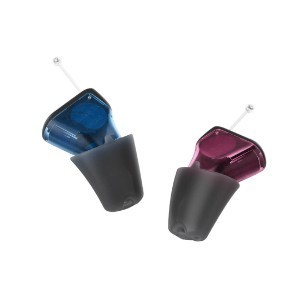
Hearing Aid UK supplies and professionally fits both the Oticon Reveal and Signia Pure Charge&Go MaX throughout the UK, and our audiologists can help you compare them with other options.
Oticon Reveal
Launched in 2026, the Oticon Reveal is Oticon’s newest premium rechargeable hearing aid and the successor to the Oticon Intent. It uses an updated feature Oticon calls Wind & Handling Stabiliser 2.0.
Oticon states that it reduces wind and handling noise by up to 40 dB, 10 dB more than the previous generation, covering outdoor wind, hair brushing across the microphones, and the noise made when you touch the hearing aid.
Reveal also introduces what Oticon describes as a Dual AI sound-processing system, designed to make speech clearer while keeping you aware of the sounds around you.
Oticon states that the Reveal range doesn't just suppress wind; it manages it while still preserving the speech and environmental sounds you need to hear.
This is important because some older wind noise reduction systems essentially just turned down all the sounds, which defeated the purpose of wearing hearing aids in the first place.
Related reading: Oticon Reveal hearing aids
Signia Pure Charge&Go MaX
The Signia Pure Charge&Go MaX is the first hearing aid on Signia’s new MaX platform, launched in 2026 as the successor to the Pure Charge&Go IX. It includes eWindScreen 2.0, which Signia says is designed to make windy conditions more comfortable without reducing speech clarity.
Signia states that the MaX platform uses four deep neural networks working together to analyse speech, background noise, your own voice and your surroundings, with the aim of keeping conversations clear in busy, changeable environments.
Related reading: Signia MaX hearing aids
Which one is right for me?
Both are rechargeable Receiver-in-Canal (RIC) hearing aids that manage wind automatically, so the better choice usually comes down to your hearing loss, how you like sound to feel, and which features matter most to you day to day.
If wind is your biggest frustration and you want the most natural balance between speech and the sounds around you, the Oticon Reveal is worth considering.
If you spend a lot of time in busy group conversations and want the longest battery life, the Signia Pure Charge&Go MaX may suit you better. If budget matters, the previous-generation models are a sensible option. Your audiologist will recommend the best fit after your free hearing test.
Beyond basic wind noise reduction
The very best hearing aids don't just reduce wind noise; they adapt their entire processing strategy based on your environment and activity. Here's what to look for:
Situational awareness: Higher-end hearing aids with environmental sensors can adjust their processing as your surroundings change. It’s a small thing, but if you’ve ever been caught out by a sudden gust drowning out everything around you, you’ll know exactly why it matters.
Conversation focus: Good wind noise reduction should never come at the expense of hearing speech clearly. Look for hearing aids that can maintain speech understanding and manage wind.
Automatic programme switching: Certain hearing aids take it a step further and switch into a dedicated wind-optimised programme when they sense you're outside, so you're not fumbling with settings; you're just getting on with your day.
Realistic expectations for hearing aids with wind noise management
Even the best wind noise reduction won't make windy conditions completely silent, and honestly, you wouldn't want it to. Complete suppression of wind would make you feel isolated from your environment.
What good wind noise reduction does is reduce wind to a manageable level whilst preserving awareness of your surroundings and, most importantly, the ability to hear speech clearly.
Fitting matters enormously
Wind noise reduction features need proper programming by your HCPC-registered audiologist. They should ask about your lifestyle and how often you're outdoors, then programme your aids accordingly.
"We always tell people to take the hearing aids outside during their first few weeks, go for a walk, have a conversation in a bit of wind, and see how it actually feels.
What works brilliantly in a quiet consultation room doesn't always hold up on a windy coastal walk, and that's exactly the kind of thing worth testing before you commit."
says Paul Harrison, Audiology Expert & Founder, Hearing Aid UK
Does the style of hearing aid make a difference?
Hearing aids worn inside the ear can benefit from some natural shelter from the outer ear. Receiver-in-Canal (RIC) and Behind-the-Ear (BTE) microphones sit on top of the ear, where wind reaches them more easily.
However, modern processing largely closed this gap. Your choice should really come down to your hearing loss and comfort; wind noise is worth factoring in, but it shouldn't be the deciding factor on its own.
Who benefits most from advanced wind noise reduction?
If your days tend to involve being outside, a walk, some gardening, a round of golf, or just time spent enjoying the outdoors, wind noise reduction isn't a nice-to-have; it's genuinely worth prioritising. It matters most for:
- People who walk a lot to stay healthy or run errands
- People who work outside or have hobbies that keep them busy
- Anyone who has stayed inside because of the noise of the wind
- People who need to talk to each other while outside
- People who live in areas with a lot of wind, like the coast or open fields
Conclusion
Wind noise reduction has gone from being a nice-to-have feature to an increasingly standard feature. The difference between hearing aids with and without effective wind management can make a real difference if you spend any time outdoors.
When choosing hearing aids, don't just ask "does it have wind noise reduction?" Also ask how it works, whether it can be customised for your specific needs, and whether you can try it in real-world windy conditions.
Take the aids outside in the weeks after your fitting. Go for a walk. Have a conversation whilst moving. You’ll quickly discover whether the wind noise reduction actually works or whether it’s just a spec sheet feature. Our 60-day money-back guarantee gives you time to try them properly.
Modern hearing aids with sophisticated wind noise reduction can genuinely give you back the freedom to enjoy outdoor activities without constantly battling noise.
A free hearing test, either at one of our 93+ clinics or during a free home visit, is a good place to start working out what suits your lifestyle. There's no obligation, just clear advice from a HCPC-registered audiologist.
We are also highly rated in the Which? Report, and every hearing aid we fit comes with aftercare included for life. Call our team free on 0800 567 7621, or book online below.
FAQs on hearing aids and wind noise
Why do my hearing aids make wind sound so loud? Hearing aids make wind sound loud because wind blowing across the microphones creates turbulent noise, which the hearing aids then amplify along with everything else.
Do all hearing aids have wind noise reduction? Most modern hearing aids have some form of wind noise reduction, but how well it works varies between models and technology levels, with premium models usually offering the most advanced processing.
Which hearing aids are good in the wind? Many premium hearing aids have dedicated wind noise features, including the Oticon Reveal with Wind & Handling Stabiliser 2.0 and the Signia Pure Charge&Go MaX with eWindScreen 2.0. Hearing Aid UK supplies and fits both, and your audiologist can help you decide which suits your hearing and lifestyle.
Can my audiologist adjust my hearing aids for windy conditions? Yes, your audiologist can adjust how strongly your hearing aids reduce wind noise, and can set up an outdoor programme if you spend a lot of time outside. Hearing Aid UK’s aftercare for life means you can go back for fine-tuning whenever you need it.
Can I try hearing aids outdoors before committing? Yes, every hearing aid from Hearing Aid UK comes with a 60-day money-back guarantee, so you can try them on walks and in windy conditions before deciding. You can book a free hearing test by calling 0800 567 7621.
Why Choose Us?
- FREE Hearing Tests
- Best Hearing Aids and Prices
- FREE Aftercare for Life
- FREE Home Visits
- FREE Clinic Appointments
- 200+ Local Audiologists
- 60 Day Money Back Guarantee
Think you would benefit from wind noise reduction?
We can support you locally
Ready to enjoy the outdoors without battling wind noise? Book an appointment with a qualified hearing care professional who can demonstrate the latest wind noise reduction technology and help you find hearing aids that work brilliantly in all your favourite outdoor environments.
Don't forget to ask for a trial period so you can test them in real-world windy conditions before making your decision.

Other hearing loss awareness articles you might like...
 What Is Ski-Slope Hearing Loss?
 I Struggle to Hear on Video Calls
 I can’t hear people in the car

Our specialist service includes:
Do not spend hundreds of pounds without getting a second opinion from us.
Please call us on 0800 567 7621
 Not only are the prices great, but the service is fantastic! Many thanks to your team.

What's included in our hearing aid prices?
FAQs
In general, any audiologist will always recommend to you the hearing aid model that best suits your needs. Here is a useful checklist to make sure that is the case.
- Audiologist's level of knowledge: The audiologist you have seen will hopefully have a wide knowledge of all available hearing aids; however, some will only be familiar with a small number of brands and, therefore, may not really be in a position to know which model is the best for you. It is OK to challenge their recommendation and ask them to justify why this particular brand is the one for you.
- Do research: Read about the hearing aid that was recommended. Does it seem like it will suit your lifestyle? Does it have more or fewer features than you need?
- Be aware of sales targets: Many high street retailers have specific tie-ins to a particular manufacturer/brand. The hearing aid they have suggested may still be the correct one for you, but do your research so that you know why they might have recommended it. You can read our best hearing aids of this year here
If you have significant hearing loss in both ears, you should be wearing two hearing aids. Here are the audiological reasons why:
Localisation: The brain decodes information from both ears and compares and contrasts them. By analysing the minuscule time delays as well as the difference in the loudness of each sound reaching the ears, the person is able to accurately locate a sound source.
Simply put, if you have better hearing on one side than the other, you can't accurately tell what direction sounds are coming from.
Less amplification is required: A phenomenon known as “binaural summation” means that the hearing aids can be set at a lower and more natural volume setting than if you wore only one hearing aid.
Head shadow effect: High frequencies, the part of your hearing that gives clarity and meaning to speech sounds, cannot bend around your head. Only low frequencies can. Therefore, if someone is talking on your unaided side, you are likely to hear that they are speaking, but be unable to tell what they have said.
Noise reduction: The brain has its own built-in noise reduction, which is only really effective when it is receiving information from both ears. If only one ear is aided, even with the best hearing aid in the world, it will be difficult for you to hear in background noise as your brain is trying to retain all of the sounds (including background noise) rather than filtering them out.
Sound quality: We are designed to hear in stereo. Only hearing from one side sounds a lot less natural to us.
Fancy some further reading on this topic? You can read about why two hearing aids are better than one in our article, hearing aids for Both Ears, here
For most people, the main benefit of a rechargeable hearing aid is simple convenience. We are used to plugging in our phones and other devices overnight for them to charge up. Here are some other pros and cons:
For anybody with poor dexterity or issues with their fingers, having a rechargeable aid makes a huge difference, as normal hearing aid batteries are quite small and some people find them fiddly to change.
One downside is that if you forget to charge your hearing aid, then it is a problem that can't be instantly fixed. For most, a 30-minute charge will get you at least two or three hours of hearing, but if you are the type of person who is likely to forget to plug them in regularly, then you're probably better off with standard batteries.
Rechargeable aids are also a little bit bigger and are only available in Behind-the-Ear models.
Finally, just like with a mobile phone, the amount of charge you get on day one is not going to be the same as you get a few years down the line. Be sure to ask what the policy is with the manufacturer's warranty when it comes to replacing the battery.
For most people, the answer is yes. But it's never that simple.
The majority of hearing problems affect the high frequencies a lot more than the low ones. Therefore, open fitting hearing aids sound a lot more natural and ones that block your ears up can make your own voice sound like you are talking with your head in a bucket. Therefore, in-ear aids tend to be less natural.
However, the true answer is we can't tell until we have had a look in your ears to assess the size of your ear canal, and until we have tested your hearing to see which frequencies are being affected.
People with wider ear canals tend to have more flexibility, also there are open fitting modular CIC hearing aids now that do not block your ears.
There is also the age-old rule to consider, that a hearing aid will not help you if it's sat in the drawer gathering dust. If the only hearing aid you would be happy wearing is one that people can't see, then that's what you should get.
Most people can adapt to any type of hearing aid, as long as they know what to expect. Have an honest conversation with your audiologist as to what your needs are.
Generally speaking, six or more. Unless it's none at all. The number of channels a hearing aid has is often a simplistic way an audiologist will use to explain why one hearing aid is better than another, but channels are complex, and it is really not that straightforward. Here are some reasons why:
Hearing aids amplify sounds of different frequencies by different amounts. Most people have lost more high frequencies than low, and therefore need more amplification in the high frequencies. The range of sounds you hear is split into frequency bands or channels, and the hearing aids are set to provide the right amount of hearing at each frequency level.
Less than six channels, and this cannot be done with much accuracy, so six is the magic number. However, a six-channel aid is typically very basic with few other features and is suitable only for hearing a single speaker in a quiet room. The number of channels is not what you should be looking at; it's more the rest of the technology that comes with them.
As a final note, different manufacturers have different approaches. One method is not necessarily better than any other. For example, some manufacturers have as many as 64 channels in their top aids. Most tend to have between 17 and 20. One manufacturer has no channels at all.
Manufacturer's warranties typically last between 2-5 years, depending on the brand and model, and cover defects in materials and workmanship. This includes repairs for component failures, electronic malfunctions, and manufacturing defects, but excludes damage from misuse, accidents, or normal wear. Most manufacturers also include loss and damage insurance for the first year.
We handle all warranty claims on your behalf, liaising with manufacturers and ensuring you get replacement devices quickly when needed. This comprehensive warranty coverage, combined with our lifetime aftercare, gives you complete peace of mind. Find out more about our warranty cover here
Our hearing tests are completely free, whether at our clinics or in your home. Unlike other providers who charge £30-£100 for home visits, we believe hearing healthcare should be accessible without financial barriers. Our comprehensive assessments include examination by an HCPC-registered audiologist, audiogram results, and personalised recommendations.
All testing, future adjustments, and ongoing support are included at no extra cost. While NHS tests are also free, typical 6-week waiting periods often lead people to seek immediate private testing. We provide prompt, professional assessments that fit your schedule and budget.
Yes, we offer completely free home visits throughout the UK, and this service is included in our prices with no additional charges. Home visits are particularly valuable for people with mobility issues, busy schedules, or those who simply prefer the comfort and convenience of their own environment.
Our audiologists can conduct full hearing tests, fit hearing aids, and provide ongoing support in your home. This service sets us apart from many providers who either don't offer home visits or charge extra for them.
We can offer prices up to 40% lower than high street retailers because of our business model. As a network of 200+ independent audiologists, we don't have the massive overheads of large retail chains - no expensive high street premises, no sales targets pushing audiologists to sell the most expensive options, and no costly marketing campaigns.
However, we maintain the same buying power as the big chains because we purchase on behalf of our entire nationwide network. This means you get access to the same premium hearing aids with professional service, but at genuinely competitive prices.
We offer a comprehensive 60-day money-back guarantee, which gives you twice the industry standard time to properly assess whether your hearing aids are right for you. This extended period recognises that adjusting to hearing aids takes time, and your brain needs several weeks to adapt to the amplified sounds.
Unlike many providers who offer just 30 days, we believe 60 days gives you the confidence to test your hearing aids in all the situations that matter to you - from quiet conversations at home to busy restaurants and outdoor activities.
Other pages you might find useful
Ask the Experts

Get free independent impartial advice from the experts you can trust. We offer nationwide coverage and huge savings on all our hearing aids.
6 Morton Lane
Walkwood
Redditch
Worcestershire
B97 5QA
Latest Launch
When we refer to a product as 'Latest Launch', we mean it is the latest to be released on the market.
New
When we refer to a product as 'New', we mean that the product is the newest hearing aid model on the market.
When we refer to a product as 'Superseded', we mean that there is a newer range available which replaces and improves on this product.
Older Model
When we refer to a product as an 'Older Model', we mean that it is has been superseded by at least two more recent hearing aid ranges.