



Starkey Omega AI Plus Hearing Aids
Free hearing test included | Fitted by HCPC-registered audiologists | Free home visits or clinic appointments | Lifetime aftercare | 60-day money-back guarantee

Starkey Omega AI Plus
- New G4 AI chip
- DNN 360 in custom in-ear styles
- Up to 51-hour battery
- Bluetooth LE Audio and Auracast

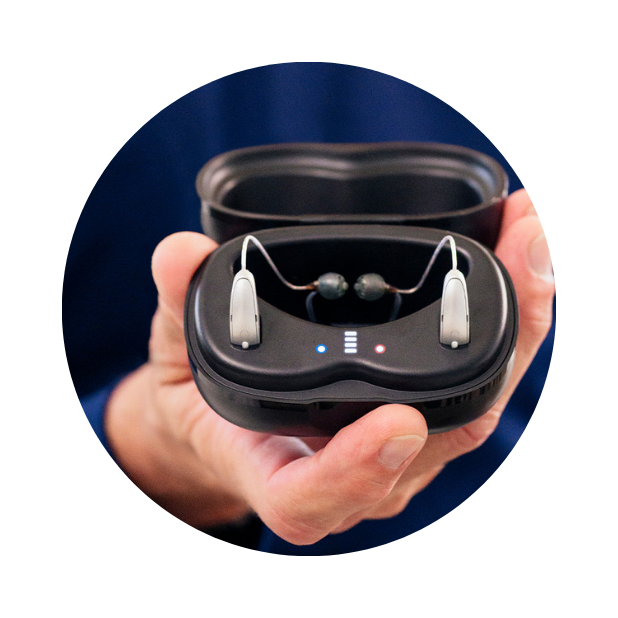
Starkey Omega AI Plus Hearing Aids
Overview
Last updated by Hearing Aid UK on 12/10/2026
The Starkey Omega AI+ hearing aids are Starkey’s newest flagship hearing aid range.
Launched in late October 2026, they replace the Omega AI at the top of the Starkey range.
Hearing Aid UK supplies and professionally fits the full Omega AI+ range throughout the UK.
Every pair is fitted and fine-tuned in person by an HCPC-registered audiologist at a local hearing clinic or during a free home visit.

So what’s actually new?
The biggest change is a new chip. Starkey says the G4 Gen AI Neuro Processor runs four separate AI systems at once, handling speech and noise, direction, spatial awareness and a new type of volume control.
Starkey states that one of these, the DNN Dual Compressor, is the first of its kind in a hearing aid.
The honest answer for most people is that Omega AI Plus is a refinement of something that was already very good. For some people, it will be worth paying for.
For others, the original Omega AI, which we still supply, will do the job at a lower price. This page explains the difference so you can decide which would be the best fit for you.

Starkey Omega AI Plus
Quick shared feature highlights
The G4 chip: the foundation
Omega AI Plus hearing aids are built on Starkey’s new G4 Gen AI Neuro Processor. Starkey states that the neural network processing sits directly on the main chip, rather than on a separate one. Starkey also says the G4 processes sound up to 2.7 times faster than a leading competitor’s hearing aid, based on Starkey’s own testing.
Why does speed matter? A hearing aid needs a moment to process sound before passing it to your ear. If that delay is too long, the processed sound and the natural sound reaching your ear can clash, and speech sounds less natural. A faster chip leaves more room for the clever processing without that trade-off.
DNN Dual Compressor: softer speech
This is the feature Starkey is leading with, and it deals with something most people never think about: compression. Hearing loss narrows the gap between “too quiet to hear” and “uncomfortably loud”. Compression squeezes sound into that gap.
Fast compression is good at lifting quick, soft details like the “s” and “t” sounds in speech, but it can make some sounds seem to rise and fall unnaturally. Slow compression sounds steadier but can miss those quick details.
Starkey states that the DNN Dual Compressor uses speech detection to blend the two, using fast compression when speech is present and easing off when it isn’t. In Starkey’s own study of 14 experienced hearing aid wearers, all participants preferred the new system for sound quality.
The same study did not find a significant difference in how many words people understood. In plain terms, the evidence so far points to more comfortable, natural sound rather than better speech understanding. Worth noting that the DNN Dual Compressor is only available on the Omega AI+ 24 tech level.
DNN 360: now in custom in-ear styles
DNN 360 is Starkey’s AI-based directional system, first introduced in Omega AI. It works out where speech is coming from and focuses on it, while keeping the rest of your surroundings audible when you’re not in conversation.
What’s new is where it’s available, as DNN 360 now comes in its rechargeable custom In-the-Canal (ITC R) and In-the-Ear (ITE R) models, not just the behind-the-ear styles. If you’ve wanted Starkey’s best directional technology but prefer a hearing aid that sits inside your ear, that’s the main reason to look at Omega AI Plus.
DNN 360 needs directional microphones, so it isn’t available on the smallest custom models. Starkey’s own research also suggests DNN 360 reduces listening effort compared with its previous directional technology.
Edge Mode: is now able to stay on
Edge Mode gives the hearing aids an extra push in difficult places, such as a busy restaurant or a crowded family gathering. On Omega AI, you had to switch it on in the My Starkey app when you needed it. On the Omega AI Plus, Starkey has added the option to keep Edge Mode running all the time in your main programme. On every level, you can still switch it on through the app.
Starkey’s own research also suggests Edge Mode reduces listening effort compared with the standard listening programme, which can make a long day of conversation less tiring.
There's also said to be fewer whistles
Starkey has also redesigned its feedback management, which stops the whistling that can happen when you put a phone to your ear, pull on a hat or chew. Starkey’s previous system was already effective, so this is likely to matter most to your audiologist, giving them more room to set the right amount of amplification in harder-to-fit cases.
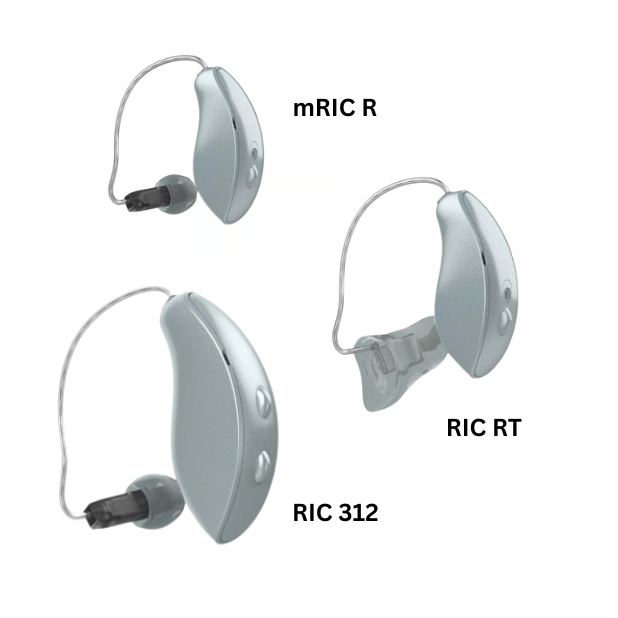
Starkey Omega AI+ Receiver-in-Canal (RIC) models
A Receiver-in-Canal (RIC) hearing aid sits behind your ear, with a thin wire carrying sound to a small speaker inside your ear canal. It’s the most popular style because it’s discreet, comfortable and suits a wide range of hearing loss.
- mRIC R: The smallest rechargeable model, for anyone who wants their hearing aids to be hard to spot.
- RIC RT: Slightly larger, with the longest battery life in the range. On Omega AI, this model includes a telecoil for hearing loops, so please confirm it carries over.
- RIC 312: Uses standard size 312 disposable batteries instead of a charger, for people who prefer swapping batteries.
- Colours available: Silver, white, beige, caramel, graphite grey, chestnut, and tech black.
- Available in technology levels: 24, 20 and 16
- Compatible accessories: StarLink TV Streamer, Remote Microphone, Table Microphone, Remote Control, and the My Starkey app
- CROS compatible: Yes, for single-sided hearing loss
Ask the Experts

Get free independent impartial advice from the experts you can trust. We offer nationwide coverage and huge savings on all our hearing aids.
6 Morton Lane
Walkwood
Redditch
Worcestershire
B97 5QA
Latest Launch
When we refer to a product as 'Latest Launch', we mean it is the latest to be released on the market.
New
When we refer to a product as 'New', we mean that the product is the newest hearing aid model on the market.
When we refer to a product as 'Superseded', we mean that there is a newer range available which replaces and improves on this product.
Older Model
When we refer to a product as an 'Older Model', we mean that it is has been superseded by at least two more recent hearing aid ranges.