




Head of Online Medical Content

Audiology Expert & Founder of Hearing Aid UK

Is a home hearing test as accurate as one done in a clinic?
Home hearing test vs clinic: what is the difference?
Overview | How a hearing test works | What makes a hearing test accurate | When a clinic might be preferable | Conclusion and takeaways
Last Hearing Aid UK Update: 10/
Overview
If you have been considering a hearing test but are not sure whether to book a home visit or go to a clinic, you may be wondering whether the results would actually be the same. It is a fair question. A clinic sounds more clinical, more controlled, more official. A home visit sounds convenient but perhaps a little less rigorous.
The honest answer is that a home hearing test carried out by a qualified audiologist is clinically reliable and, for the vast majority of people, produces results that are just as accurate as those obtained in a clinic setting.
According to the RNID, around 12 million people in the UK live with hearing loss, yet many wait years before seeking help. For a significant number, the practical barrier is getting to a clinic. A home hearing test removes that barrier without compromising on clinical quality. Here is why, and what the genuine differences are.
How a hearing test works
A standard hearing test, known as pure tone audiometry, measures your ability to hear a range of tones at different frequencies and volumes. You listen through a pair of headphones and raise your hand (or press a button) each time you hear a sound.
Those responses are mapped onto a simple chart called an audiogram, which shows your audiologist exactly how well you're picking up the different pitches that matter most in everyday life, things like conversation, birdsong, or the TV.
This process does not require specialist laboratory equipment. It requires a calibrated audiometer, a quiet environment, and a qualified audiologist who knows how to administer and interpret the test correctly. All three of those things can be present in your living room just as readily as in a clinic.
Your audiologist will also carry out a visual inspection of your ear canal (called otoscopy) before the test begins, to check for wax build-up or any other physical factors that might affect the results. This is exactly the same check carried out in a clinic.
What makes a hearing test accurate
The main factors that determine the accuracy of a hearing test are the calibration of the equipment (guidelines set out by the British Society of Hearing Aid Audiologists (BSHAA), the skill of the audiologist, and the level of background noise during the test.
Background noise is the one area where a clinic has a theoretical advantage. Dedicated audiology booths are designed to block out external sound, which creates ideal testing conditions.
In practice, however, most people's homes are quiet enough during a scheduled appointment to produce reliable results. An audiologist will always let you know if background noise is affecting the test and will take steps to address it before proceeding.
When a clinic might be preferable
There are some circumstances where a clinic-based test is the more appropriate choice. For some people, a clinic works better. If there's a lot of background noise at home that can't easily be reduced, testing in a dedicated clinical space can help your audiologist get a clearer, more consistent result.
According to NHS guidance on hearing loss, some causes of hearing loss require medical evaluation beyond a standard audiometric test, for example, if there are signs of a perforated eardrum, sudden hearing loss, or significant wax build-up that needs clinical removal.
A qualified audiologist will tell you honestly if that applies to your situation and will refer you to the appropriate NHS or clinical service if needed.
The key point is that neither option is universally better. The right choice depends on your circumstances, and a brief conversation at the time of booking is usually enough to work out which suits you.
"The question we hear most often is whether a home test is as good as a clinic test. In the vast majority of cases, it is. The equipment is the same, the process is the same, and the audiologist is the same qualified professional. What changes is the setting, and for most of our customers, being tested at home makes the whole process feel far less daunting. That matters. A person who feels comfortable is more likely to engage honestly with the assessment, and that leads to better outcomes."
Paul Harrison, Audiology Expert, Hearing Aid UK
What a home visit actually involves
A free home visit from one of our audiologists follows the same process as a clinic appointment. Your audiologist will arrive with calibrated testing equipment, carry out a full hearing assessment, and discuss the results with you.
If hearing aids would help, your audiologist will suggest options suited to your hearing and your lifestyle. There's no obligation to go ahead, and the whole visit usually takes about an hour.
Many people find the home visit preferable, not just for convenience but because being in a familiar environment makes them more relaxed, which can actually improve the quality of the assessment. There is no rushing to find parking, no waiting rooms, and no need to arrange transport.
Every appointment, whether at home or in a clinic, includes aftercare for life, meaning your audiologist remains available for fine-tuning, adjustments, and follow-up care at no extra cost, for as long as you wear your hearing aids.
Conclusion
A home hearing test carried out by an audiologist with calibrated equipment is clinically reliable for the vast majority of people. The setting matters less than the skill of the audiologist and the quality of the equipment. Both of those travel with the audiologist.
If you are considering a hearing test and are not sure which option suits you, it is worth raising that when you book. Our audiologists are straightforward about what they can and cannot assess in a home setting, and will always be honest if a clinic appointment would serve you better.
You can book a free home visit or find a local clinic here, or call us on 0800 567 7621. There is no obligation, and the test is completely free.
Key takeaways
- A home hearing test is clinically reliable for the vast majority of people. The accuracy of any hearing test depends on the audiologist's skill and the calibration of their equipment, not on the location.
- Audiologists use portable audiometers calibrated to the same clinical standards as clinic equipment. The equipment travels with the audiologist.
- The home visit follows exactly the same process as a clinic appointment: otoscopy first, then pure tone audiometry, then a discussion of results, usually within an hour.
- A clinic may be preferable if background noise at home is difficult to reduce, or if your audiologist identifies a medical issue requiring further investigation. They will tell you this honestly.
- Both home visits and clinic appointments are free through Hearing Aid UK. There is no obligation, no pressure, and no cost for the test, the advice, or the audiologist's time.
- The RNID estimates around 12 million people in the UK live with hearing loss, and many wait years before seeking help. A home hearing test is often the lowest-barrier first step.
- Most hearing aid retailers on the high street do not offer home visits. Always check with them to see if they do and if they cover your area before you commit to booking.
- Across our network of over 200 HCPC-registered audiologists and 93+ clinics nationwide, both options are available, and both are free.
Why Choose Us?
- FREE Hearing Tests
- Best Hearing Aids and Prices
- FREE Aftercare for Life
- FREE Home Visits
- FREE Clinic Appointments
- 200+ Local Audiologists
- 60 Day Money Back Guarantee
Not sure where to start?
A free hearing assessment is the best way to get a clear picture of where your hearing is now and what, if anything, would help.
Which? recommended and trusted by over 31,000 people across the UK, our HCPC-registered audiologists are available across the UK, either at a local clinic or in your own home at no extra charge.
The appointment takes around an hour, there is no obligation, and you will leave with a clear understanding of your hearing.
Wherever you live, we can support you locally. Book a free home visit or free clinic appointment here, or call us free on 0800 567 7621.

Other hearing loss awareness articles you might like...
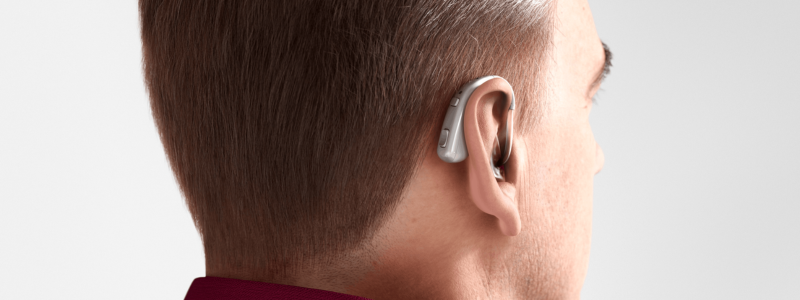 What is a Cholesteatoma?
  I need subtitles all the time
  Struggling to hear on public transport
 Watch our "Are Hearing Tests at Home Just as Good as Those in Clinics?" video below

Our specialist service includes:
Do not spend hundreds of pounds without getting a second opinion from us.
Please call us on 0800 567 7621
 Not only are the prices great, but the service is fantastic! Many thanks to your team.
What's included in our hearing aid prices?
Other pages you might find useful
FAQs on comparing hearing tests at home and in clinic
How long does a home hearing test take?
A home hearing test appointment typically takes around an hour in total, including the otoscopy, the pure tone audiometry test itself, and the discussion of results with your audiologist afterwards.
Will the audiologist bring all the equipment they need?
Yes. Your audiologist arrives with a calibrated audiometer and everything needed to carry out a full hearing assessment. You do not need to prepare anything in advance.
What happens if my hearing loss needs further investigation?
If your audiologist identifies anything during the assessment that requires medical follow-up, such as a suspected infection, sudden hearing loss, or significant wax blockage, they will refer you to the appropriate NHS or clinical service and explain exactly what the next step involves.
Can I have a family member present during the home hearing test?
Yes, and many people find this helpful. Having someone familiar in the room can make the appointment feel more relaxed, and a family member can also help you remember the details of the discussion afterwards.
If I decide to go ahead with hearing aids, what is included in the price?
All Hearing Aid UK prices include the full hearing test, the fitting and programming of your hearing aids by a qualified audiologist, and aftercare for life, meaning follow-up appointments, fine-tuning, and annual hearing retests are all covered at no extra cost for as long as you wear your aids.
Every hearing aid also comes with a manufacturer's warranty and a 60-day full money-back guarantee. The only additional cost over time is consumables such as batteries. We are Which? Recommended and trusted by over 31,000 customers across the UK.
Ask the Experts

Get free independent impartial advice from the experts you can trust. We offer nationwide coverage and huge savings on all our hearing aids.
6 Morton Lane
Walkwood
Redditch
Worcestershire
B97 5QA
Latest Launch
When we refer to a product as 'Latest Launch', we mean it is the latest to be released on the market.
New
When we refer to a product as 'New', we mean that the product is the newest hearing aid model on the market.
When we refer to a product as 'Superseded', we mean that there is a newer range available which replaces and improves on this product.
Older Model
When we refer to a product as an 'Older Model', we mean that it is has been superseded by at least two more recent hearing aid ranges.