




Head of Online Medical Content

Audiology Expert & Founder of Hearing Aid UK
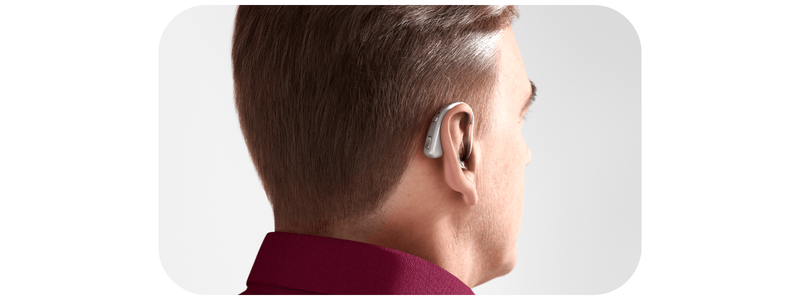
The Most Powerful Hearing Aids in 2026
If your hearing loss has been described as severe or profound, here's a look at the hearing aids actually built to handle it
Introduction | What are they? | Common features | What's available? | What's best for me? | Conclusion
Last Hearing Aid UK Update: 20
Overview
If you're researching powerful hearing aids, you've probably been told your hearing loss is severe or profound. And if that's the case, we know that can be a lot to take in.
Maybe you've already tried hearing aids that simply weren't strong enough. Maybe you're worried that even the most powerful options won't make enough of a difference.
Whatever's brought you here, we want to give you an honest picture of where this technology actually stands, because it's come much further than most people realise.
The hearing aids available today are smaller, smarter, and more capable than anything that existed even a decade ago. We've seen them genuinely transform the lives of people who had all but given up on hearing properly again, and that's not marketing language; it's just what we've witnessed.
Today's powerful hearing aids combine serious amplification with features like noise reduction, speech recognition, and wireless streaming, all in devices that are far more discreet and comfortable than the bulky aids many people still picture when they hear the word "hearing aid."
In this article, we'll walk you through the best options currently available and what each one could realistically do for your hearing.
What are powerful hearing aids?
Powerful hearing aids are, at their core, just built to turn sound up more than a standard hearing aid can, giving you the extra amplification your hearing needs.
They're usually recommended for people with severe to profound hearing loss, since they provide enough amplification to actually hear and make sense of speech and everyday sounds again.
In practical terms, these are the devices that can help you hear conversations in busy restaurants, follow dialogue on the television without subtitles, and stay connected with family gatherings, the everyday moments that matter most.
People who have severe to profound hearing loss wear hearing aids that are called power, superpower, or ultra-power hearing aids. These classifications genuinely matter because they indicate how much amplification the device can provide, and getting the right level is absolutely crucial for your success.
They are generally a touch larger than other hearing aids, but recent launches have proven that powerful hearing aid technology doesn't have to mean big, clunky designs. The technology is getting smaller, and therefore so are the devices themselves. Honestly, you'd be surprised at how discreet some of these powerful aids have become.
In fact, we've had customers express genuine amazement that their superpower hearing aids are smaller than their friend's standard aids from just a few years ago. Several factors determine the power of a hearing aid, including the size of the device, the type of technology it uses, and the level of amplification it provides.
Some powerful hearing aids are larger and more visible than others, while some are designed to be as small and discreet as possible. The key is finding the right balance for you, enough power to genuinely help your hearing, in a size that you're comfortable wearing every day.
The circuitry
The reason that powerful hearing aids are bigger is due to the need for more circuitry. These hearing aids are usually worn Behind-the-Ear (BTE) and also with a custom earmould that generally runs on a 675 battery or the smaller 13 battery.
Think of it rather like comparing a standard car engine to a high-performance sports car engine; more power requires more sophisticated components, which naturally takes up a bit more space.
BTE hearing aids are the popular choice for high-power aids because they are more flexible and offer more personalisation and access to sounds based on the placement of the microphone.
And there's a practical advantage here too: BTE styles are easier to handle if you have dexterity issues, which matters when you're adjusting settings or changing batteries.
Some common features include:
- Multiple microphones: These work together to sharpen sound and help you tell where it's coming from, so following speech in a noisy room feels far less like hard work.
In practical terms, that's being able to actually keep up at a busy family gathering, or catch what your grandchildren are saying even with the television on and everyone else talking at once.
- Noise reduction technology: This helps to reduce background noise, making it easier for the wearer to focus on the sounds they want to hear.
We've had customers tell us this feature alone has given them back their confidence to visit restaurants or attend social events they'd been avoiding for years.
- Telecoils: These allow the hearing aid to connect wirelessly to devices such as phones, televisions, and public address systems, making it easier for the wearer to hear in these situations.
If you've ever struggled to hear in theatres, churches, or lecture halls with loop systems, telecoils are genuinely transformative - the sound comes directly into your hearing aids without all the echo and background noise.
- Multiple program settings: These allow the wearer to customise the hearing aid for different environments, such as quiet settings, noisy settings, and settings with music.
Your audiologist will set these up with you during your home visit or clinic appointment, tailored specifically to the places you spend your time, whether that's your living room, your local pub, or your grandchildren's noisy playroom.
The right fit is key
Accessing the right fit is key to a successful hearing aid, no matter how much power it holds. But for powerful hearing aids, it is even more important.
This isn't something to be casual about; a poorly fitted powerful hearing aid will whistle, feel uncomfortable, and frankly won't work properly, regardless of how expensive or advanced it is.
The main goal is to reduce feedback, as a poor-fit earmould will cause feedback. If you've ever experienced that high-pitched whistling sound from hearing aids, you'll know exactly why proper fitting matters so much. It's not just annoying; it can actually prevent you from using the full power of the device.
Your audiologist will base the right power hearing aid for you and your hearing loss needs on how much power it provides, how successfully it controls feedback, and its circuitry.
This is where having an independent audiologist really matters. They're not limited to one or two manufacturers, so they can genuinely find the right device for your specific hearing loss pattern and lifestyle needs.
A lot of people have severe to profound hearing loss, like the use of telecoils to pair to loop systems in theatres and other large venues, and these are commonplace in such hearing devices to enhance their listening experience in a busy and noisy atmosphere.
People with hearing loss of this level also get huge benefits from investing in wireless hearing aid accessories that pair to both your powerful hearing aids and, in some cases, your smartphone. Accessories such as Remote Mics, TV Streamers, and Adapters make the challenging environments of life just that little bit easier.
What are the most powerful hearing aids available on the market?
The "most powerful" isn't always the same as "best for you." What matters is finding the right level of power for your specific hearing loss, combined with features that suit your lifestyle.
It's important to first know that severe to profound hearing loss is successfully treated with high-powered hearing aids. These hearing aids include many of the same features as hearing aids that treat other levels of hearing loss.
The only other additions are extra amplification and more advanced speech recognition features. And here's something encouraging: you're not being given second-best technology just because you need more power. These devices often include the very latest innovations in speech processing and noise management.
Most hearing aid manufacturers in today's industry offer powerful hearing aids for this niche patient. We have access to all of them because we're truly independent, not tied to any manufacturer. This means we can compare them fairly and recommend what's genuinely right for you, not what earns us the highest commission.
Remember, as you read through these options: technical specifications matter, but so does real-world performance in your actual life.
"What's genuinely encouraging about this latest crop of power and superpower devices is that manufacturers have finally stopped treating high amplification and modern connectivity as a trade-off. For example, ten years ago, if you needed serious power, you accepted a bigger device, a shorter battery life, and you often gave up on Bluetooth altogether. That's changing fast"
Paul Harrison, Audiology Expert & Founder, Hearing Aid UK
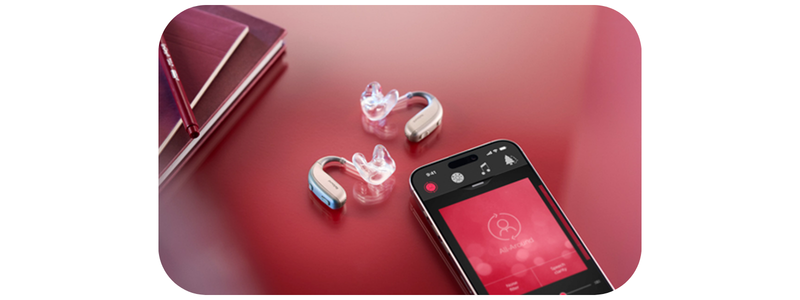
Recent Powerful Hearing Aid Launches
What are the best and most powerful hearing aids still available for 2026?
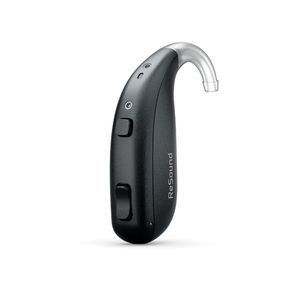
Resound Enzo IA hearing aids
Launched in August 2025, the Enzo IA is described by the manufacturer as the world's smallest rechargeable Super Power hearing aid, with 28 hours of battery life on a single charge.
In practical terms, that means charging it overnight like a phone and not thinking about it again until bedtime, no spare batteries in your pocket for a long day out or an evening at your favourite restaurant.
Behind the scenes, it runs on Resound's Intelligence Augmented platform, which uses machine learning to read the room and adjust automatically. Walk from a quiet kitchen into a noisy pub garden, and the aid is designed to shift with you rather than needing manual reprogramming.
Its feedback management system is built to control the high-pitched whistling that's long been the biggest complaint about powerful hearing aids, the kind of noise that makes people avoid turning the volume up even when they need to.
According to the manufacturer's own published data, the Enzo IA earned a 93% user preference rating in noisy conditions, and its Clear Focus beamforming feature delivers a 2.7 dB signal-to-noise improvement over Resound's previous Super Power devices.
In everyday terms, that's the difference many wearers report between giving up on a busy restaurant and actually following the conversation across the table, or attending a crowded family celebration without spending the whole evening nodding along and hoping nobody notices you've lost the thread.
Connectivity is another area where the manufacturer positions the Enzo IA as a first: it's built for Bluetooth LE Audio and Auracast, supported through the Resound Smart 3D app.
For someone who struggles on the phone, that means hands-free calls streamed straight into both ears. For TV, it means following a programme without turning the volume up for everyone else in the room.
And telecoil compatibility still covers the more old-fashioned but genuinely useful scenario of loop systems in churches, theatres, and community halls.
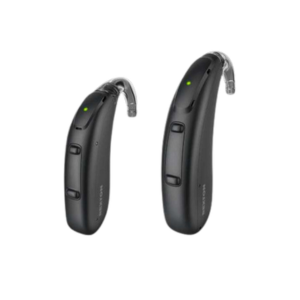
Rexton Reach B-Li P (Power) and B-Li HP (High Power) hearing aids
Launched on 1st April 2026, Rexton's Reach B-Li range gives you two power options depending on the level of amplification you need: the B-Li P (Power) and the B-Li HP (High Power), both rechargeable Behind-the-Ear (BTE) devices built for people with severe to profound hearing loss.
Battery life is where this range stands out. The manufacturer states the B-Li HP offers up to 73 hours of runtime, including 5 hours of streaming, on a single charge, with the B-Li P offering up to 35 hours under the same conditions.
In real terms, that's the difference between worrying about a charger on a long weekend away and simply not thinking about it; even the lower-power B-Li P comfortably covers a full day and evening out, while the B-Li HP can stretch across a busy few days without needing to plug in.
A feature called Multi-Voice Focus is designed to keep multiple speakers clear and distinct in group conversation, even with background noise and people talking over one another.
Picture a family dinner where three people are chatting at once, or a work meeting where colleagues speak in quick succession: this is the everyday scenario the feature is aimed at, rather than the more common single-speaker-in-noise problem other ranges tend to focus on.
Both models stream directly to iPhone and Android devices via MFi, ASHA, and Bluetooth LE Audio, and include telecoil compatibility for hearing loops in places like churches, theatres, and community halls.
The charging station itself is worth a mention too: it includes a built-in drying function and UV cleaning light, useful for anyone whose previous hearing aids have suffered from moisture or wax build-up.
One niche but genuinely useful detail: Rexton's Reach B-Li range carries ATEX certification, meaning it's tested and approved as safe to use in potentially explosive environments, such as paint or chemical manufacturing sites, petrol stations, or mills.
This won't be relevant to most customers, but it's a real point of difference for anyone working in those industries who's been told to avoid standard hearing aids on-site.
- Rexton Reach 80 hearing aids
- Rexton Reach 60 hearing aids
- Rexton Reach 40 hearing aids
- Rexton Reach 30 hearing aids
- Rexton Reach 20 hearing aids
Starkey G Series AI 24 Power BTE 13 and G Series AI 24 Ultrapower BTE 13 hearing aids
Launched in May 2026, Starkey's G Series AI range includes two BTE power options: the Power BTE 13 and the Ultrapower BTE 13, both running a size 13 disposable battery rather than rechargeable power, since higher amplification tends to drain rechargeable batteries faster over a full day, particularly for anyone making frequent calls or streaming audio.
The difference is the receiver inside: a P receiver for Power, a UP receiver for greater amplification on the Ultrapower, suited to more profound hearing loss. Starkey recommends the 24 or 20 tiers for noisy social settings like pubs and restaurants, and states the 24 tier offers 14 dB of wind noise reduction, useful if you're often outdoors and have previously found wind drowned out conversation.
Both include telecoil, My Starkey app control, and Bluetooth for calls and streaming, and come in silver, beige, graphite grey, and chestnut.
- Starkey G Series AI 24 hearing aids
- Starkey G Series AI 20 hearing aids
- Starkey G Series AI 16 hearing aids
- Starkey G Series AI 12 hearing aids
- Starkey G Series AI 10 hearing aids
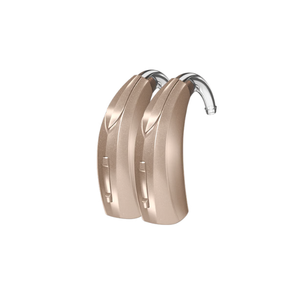
Phonak Naida Lumity hearing aids
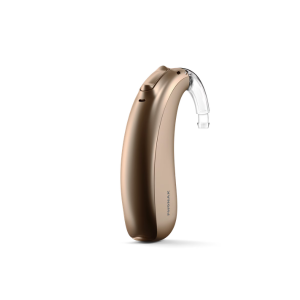
Launched by Phonak in August 2023, Naida Lumity (often shortened to Naida L) is still the current generation of Phonak's power range. It comes in two versions: the L-PR, a rechargeable BTE, and the L-UP, an ultra-power model that runs on a disposable 675 battery, built specifically for severe to profound hearing loss.
One honest note worth flagging here: Naida L still runs on Phonak's Lumity processing platform, the generation before Infinio, which has already rolled out across some of Phonak's smaller Receiver-in-Canal RIC ranges.
That's not a criticism; ultra-power devices typically lag behind more compact styles by a generation or two because of the extra engineering involved, but if advanced processing is your absolute priority over raw power, it's worth asking your audiologist whether an Infinio-based option in a lower power tier might suit you, versus Naida L's higher power ceiling.
The manufacturer states this generation is 14% smaller and 27% lighter than the previous Naida Paradise, while offering up to 141 dB of peak gain on the UP model and up to 130 dB on the rechargeable PR model.
In everyday terms, that extra headroom matters most for people who've been told previous hearing aids simply weren't strong enough, rather than uncomfortable or the wrong shape.
SmartSpeech Technology, powered by AutoSense OS 5.0, is designed to automatically adjust to your surroundings, whether that's a one-to-one chat in a quiet room or trying to follow a conversation at a busy family gathering.
Universal Bluetooth connectivity ("Made for All") means streaming works with both Apple and Android phones, plus TVs, tablets, and laptops, controlled through the myPhonak app.
For someone who's previously had a hearing aid that only worked properly with one phone brand, that flexibility can be the difference between actually using the streaming features or ignoring them entirely.
Naida L also includes integrated Roger receivers, letting you pair with a Roger microphone in situations like classrooms, meetings, or noisy family dinners, streaming a speaker's voice directly into both ears over distance and background noise.
- Phonak Lumity L90 hearing aids
- Phonak Lumity L70 hearing aids
- Phonak Lumity L50 hearing aids
- Phonak Lumity L30 hearing aids
Which is right for me?
Think about what matters most day to day rather than comparing spec sheets. For the smallest rechargeable device without sacrificing power, the Resound Enzo IA leads, with strong Auracast and Bluetooth LE Audio support too. If battery life is your main frustration, the Rexton Reach B-Li HP's 73-hour runtime is hard to beat for frequent travellers.
Struggling in group conversations with several people talking at once? Rexton's Multi-Voice Focus is built for exactly that. For an established range with strong Roger microphone integration for classrooms and meetings, Phonak Naida Lumity remains dependable.
And if you work somewhere with explosion risk, such as chemical manufacturing or fuel handling, the Rexton Reach B-Li's ATEX certification is worth raising with your audiologist. If none of this feels clear-cut yet, that's completely normal; your free hearing test and audiologist will help you find the right fit.
Conclusion
The past year has brought some genuinely useful progress for anyone with severe to profound hearing loss, real improvements in the things that actually affect daily life: smaller rechargeable bodies, longer battery life, better handling of group conversations, and connectivity that finally works the way it should.
Not every advance points the same direction, though; Starkey's G Series AI Power and Ultrapower BTE models deliberately stick with disposable batteries at this power level, a reminder that "newer" doesn't always mean "rechargeable," and that the right choice still depends on your own routine and power needs.
Whichever of these ranges you're drawn to, remember that the technology is only ever half the story. Proper fitting, ongoing support, and an audiologist who isn't tied to a single manufacturer matter just as much as the specification sheet.
If you're ready to find out what would genuinely work best for you, book your free hearing test and we'll talk you through it, with no pressure and no obligation.
Every appointment is with an HCPC-registered audiologist from our network of over 200 professionals across 93+ clinics UK-wide, and if getting to a clinic isn't easy, we'll come to you with a completely free home visit.
We're independent of every manufacturer, so the advice you get is based on what suits you, not what we're incentivised to sell, and it comes with prices up to 40% less than the high street, aftercare for life included as standard, and a 60-day money-back guarantee if it's not right.
We're proud to be featured in the latest Which? Report for hearing aids, alongside other independent audiologists, where we came on top. Trusted by over 31,000 customers, so you're in good hands either way.
Why Choose Us?
- FREE Hearing Tests
- Best Hearing Aids and Prices
- FREE Aftercare for Life
- FREE Home Visits
- FREE Clinic Appointments
- 200+ Local Audiologists
- 60 Day Money Back Guarantee
Need more support?
It is important to note that powerful hearing aids may not be suitable for everyone, and it is important to consult with a hearing healthcare professional to determine the best solution for your individual needs. They can help you determine the level of amplification you need based on your specific hearing loss and lifestyle needs.
Please call us free on 0800 567 7621 to speak with one of our audiologists. With over 200 private audiologists nationwide, we can look after your hearing health in your area. Supporting patients at home or in clinic at a convenient time for them. You can download Oticon's power hearing aids whitepaper below for reference.

Other articles on hearing aid advice you might like...
 Audibel Hearing Aids
  How hearing aids boost your confidence
  Hearing aids for dexterity problems
Our specialist service includes:
Do not spend hundreds of pounds without getting a second opinion from us.
Please call us on 0800 567 7621
 Not only are the prices great, but the service is fantastic! Many thanks to your team.
What's included in our hearing aid prices?
Other pages you might find useful
FAQs
In general, any audiologist will always recommend to you the hearing aid model that best suits your needs. Here is a useful checklist to make sure that is the case.
- Audiologist's level of knowledge: The audiologist you have seen will hopefully have a wide knowledge of all available hearing aids; however, some will only be familiar with a small number of brands and, therefore, may not really be in a position to know which model is the best for you. It is OK to challenge their recommendation and ask them to justify why this particular brand is the one for you.
- Do research: Read about the hearing aid that was recommended. Does it seem like it will suit your lifestyle? Does it have more or fewer features than you need?
- Be aware of sales targets: Many high street retailers have specific tie-ins to a particular manufacturer/brand. The hearing aid they have suggested may still be the correct one for you, but do your research so that you know why they might have recommended it. You can read our best hearing aids of this year here
If you have significant hearing loss in both ears, you should be wearing two hearing aids. Here are the audiological reasons why:
Localisation: The brain decodes information from both ears and compares and contrasts them. By analysing the minuscule time delays as well as the difference in the loudness of each sound reaching the ears, the person is able to accurately locate a sound source.
Simply put, if you have better hearing on one side than the other, you can't accurately tell what direction sounds are coming from.
Less amplification is required: A phenomenon known as “binaural summation” means that the hearing aids can be set at a lower and more natural volume setting than if you wore only one hearing aid.
Head shadow effect: High frequencies, the part of your hearing that gives clarity and meaning to speech sounds, cannot bend around your head. Only low frequencies can. Therefore, if someone is talking on your unaided side, you are likely to hear that they are speaking, but be unable to tell what they have said.
Noise reduction: The brain has its own built-in noise reduction, which is only really effective when it is receiving information from both ears. If only one ear is aided, even with the best hearing aid in the world, it will be difficult for you to hear in background noise as your brain is trying to retain all of the sounds (including background noise) rather than filtering them out.
Sound quality: We are designed to hear in stereo. Only hearing from one side sounds a lot less natural to us.
Fancy some further reading on this topic? You can read about why two hearing aids are better than one in our article, hearing aids for Both Ears, here
For most people, the main benefit of a rechargeable hearing aid is simple convenience. We are used to plugging in our phones and other devices overnight for them to charge up. Here are some other pros and cons:
For anybody with poor dexterity or issues with their fingers, having a rechargeable aid makes a huge difference, as normal hearing aid batteries are quite small and some people find them fiddly to change.
One downside is that if you forget to charge your hearing aid, then it is a problem that can't be instantly fixed. For most, a 30-minute charge will get you at least two or three hours of hearing, but if you are the type of person who is likely to forget to plug them in regularly, then you're probably better off with standard batteries.
Rechargeable aids are also a little bit bigger and are only available in Behind-the-Ear models.
Finally, just like with a mobile phone, the amount of charge you get on day one is not going to be the same as you get a few years down the line. Be sure to ask what the policy is with the manufacturer's warranty when it comes to replacing the battery.
For most people, the answer is yes. But it's never that simple.
The majority of hearing problems affect the high frequencies a lot more than the low ones. Therefore, open fitting hearing aids sound a lot more natural and ones that block your ears up can make your own voice sound like you are talking with your head in a bucket. Therefore, in-ear aids tend to be less natural.
However, the true answer is we can't tell until we have had a look in your ears to assess the size of your ear canal, and until we have tested your hearing to see which frequencies are being affected.
People with wider ear canals tend to have more flexibility, also there are open fitting modular CIC hearing aids now that do not block your ears.
There is also the age-old rule to consider, that a hearing aid will not help you if it's sat in the drawer gathering dust. If the only hearing aid you would be happy wearing is one that people can't see, then that's what you should get.
Most people can adapt to any type of hearing aid, as long as they know what to expect. Have an honest conversation with your audiologist as to what your needs are.
Generally speaking, six or more. Unless it's none at all. The number of channels a hearing aid has is often a simplistic way an audiologist will use to explain why one hearing aid is better than another, but channels are complex, and it is really not that straightforward. Here are some reasons why:
Hearing aids amplify sounds of different frequencies by different amounts. Most people have lost more high frequencies than low, and therefore need more amplification in the high frequencies. The range of sounds you hear is split into frequency bands or channels, and the hearing aids are set to provide the right amount of hearing at each frequency level.
Less than six channels, and this cannot be done with much accuracy, so six is the magic number. However, a six-channel aid is typically very basic with few other features and is suitable only for hearing a single speaker in a quiet room. The number of channels is not what you should be looking at; it's more the rest of the technology that comes with them.
As a final note, different manufacturers have different approaches. One method is not necessarily better than any other. For example, some manufacturers have as many as 64 channels in their top aids. Most tend to have between 17 and 20. One manufacturer has no channels at all.
Manufacturer's warranties typically last between 2-5 years, depending on the brand and model, and cover defects in materials and workmanship. This includes repairs for component failures, electronic malfunctions, and manufacturing defects, but excludes damage from misuse, accidents, or normal wear. Most manufacturers also include loss and damage insurance for the first year.
We handle all warranty claims on your behalf, liaising with manufacturers and ensuring you get replacement devices quickly when needed. This comprehensive warranty coverage, combined with our lifetime aftercare, gives you complete peace of mind. Find out more about our warranty cover here
Our hearing tests are completely free, whether at our clinics or in your home. Unlike other providers who charge £30-£100 for home visits, we believe hearing healthcare should be accessible without financial barriers. Our comprehensive assessments include examination by an HCPC-registered audiologist, audiogram results, and personalised recommendations.
All testing, future adjustments, and ongoing support are included at no extra cost. While NHS tests are also free, typical 6-week waiting periods often lead people to seek immediate private testing. We provide prompt, professional assessments that fit your schedule and budget.
Yes, we offer completely free home visits throughout the UK, and this service is included in our prices with no additional charges. Home visits are particularly valuable for people with mobility issues, busy schedules, or those who simply prefer the comfort and convenience of their own environment.
Our audiologists can conduct full hearing tests, fit hearing aids, and provide ongoing support in your home. This service sets us apart from many providers who either don't offer home visits or charge extra for them.
We can offer prices up to 40% lower than high street retailers because of our business model. As a network of 200+ independent audiologists, we don't have the massive overheads of large retail chains - no expensive high street premises, no sales targets pushing audiologists to sell the most expensive options, and no costly marketing campaigns.
However, we maintain the same buying power as the big chains because we purchase on behalf of our entire nationwide network. This means you get access to the same premium hearing aids with professional service, but at genuinely competitive prices.
We offer a comprehensive 60-day money-back guarantee, which gives you twice the industry standard time to properly assess whether your hearing aids are right for you. This extended period recognises that adjusting to hearing aids takes time, and your brain needs several weeks to adapt to the amplified sounds.
Unlike many providers who offer just 30 days, we believe 60 days gives you the confidence to test your hearing aids in all the situations that matter to you - from quiet conversations at home to busy restaurants and outdoor activities.
Ask the Experts

Get free independent impartial advice from the experts you can trust. We offer nationwide coverage and huge savings on all our hearing aids.
6 Morton Lane
Walkwood
Redditch
Worcestershire
B97 5QA
Latest Launch
When we refer to a product as 'Latest Launch', we mean it is the latest to be released on the market.
New
When we refer to a product as 'New', we mean that the product is the newest hearing aid model on the market.
When we refer to a product as 'Superseded', we mean that there is a newer range available which replaces and improves on this product.
Older Model
When we refer to a product as an 'Older Model', we mean that it is has been superseded by at least two more recent hearing aid ranges.