



Free home visits
with a local audiologist

Head of Online Medical Content

Audiology Expert & Founder of Hearing Aid UK
Last Hearing Aid UK Update: 24
Hearing Aid UK offers free hearing tests across the UK, at one of our 93+ local clinics or in your own home through a free home visit. Every test is carried out by one of our over 200 HCPC-registered audiologists, and there's no obligation to buy anything.
If hearing aids could help, they can often be fitted on the same visit, or at a follow-up if they need ordering. Whether you want a second opinion or just want to know where you stand, we make it simple, local, and convenient. On this page, we talk about what to expect from your hearing test, what your results mean, and what happens next.





Many people start with a simple online search for a hearing test near them, and we're here to provide trusted, professional results locally.
Wherever you are in the UK, there is a qualified, HCPC-registered audiologist nearby ready to carry out a thorough hearing test.
Using professional-grade equipment, they will assess your hearing carefully, explain what the results mean, and talk you through your options with no pressure and no obligation.
Getting checked early means you have more options and a clear answer either way.

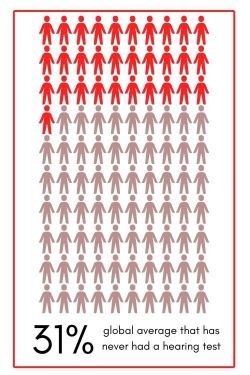
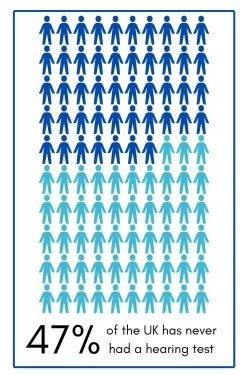
According to RNID, nearly half of UK adults (47%) feel hearing aids haven't been accepted by society the way glasses have. In our experience, many people wait years between first noticing a change and getting it checked.
Sometimes it's because people don't realise how much a change in hearing can affect everyday life.
Or they may feel there is a stigma surrounding hearing loss and see it only through a negative lens.
Either way, a hearing test is simply a way of finding out where you stand, and it doesn't commit you to anything.

However, what they don’t always realise is how discreet and modern today's hearing aids are.
If this sounds familiar, a hearing test near you is a low-pressure first step.
RNID notes that unaddressed hearing loss can lead to social isolation, so it's worth getting checked rather than wondering.
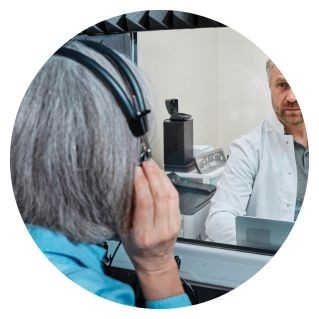
It's completely natural to feel a bit nervous before your first hearing test, mostly because you don't know what to expect. The short version: a few questions about your health and hearing, a look in your ears, then a listening test where you press a button when you hear a sound; your audiologist will explain everything as they go.
Whether you're looking for a second opinion on hearing aids, a hearing test, or simply advice on hearing healthcare or pricing you've received elsewhere, we're here to help.
If something didn't feel right about a previous hearing test or the advice you were given, that's a completely valid reason to seek a second opinion, and we'd encourage it.
A fresh assessment from one of our audiologists can either confirm what you've already been told and give you confidence to move forward, or pick up something that was missed. Either way, you leave with a clearer picture and no pressure to do anything you're not comfortable with.
Your results are plotted on an audiogram: a chart showing the quietest sounds you can hear at different pitches. It's one part of your assessment with an audiologist, and the most useful. During the test, your audiologist uses an audiometer to play tones at different pitches and volumes through headphones.
You respond to these sounds by pressing a button when you hear them. The quietest level you hear is recorded at each pitch, then plotted on the audiogram. Your right ear is usually marked with a red circle and your left with a blue cross.
The higher up the chart your results sit, the better your hearing. The further down they sit, the louder a sound has to be before you hear it.
Your audiologist will explain what the results show for everyday things like speech and the TV. If anything suggests a medical issue, such as pain, discharge or a sudden change, your audiologist will recommend you see your GP, who may refer you to an ENT specialist.
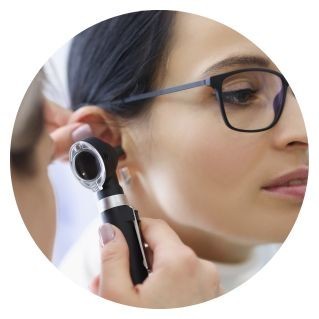
Allow around an hour. The listening test itself takes about 20 to 30 minutes, and the rest is time to go through your results and ask questions.
If hearing aids could help, your audiologist will talk you through the options that suit your hearing, lifestyle and budget. Depending on the model, they can often fit them on the same visit. Your results also give you a baseline, so future tests can show whether anything has changed.
It all depends on how exposed you are to harmful sounds. For example, under UK Health and Safety legislation, if you work on a building site, you would need to have an annual hearing test. However, you should get your hearing checked immediately if you think your hearing might have changed, even if you already wear hearing aids.
Other than that, on average, we would recommend testing your hearing at least every three years - unless your audiologist has stated otherwise. Though if you're over 50 or have existing hearing concerns, more frequent checks are advisable. Untreated hearing loss can worsen over time and has been linked to social isolation and cognitive decline.

Your audiologist compares your air and bone conduction results for both ears. That shows how much hearing loss there is, if any, and which part of the ear it's coming from. Some people refer to an audiogram as a 'hearing test chart' or 'hearing test graph'.
The audiogram’s vertical axis shows the volume or intensity of the sound given, measured in decibels (dBHL). It begins at 10 dBHL and finishes at 120 dBHL. The horizontal axis displays where the low-pitched sound starts and escalates in pitch as you go through your test.
When the audiologist reads the results for both ears and finds a level of hearing loss, it is generally found in both ears. However, sometimes there can be asymmetry and varying levels. Your air and bone conduction tests are compared, and you will be shown if this is the case and if your loss is sensorineural, conductive, or both.
What are decibels, and what are frequencies? Decibels are what we measure sound in and are not permanent values like volts and meters. This scale is logarithmic and doubles the sound pressure level, increasing by 6 dB. The dB scales vary according to the environment the sound travels through, using a calibrated decibel hearing level scale.
Frequency is the number of vibrations per second in each sound wave and is measured in Hertz (Hz). The higher the level, the higher the frequency.
The human ear can detect sounds from 20 to 20,000Hz, though clinical audiograms typically test the 250Hz–8,000Hz range most relevant to speech and daily hearing. Nature sounds such as birdsong sit at the higher end of that range, while a bass guitar sits at the lower end.
If you have a high-frequency loss, it generally means that you have problems hearing high-frequency sounds only. Consonants like s, f, and sh are hard to make sense of. Whereas low-frequency loss, being less common, affects the ability to hear vowels in conversation.
Wherever you go for your hearing test, it should be free, but some hearing aid providers do charge, especially if you want to test your hearing at home. We recommend you ask your audiologist before you book your appointment to avoid any disappointment.
At Hearing Aid UK, all our hearing tests, aftercare, digital hearing aid fitting, and programming are included in the price of the hearing aid(s).
On another note, the NHS provides free hearing tests and usually, your GP will refer you to the NHS to book an initial appointment with an audiologist.
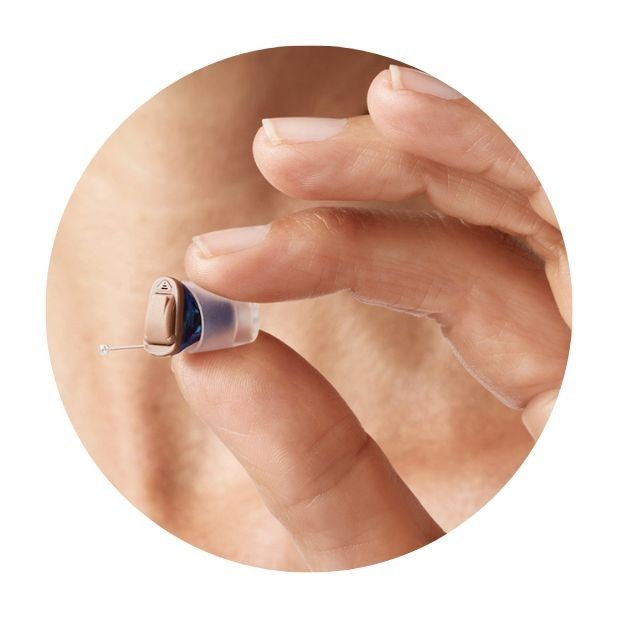
Choosing between hearing care in a clinic or at home will depend on your specific needs and preferences. Both options have their own advantages and disadvantages.
It may be helpful to talk to an audiologist or hearing healthcare professional to determine the best option for you.
Both are free, both use the same equipment, and both are carried out by the same HCPC-registered audiologists.
A clinic might suit you if you're able to travel.
A home visit might suit you if getting there is difficult, you'd like family with you, or you'd simply rather stay at home.
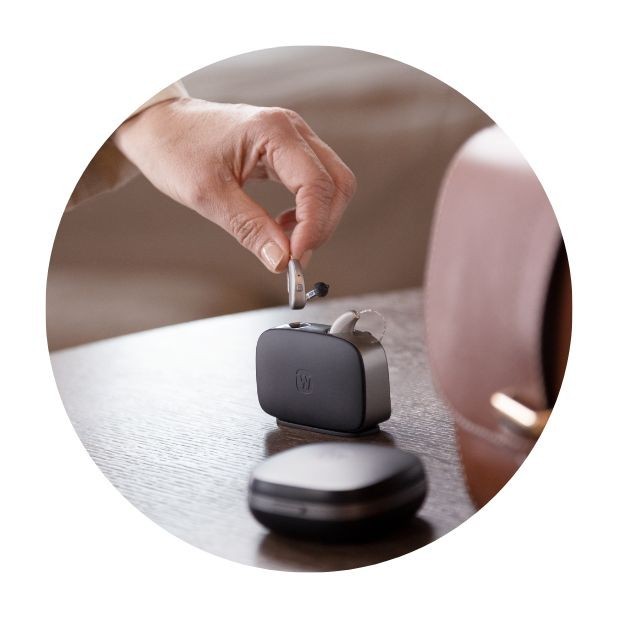
Your audiologist talks you through the types of hearing aids that suit your results, lifestyle and budget, from all the leading brands, with no manufacturer bias.
You will select a hearing aid that suits your needs, loss, and budget with support from your audiologist.
Your audiologist programmes your hearing aids to your test results, adjusting how much they amplify each pitch, then fine-tunes them to how they sound to you.
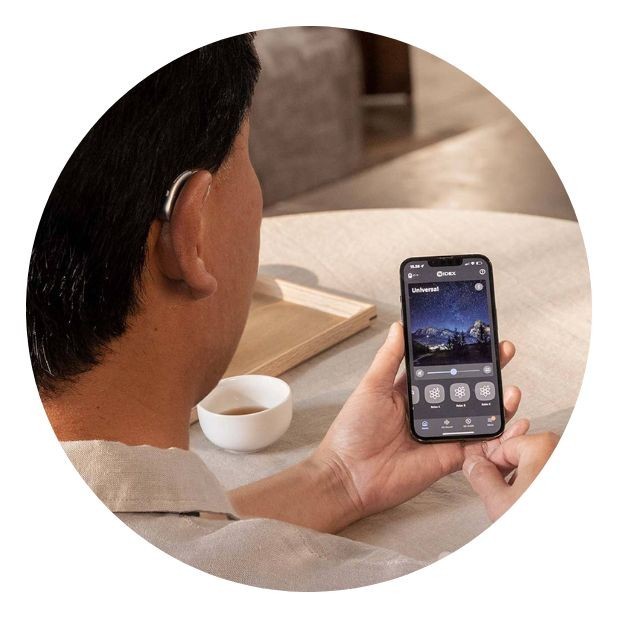
Follow-up appointments are simply a chance to check in, making sure your hearing aid is still performing as it should and that you're happy with how everything feels and sounds.
The audiologist will give you advice on how to take care of your hearing aid and use it properly.
The fitting process may take several appointments to ensure that the hearing aid is properly adjusted and customised to your satisfaction and comfort.
Worried about your hearing? You don't have to wait weeks to find out.
Unlike NHS referrals, which can take several weeks or more, our private hearing tests are available at local clinics across the UK, with no waiting list.
One of our qualified audiologists will carry out a thorough assessment, talk you through your results on the same day, and in many cases, can get you fitted with hearing aids there and then.

Do not spend hundreds of pounds without getting a second opinion from us.
 Not only are the prices great, but the service is fantastic! Many thanks to your team.
Well, while you are being tested sounds are sent to you at various pitches and volumes using a computer-driven audiometer. You will respond to these sounds by pressing a button to indicate when you hear them. An audiologist will use a red circle for your right ear and a blue one for your left. These markings will give your audiologist a bigger picture of how well you hear.
Well, while you are being tested sounds are sent to you at various pitches and volumes using a computer-driven audiometer. You will respond to these sounds by pressing a button to indicate when you hear them. An audiologist will use a red circle for your right ear and a blue one for your left. These markings will give your audiologist a bigger picture of how well you hear.
A good audiologist will take their time, however, a hearing test will generally take about 20-30 minutes to complete.

Get free independent impartial advice from the experts you can trust. We offer nationwide coverage and huge savings on all our hearing aids.
When we refer to a product as 'Latest Launch', we mean it is the latest to be released on the market.
When we refer to a product as 'New', we mean that the product is the newest hearing aid model on the market.
When we refer to a product as 'Superseded', we mean that there is a newer range available which replaces and improves on this product.
When we refer to a product as an 'Older Model', we mean that it is has been superseded by at least two more recent hearing aid ranges.
