



Looking for ATEX certified hearing aids?
Discover hearing aids with ATEX certification
Have hearing loss and work in a flammable or potentially explosive environment? Looking for hearing aids that not only keep you safe but also offer durability and reliability?
There are ATEX-certified hearing aids on the market that offer reliable, robust, and safe hearing solutions.
We briefly explore the Rexton Reach and BiCore hearing aid ranges, which both include ATEX-certified devices. Find out how these solutions will not only be safe to wear but also offer premium hearing support.

ATEX Hearing Aid Facts

Paul Harrison
Audiology Expert at Hearing Aid UK
0800 567 7621

ATEX Certified Hearing Aids
Safeguarding the hearing health of workers in hazardous environments
Last Hearing Aid UK Update: 07/05/2026
ATEX-certified hearing aids for explosive atmospheres
If you work in an environment where flammable gases, vapours, or combustible dusts are present - or if you're an employer responsible for workers in these conditions - you'll know that standard hearing aids simply aren't permitted.
ATEX-certified hearing aids are the only legally compliant solution that allows workers with hearing loss to perform their roles safely whilst meeting UK Health and Safety Executive (HSE) requirements.
What are ATEX hearing aids?
ATEX-certified hearing aids are specialised devices designed to meet stringent safety standards for wearing in potentially explosive atmospheres. For example, where flammable gases, vapours, or combustible dusts may be present. These environments could be industrial settings such as oil rigs, chemical plants, or mining locations.
The actual word, ATEX, comes from the French term "Atmosphères Explosibles", which outlines regulations for equipment intended for use in potentially dangerous working environments.
It doesn't stop at hearing aids either; other devices, such as mobiles, watches, and computers, have to be ATEX-certified to be used in these working conditions. For example, when looking at both Rexton Reach and BiCore hearing aid ranges,
"The ATEX group/class is printed on the ATEX card, which must be available at hand when the hearing aids are used in explosive atmospheres. Ask your hearing care professional for your ATEX card"
Rexton
Who needs ATEX hearing aids in the UK?
ATEX-certified hearing aids are essential for workers with hearing loss in industries including:
- Oil and gas extraction and refining - Both onshore and offshore platforms
- Chemical manufacturing and processing plants
- Pharmaceutical production facilities
- Mining operations - Particularly coal and mineral extraction
- Paint and solvent manufacturing
- Petrochemical facilities
- Grain handling and storage (flour mills, feed mills)
- Wastewater treatment plants
- Any environment classified as ATEX Zone 0, 1, 2, 20, 21, or 22
If you're unsure whether your workplace requires ATEX certification, your health and safety officer or facility manager will be able to confirm. Many companies conduct ATEX assessments that identify which zones require certified equipment.
ATEX certification testing and long-term durability
Before an ATEX hearing aid reaches you, it goes through extensive testing — checking how it performs under heat, pressure, and impact, and verifying that it simply cannot generate enough energy to cause ignition in a hazardous atmosphere.
This means that they are often made from robust housing materials that can withstand harsh conditions, offer protection from moisture and corrosion, whilst minimising the risk of leaks or electrical sparks.
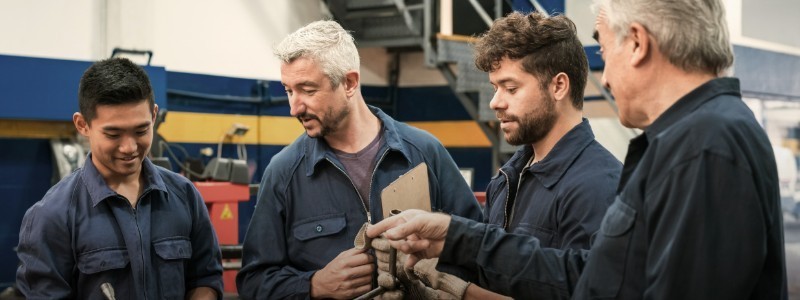
ATEX Certification Hearing Aids
In addition to meeting safety requirements, what else can intrinsically safe hearing aids support you with?
Why standard hearing aids create explosion risks
Standard hearing aids contain electronic components that can generate tiny sparks or heat during normal operation - completely safe in everyday environments but potentially catastrophic in atmospheres containing flammable substances. Even a microscopic spark from a battery connection or circuit board could ignite gases or dust particles, causing an explosion.
ATEX-certified hearing aids are built differently from the ground up — designed so that even in a fault condition, they cannot release enough energy to cause ignition. This means they're constructed in ways that make it physically impossible for them to release enough energy to cause ignition, even in the event of a malfunction.
ATEX hearing aids still prioritise features and comfort
ATEX-certified hearing aids are equipped with features that meet the needs of those with hearing loss who work in harsh environments. Features such as advanced Bluetooth, noise-cancelling, speech clarity and enhancement settings.
Thus ensuring that you can communicate effectively and hear through the noise of machinery and equipment, as well as being alerted to any safety notices, without sacrificing your safety.
Hearing aids with ATEX certification are also some of the most comfortable hearing solutions you can wear, as they often feature an ergonomic design for all-day comfort.
The reality of wearing hearing aids in industrial environments
Working in a tough environment puts hearing aids through far more than a standard day at a desk. ATEX models are built for it — designed to cope with:
- High noise levels - Advanced noise reduction helps you hear speech clearly even with heavy machinery operating nearby
- Extreme temperatures - Functional in both very cold offshore environments and hot industrial processing areas
- Moisture and humidity - Sealed against water ingress, steam, and condensation
- Dust and debris - Protected against fine particles that would damage standard hearing aids
- Physical knocks and impacts - Robust housing that survives the rough and tumble of manual work
- PPE compatibility - Designed to work alongside hard hats, safety goggles, respirators, and other protective equipment
For information on ATEX hearing aids and employer responsibilities
If you employ someone with hearing loss who works in an ATEX environment, the law is fairly clear. The Equality Act 2010 places a duty on employers to make reasonable adjustments, and providing certified hearing aids that allow someone to do their job safely sits squarely within that. It's not optional.
Health and Safety at Work regulations reinforce this further, requiring that workers can hear safety warnings and communicate effectively in hazardous environments. For someone with hearing loss, ATEX hearing aids are often the only way to meet both requirements at once.
We work with occupational health teams across the UK to help employers navigate this — making sure the right hearing solution is in place for each individual, and that everything meets the necessary safety and regulatory standards. If you'd like to talk it through, we're here.
Understanding ATEX markings on your hearing aids
Your ATEX hearing aids will come with certification documentation that specifies which zones they're approved for. This typically appears as:
- Equipment Group II (for surface/non-mining use) or Group I (for mining)
- Category rating (1, 2, or 3)
- Zone compatibility (which zones you can safely wear them in)
For example, you might see: II 2G Ex ib IIC T4 Gb - This indicates equipment suitable for Zone 1 gas atmospheres. Your audiologist will provide you with an ATEX card that must be carried whenever you're wearing the hearing aids in hazardous areas. Your employer's health and safety team may also need to see this documentation for their records.
Definition of ATEX zones table
In brief, ATEX zones are locations where there is a risk of explosion or combustion. For example, combustion dust will eventually build up over time and emit flammable gases. This also determines how equipment in hazardous working environments is labelled and used, and potentially how long a worker can be in that atmosphere.
Below, we highlight each ATEX zone, its definition, and the level of explosive atmosphere present.
| ATEX Zone for Combustible Dust Atmospheres | ATEX Zone for Gas/Vapour/Mist Atmospheres | Definition | Explosive Atmosphere Present |
| 20 | 0 | Air and flammable substances such as vapour, gas, and mist. | Frequent, continuous, long periods. |
| 21 | 1 | Air and flammable substances such as vapour, gas, and mist. | Likely to occur, occasionally. |
| 22 | 2 | Air and flammable substances such as vapour, gas, and mist. | Not likely to occur in short periods. |
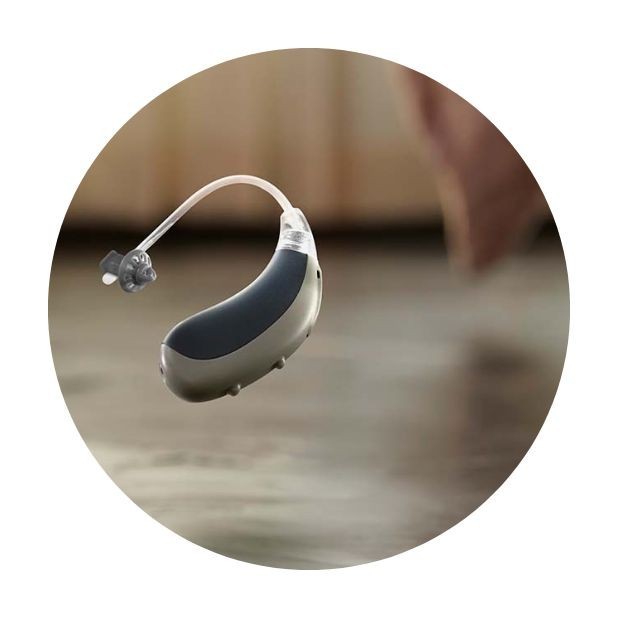
Rexton ATEX Hearing Aids
Are hearing aids intrinsically safe? Do hearing aids emit radiation? Hearing aids emit very low radiation, and we believe it is not enough to cause health risks. Most hearing aids now use Bluetooth LE (low-energy,) which is safer than your headphones or car's wireless connection.
There are only a select few hearing aids that are ATEX-certified, which offer this security. Rexton BiCore and Reach hearing aid ranges are ATEX certified - prioritising both safety, performance, and overall enhancing the well-being and productivity of workers in challenging industrial environments.
"We have ATEX Certification on Rexton Reach and BiCore products. ATEX certification verifies our hearing aids are both tested and approved to be classified as intrinsically safe.
This is crucial for individuals in certain fields of work where use of hearing aids are only allowed if there is ATEX certification"
Rez Moghimi - Rexton UK Representative
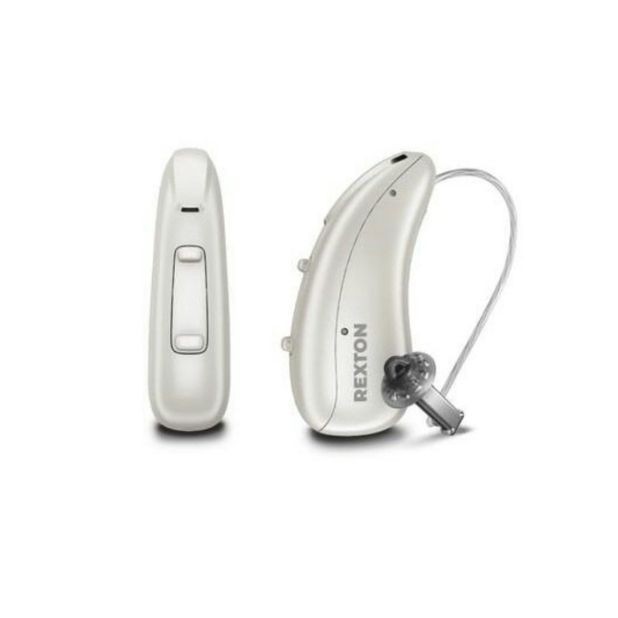
Rexton Reach ATEX Hearing Aid Highlights
Multi-Voice Focus: Enables you to hear multiple voices all at the same time - even in background noise with Multi-Voice Focus technology.
This is made possible by scanning your surrounding environment 1,000 times a second using 4 focus beams and adapting to switches in speaker positions and volumes automatically.
Seamless connectivity: Includes MFi and ASHA protocols that connect seamlessly to mobiles. It’s also future-proof, requiring only a quick firmware update to connect via Bluetooth LE audio.
Rechargeable technology: Offers sustainability and peace of mind that you will have enough power to get you through the day. Battery life is up to 39 hours on a single charge.
Lifeproof: They are built using rugged components and have been rigorously tested to ensure they can withstand everyday challenges and harsh environments with ATEX certification.
Models available: Rexton Reach R-Li, Rexton Reach R-Li T-coil, Rexton Reach inoX-CIC Li, and Rexton Reach R.
Explore the Rexton Reach hearing aid range here
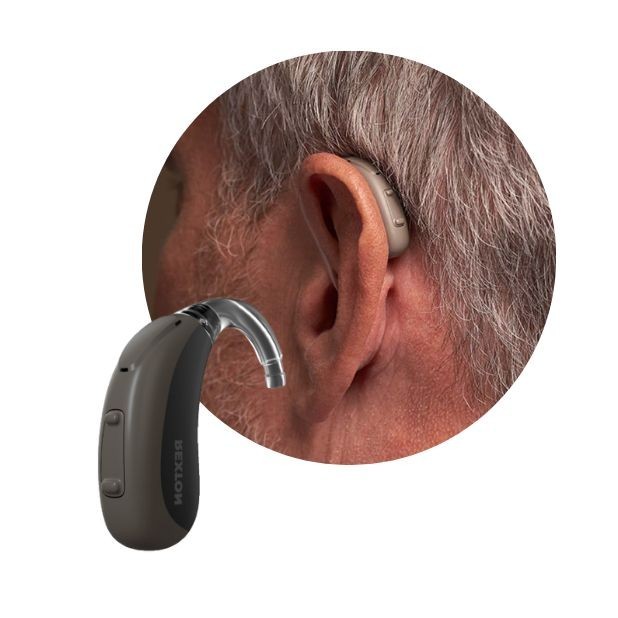
Rexton BiCore ATEX Hearing Aid Highlights
BiCore Technology: Ensures you can hear speech sounds easily from a work colleague or friend, whilst you remain aware of background noise in your environment. This could be safety alerts, machinery, a phone ringing, or equipment.
Soundpro 2.0: Harnessing an innovative blend of inputs, including real-time motion data and sophisticated sound directionality. It continually fine-tunes sound settings to mirror your environment seamlessly and automatically.
Connectivity: Rechargeability is built in, and connectivity is straightforward — direct Bluetooth streaming to iPhones and Android phones, plus a range of wireless accessories if you need them.
Models available: Options include slim RIC models, traditional BTE models, and compact custom models, such as BiCore R-Li and R-Li T and BiCore B-Li Rugged.
Explore the Rexton BiCore hearing aid range here
Getting ATEX hearing aids through Hearing Aid UK
Getting fitted with ATEX hearing aids is a more straightforward process than most people expect. Here's how it works:
- Hearing assessment — A full assessment of your hearing alongside confirmation of your workplace ATEX zone classifications.
- Employer liaison — Where funding or subsidy is involved, we'll deal directly with occupational health or HR on your behalf.
- Choosing the right model — With only a small number of ATEX-certified options available, we'll match the right device to your hearing loss, your zone classification, and the realities of your working day.
- Fitting and programming — Set up specifically for your environment — not just standard settings from a quiet consultation room.
- Certification paperwork — All documentation provided, including your ATEX card to carry on-site whenever you're in a hazardous area.
- Follow-up in the real world — A second appointment after you've worn them at work, to fine-tune based on actual experience rather than assumptions.
- Long-term support — Ongoing servicing, adjustments, and parts for the life of your devices.
To arrange a consultation about ATEX hearing aids, call us free on 0800 567 7621. We can discuss your specific workplace requirements and help you understand whether employer funding might be available.
Further reading
If you're an employer or worker wanting to dig into the details, these official sources are worth bookmarking:
- HSE — ATEX and Explosive Atmospheres: The go-to reference for UK employers on zone classifications, DSEAR obligations, and what the law actually requires in practice. https://www.hse.gov.uk/fireandexplosion/atex.htm
- RNID — Your Rights at Work: A straightforward guide to what the Equality Act 2010 means for employees with hearing loss — including what a reasonable adjustment looks like and how to ask for one. https://rnid.org.uk/information-and-support/your-rights/your-rights-at-work/
- GOV.UK — Access to Work: The government scheme that can help fund specialist equipment beyond what an employer is legally required to provide — worth checking if cost is a concern. https://www.gov.uk/access-to-work
What are the other benefits of Rexton ATEX-certified hearing aids?
- Impact resistant. Working environments aren't gentle — and neither is the testing.
- Chemical resistant. Creams, oils, and industrial substances won't cause damage to the casing.
- Sweat resistant. A full day of physical work won't affect performance.
- Heat resistant. Built for environments where temperatures run high.
- Vibration resistant. Consistent performance even alongside heavy plant and machinery.
- UV resistant. Prolonged outdoor or UV exposure isn't a problem.

How tough are Rexton Hearing aids? Watch the video below
What's included in our hearing aid prices?

Our specialist service includes:
Do not spend hundreds of pounds without getting a second opinion from us.
Please call us on 0800 567 7621
 Not only are the prices great, but the service is fantastic! Many thanks to your team.
Other pages you might find useful
FAQs
In general, any audiologist will always recommend to you the hearing aid model that best suits your needs. Here is a useful checklist to make sure that is the case.
- Audiologist's level of knowledge: The audiologist you have seen will hopefully have a wide knowledge of all available hearing aids; however, some will only be familiar with a small number of brands and, therefore, may not really be in a position to know which model is the best for you. It is OK to challenge their recommendation and ask them to justify why this particular brand is the one for you.
- Do research: Read about the hearing aid that was recommended. Does it seem like it will suit your lifestyle? Does it have more or fewer features than you need?
- Be aware of sales targets: Many high street retailers have specific tie-ins to a particular manufacturer/brand. The hearing aid they have suggested may still be the correct one for you, but do your research so that you know why they might have recommended it. You can read our best hearing aids of this year here
If you have significant hearing loss in both ears, you should be wearing two hearing aids. Here are the audiological reasons why:
Localisation: The brain decodes information from both ears and compares and contrasts them. By analysing the minuscule time delays as well as the difference in the loudness of each sound reaching the ears, the person is able to accurately locate a sound source.
Simply put, if you have better hearing on one side than the other, you can't accurately tell what direction sounds are coming from.
Less amplification is required: A phenomenon known as “binaural summation” means that the hearing aids can be set at a lower and more natural volume setting than if you wore only one hearing aid.
Head shadow effect: High frequencies, the part of your hearing that gives clarity and meaning to speech sounds, cannot bend around your head. Only low frequencies can. Therefore, if someone is talking on your unaided side, you are likely to hear that they are speaking, but be unable to tell what they have said.
Noise reduction: The brain has its own built-in noise reduction, which is only really effective when it is receiving information from both ears. If only one ear is aided, even with the best hearing aid in the world, it will be difficult for you to hear in background noise as your brain is trying to retain all of the sounds (including background noise) rather than filtering them out.
Sound quality: We are designed to hear in stereo. Only hearing from one side sounds a lot less natural to us.
Fancy some further reading on this topic? You can read about why two hearing aids are better than one in our article, hearing aids for Both Ears, here
For most people, the main benefit of a rechargeable hearing aid is simple convenience. We are used to plugging in our phones and other devices overnight for them to charge up. Here are some other pros and cons:
For anybody with poor dexterity or issues with their fingers, having a rechargeable aid makes a huge difference, as normal hearing aid batteries are quite small and some people find them fiddly to change.
One downside is that if you forget to charge your hearing aid, then it is a problem that can't be instantly fixed. For most, a 30-minute charge will get you at least two or three hours of hearing, but if you are the type of person who is likely to forget to plug them in regularly, then you're probably better off with standard batteries.
Rechargeable aids are also a little bit bigger and are only available in Behind-the-Ear models.
Finally, just like with a mobile phone, the amount of charge you get on day one is not going to be the same as you get a few years down the line. Be sure to ask what the policy is with the manufacturer's warranty when it comes to replacing the battery.
For most people, the answer is yes. But it's never that simple.
The majority of hearing problems affect the high frequencies a lot more than the low ones. Therefore, open fitting hearing aids sound a lot more natural and ones that block your ears up can make your own voice sound like you are talking with your head in a bucket. Therefore, in-ear aids tend to be less natural.
However, the true answer is we can't tell until we have had a look in your ears to assess the size of your ear canal, and until we have tested your hearing to see which frequencies are being affected.
People with wider ear canals tend to have more flexibility, also there are open fitting modular CIC hearing aids now that do not block your ears.
There is also the age-old rule to consider, that a hearing aid will not help you if it's sat in the drawer gathering dust. If the only hearing aid you would be happy wearing is one that people can't see, then that's what you should get.
Most people can adapt to any type of hearing aid, as long as they know what to expect. Have an honest conversation with your audiologist as to what your needs are.
Generally speaking, six or more. Unless it's none at all. The number of channels a hearing aid has is often a simplistic way an audiologist will use to explain why one hearing aid is better than another, but channels are complex, and it is really not that straightforward. Here are some reasons why:
Hearing aids amplify sounds of different frequencies by different amounts. Most people have lost more high frequencies than low, and therefore need more amplification in the high frequencies. The range of sounds you hear is split into frequency bands or channels, and the hearing aids are set to provide the right amount of hearing at each frequency level.
Less than six channels, and this cannot be done with much accuracy, so six is the magic number. However, a six-channel aid is typically very basic with few other features and is suitable only for hearing a single speaker in a quiet room. The number of channels is not what you should be looking at; it's more the rest of the technology that comes with them.
As a final note, different manufacturers have different approaches. One method is not necessarily better than any other. For example, some manufacturers have as many as 64 channels in their top aids. Most tend to have between 17 and 20. One manufacturer has no channels at all.
Manufacturer's warranties typically last between 2-5 years, depending on the brand and model, and cover defects in materials and workmanship. This includes repairs for component failures, electronic malfunctions, and manufacturing defects, but excludes damage from misuse, accidents, or normal wear. Most manufacturers also include loss and damage insurance for the first year.
We handle all warranty claims on your behalf, liaising with manufacturers and ensuring you get replacement devices quickly when needed. This comprehensive warranty coverage, combined with our lifetime aftercare, gives you complete peace of mind. Find out more about our warranty cover here
Our hearing tests are completely free, whether at our clinics or in your home. Unlike other providers who charge £30-£100 for home visits, we believe hearing healthcare should be accessible without financial barriers. Our comprehensive assessments include examination by an HCPC-registered audiologist, audiogram results, and personalised recommendations.
All testing, future adjustments, and ongoing support are included at no extra cost. While NHS tests are also free, typical 6-week waiting periods often lead people to seek immediate private testing. We provide prompt, professional assessments that fit your schedule and budget.
Yes, we offer completely free home visits throughout the UK, and this service is included in our prices with no additional charges. Home visits are particularly valuable for people with mobility issues, busy schedules, or those who simply prefer the comfort and convenience of their own environment.
Our audiologists can conduct full hearing tests, fit hearing aids, and provide ongoing support in your home. This service sets us apart from many providers who either don't offer home visits or charge extra for them.
We can offer prices up to 40% lower than high street retailers because of our business model. As a network of 200+ independent audiologists, we don't have the massive overheads of large retail chains - no expensive high street premises, no sales targets pushing audiologists to sell the most expensive options, and no costly marketing campaigns.
However, we maintain the same buying power as the big chains because we purchase on behalf of our entire nationwide network. This means you get access to the same premium hearing aids with professional service, but at genuinely competitive prices.
We offer a comprehensive 60-day money-back guarantee, which gives you twice the industry standard time to properly assess whether your hearing aids are right for you. This extended period recognises that adjusting to hearing aids takes time, and your brain needs several weeks to adapt to the amplified sounds.
Unlike many providers who offer just 30 days, we believe 60 days gives you the confidence to test your hearing aids in all the situations that matter to you - from quiet conversations at home to busy restaurants and outdoor activities.
Ask the Experts

Get free independent impartial advice from the experts you can trust. We offer nationwide coverage and huge savings on all our hearing aids.
6 Morton Lane
Walkwood
Redditch
Worcestershire
B97 5QA
Latest Launch
When we refer to a product as 'Latest Launch', we mean it is the latest to be released on the market.
New
When we refer to a product as 'New', we mean that the product is the newest hearing aid model on the market.
When we refer to a product as 'Superseded', we mean that there is a newer range available which replaces and improves on this product.
Older Model
When we refer to a product as an 'Older Model', we mean that it is has been superseded by at least two more recent hearing aid ranges.